
Why Warning Signs Matter (Especially for First-Timers)
Homes don't break down overnight. Most costly repairs — rotting subfloors, mold infestations, failing foundations — announce themselves weeks or months before they become emergencies. The problem is that first-time homeowners and renters often don't know what to look for, so small signals go ignored until a professional hands over a four-figure invoice.
Think of your home the way you might think of your car: a strange sound or dashboard light isn't something to dismiss. It's a prompt to investigate. The same logic applies to your walls, floors, and ceilings. This guide gives you a plain-English decoder for the most common household warning signs — what they typically mean, how urgent they are, and when to call a professional.
For a broader foundation on keeping your home in shape year-round, see What Every New Homeowner Should Know About Home Maintenance.
| Time for mold to grow after water intrusion | 24–48 hours (U.S. Environmental Protection Agency (EPA)) |
| Crack width that warrants professional assessment | ¼ inch or wider (General building industry guidance) |
| Most common cause of soft or spongy floors | Moisture damage to the subfloor |
| Key test for a hidden pipe leak | Water meter movement with all fixtures off |
| Warning sign that a window seal has failed | Condensation between the glass panes |
A Room-by-Room Warning Sign Decoder
Walls and Ceilings
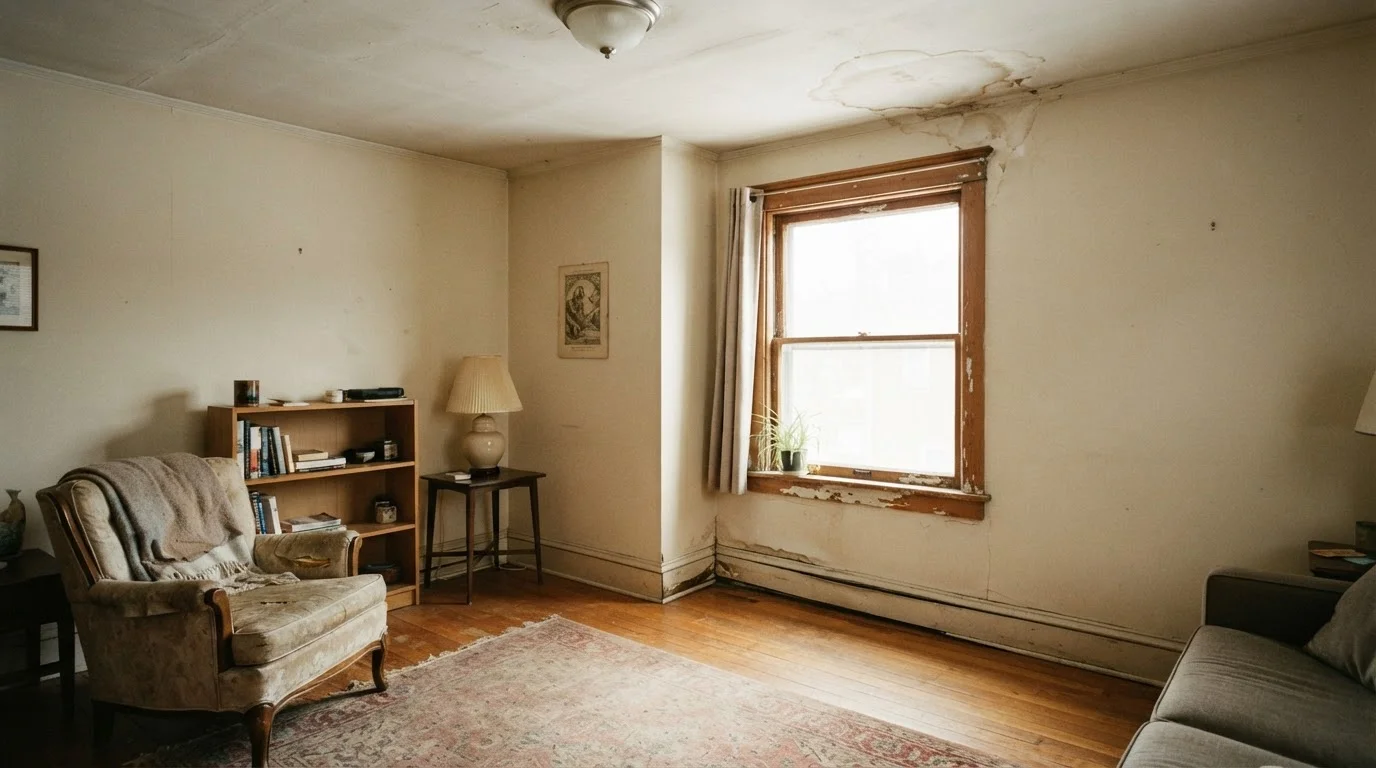
- Peeling or bubbling paint: Usually indicates moisture trapped beneath the surface. On exterior walls, this points to a weatherproofing failure. On ceilings, it often signals a roof leak or a plumbing issue above. Don't just repaint — find the moisture source first. Our guide to wall repair methods can help once the cause is addressed.
- Brown or yellow water stains: A stain with a defined ring means water pooled there at some point. A spreading, soft stain means it may still be active. Press gently — if the drywall feels soft or spongy, water damage is ongoing.
- Hairline cracks vs. wide cracks: Hairline cracks along drywall seams are common as a house settles and are usually cosmetic. Cracks wider than ¼ inch, stair-step cracks in brick or block, or cracks near door and window corners may signal foundation movement and warrant a professional assessment.
Floors
- Soft or bouncy spots: If a floor feels spongy underfoot — especially near bathrooms or exterior walls — the subfloor may be damaged by water. This is a serious structural concern; don't delay investigation.
- Squeaky boards: Often just cosmetic (the subfloor has separated slightly from joists), but persistent squeaking in the same spot after wet weather can signal moisture swelling.
- Gaps between floorboards: Minor seasonal gaps are normal as wood expands and contracts. Widening gaps year-round, or gaps accompanied by a sloping floor, need a closer look.
Doors and Windows
- Sticking or misaligned doors: A door that suddenly won't close squarely — especially if it closed fine before — can indicate foundation settling, seasonal swelling, or a framing issue. If multiple doors are affected simultaneously, call a professional.
- Drafts and condensation between panes: Condensation inside double-pane glass means the seal has failed and the insulating gas has escaped. The pane needs replacement, not cleaning. For broader weatherproofing context, see Weatherproofing Myths That Cost Renters and Owners Money.
Subfloor
The structural layer of flooring beneath your finished floor surface (tile, hardwood, carpet). It sits on top of the floor joists and provides the base everything else rests on. Water damage to the subfloor is a serious structural concern.
P-trap
The curved, U-shaped pipe section beneath sinks and drains. It holds a small amount of water that acts as a seal, preventing sewer gases from traveling back up into your home. If unused for long periods, the water can evaporate and let odors through.
Drywall
The most common interior wall material in US homes, made of gypsum plaster pressed between two sheets of thick paper. It's relatively easy to patch but highly vulnerable to water damage.
Foundation settling
The gradual, normal shift of a home's foundation over time as the soil beneath it compresses. Minor settling is expected; rapid or uneven settling can cause structural problems like cracked walls, sticking doors, and sloping floors.
Double-pane window
A window with two layers of glass separated by an air or gas-filled space for insulation. When the seal fails, outside air and moisture enter the gap, causing fogging or condensation between the panes that can't be wiped away.
HVAC
Stands for Heating, Ventilation, and Air Conditioning — the combined system that controls your home's temperature and air quality. Regular maintenance, including filter changes, keeps it running efficiently and extends its lifespan.
Smells, Sounds, and Other Non-Visual Cues
Not every warning sign is something you can see.
98%
Of water-damaged basements involve preventable causes
According to the American Society of Home Inspectors, the vast majority of basement water intrusion is linked to drainage and grading issues that can be addressed before damage escalates.
24–48 hrs
Time for mold growth to begin after moisture exposure
The U.S. EPA notes that mold can start developing within one to two days in warm, damp conditions — making early detection of moisture critical.
- Musty or earthy smell: A persistent musty odor — especially in basements, closets, or bathrooms — is strongly associated with mold or mildew growth. Mold can develop within 24–48 hours in the right moisture conditions and may be hidden behind walls or under flooring.
- Sulfur or rotten-egg smell: Near a gas appliance, this is a potential gas leak — leave the building immediately and call your utility provider. Near drains, it may indicate a dry P-trap (the U-shaped pipe that holds water and blocks sewer gases). Running the faucet briefly often resolves dry traps.
- Running water sounds when nothing is on: This can indicate a pipe leak inside a wall. Check your water meter: turn off all fixtures, note the reading, wait 15 minutes, and check again. Movement on the meter with no fixtures running suggests a leak.
- Clicking or banging from HVAC: Occasional clicking when your system cycles on is normal. Persistent banging, rattling, or a grinding sound often means a loose component or a failing motor — have an HVAC technician inspect it. Regular filter replacement helps prevent some of these issues; see monthly maintenance tasks for a simple schedule.
If you're buying a home and worried about missing hidden problems, a professional inspection is your best protection. Home Inspections: What They Cover, What They Don't, and Why Skipping One Is Risky explains what inspectors examine and how to use the report.
This article is for general informational purposes only. For issues involving structural integrity, gas, electrical systems, or significant water damage, always consult a licensed, qualified professional and verify any required permits with your local authority.