
The Tasks Nobody Warns You About
Moving into your first place comes with a crash course in responsibilities your landlord or prior living situation quietly handled for you. Most new residents focus on the big stuff — paying rent, setting up utilities, buying furniture — and completely miss the small recurring tasks that quietly protect a home from the inside out.
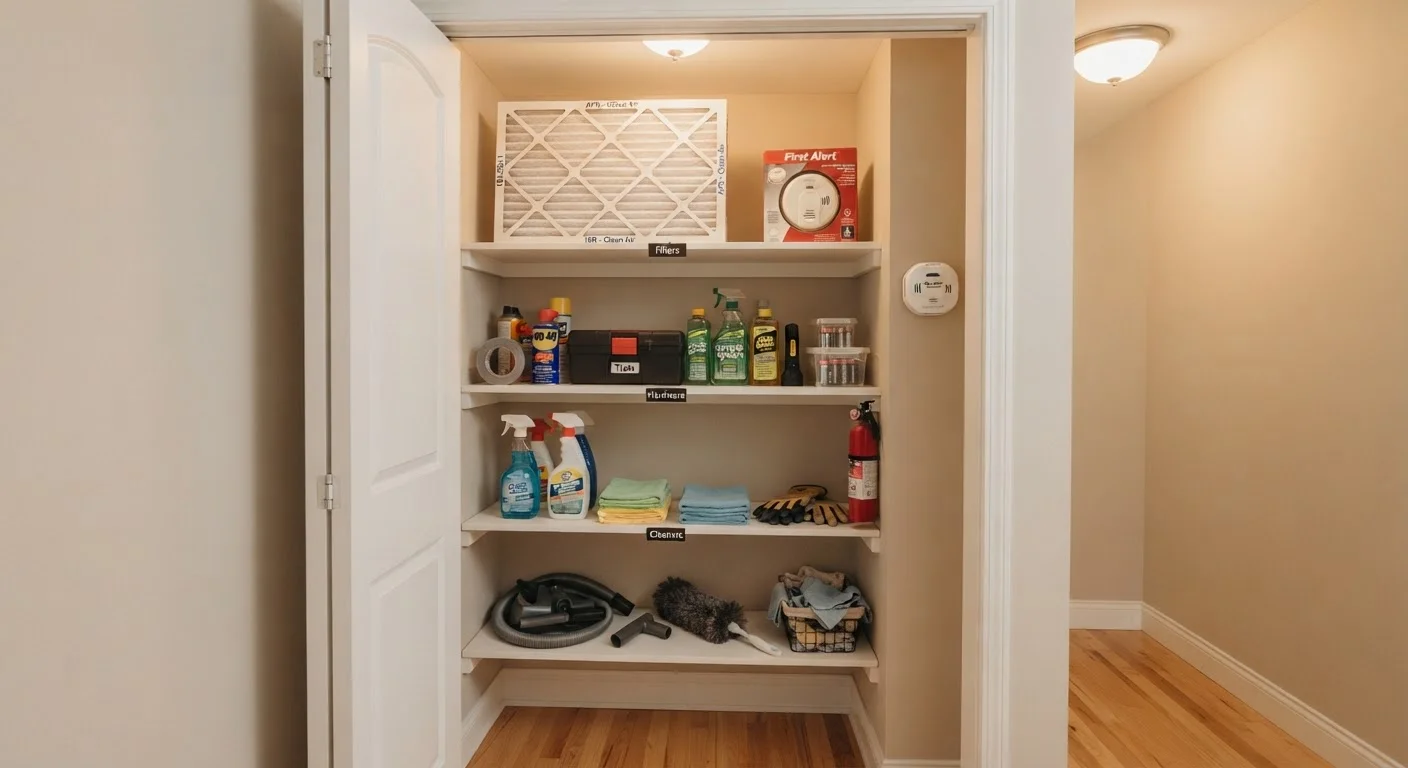
None of the items on this list require a contractor, a large budget, or advanced skills. What they do require is a habit. If you're just getting started with home upkeep, the foundation every first-timer needs is a solid place to build your baseline before diving into a recurring routine.
Below are the monthly and near-monthly checks that consistently fall through the cracks — and why each one actually matters.
Check and Replace Your Furnace Filter
Your furnace (and central air system) pulls air through a filter designed to trap dust, pet dander, and other particles. Over time that filter clogs, forcing the system to work harder — raising your energy bill and shortening the equipment's lifespan. A heavily blocked filter can also push pollutants back into your living space.
Most standard 1-inch filters should be inspected monthly and replaced every 1–3 months depending on how dusty your home is, whether you have pets, and whether anyone in the household has allergies. Thicker filters (4–5 inches) can last longer — check the manufacturer's guidance. Pull the filter out and hold it up to the light: if you can't see light through it, it's time for a new one.
A clogged filter forces your HVAC to work harder, raising bills and cutting equipment life.
Test Every Smoke and Carbon Monoxide Detector
Smoke detectors and carbon monoxide (CO) detectors save lives — but only when they're actually working. Both can fail silently: batteries die, sensors degrade, and units that are more than 10 years old may not trigger reliably at all.
Once a month, press and hold the test button on each unit until it beeps. If the sound is faint or the unit doesn't respond, replace the battery immediately. Most detectors use standard 9V or AA batteries. If your detector chirps intermittently, that's the low-battery warning — don't ignore it. Write the installation date on a sticker on the back of each unit so you know when to replace the detector itself, not just the battery.
A silent detector offers no protection — test every unit monthly, every single month.
Run Water in Infrequently Used Drains
Every drain in your home has a P-trap — the curved section of pipe beneath the drain that holds a small amount of water. That water forms a seal that blocks sewer gases (including hydrogen sulfide, which smells like rotten eggs) from entering your living space. In bathrooms, utility sinks, or guest spaces that rarely get used, that water evaporates over time and the seal breaks.
Once a month, run water for 30 seconds in every drain that doesn't get regular use: guest bathroom sinks, tubs, floor drains in laundry rooms or basements. That's all it takes to maintain the seal. If you notice a persistent sewer smell in your home, a dry trap is often the first place to check.
Running unused drains for 30 seconds monthly prevents sewer gas from entering your home.
Inspect and Clean Your Range Hood Filter
The range hood above your stove captures grease-laden air before it coats your cabinets and circulates through your home. The mesh filter inside it accumulates grease rapidly, especially if you cook frequently. A saturated filter becomes a fire hazard and stops doing its job entirely.
Remove the filter (it typically unclips or slides out) and soak it in hot water with a degreasing dish soap for 10–15 minutes, then scrub and rinse. Many are also dishwasher-safe — check the manufacturer's label. If your range hood vents to the outside, also visually confirm the exterior damper flap opens freely and isn't blocked by debris or a bird's nest.
A grease-saturated range hood filter is both a fire risk and a ventilation failure.
Check Under Sinks for Slow Leaks
Slow plumbing leaks under kitchen and bathroom sinks are one of the most common — and most preventable — causes of water damage and mold growth in residential spaces. The leak often starts as a drip so minor it doesn't pool visibly, but over weeks it saturates the cabinet floor and the subfloor beneath it.
Once a month, open every cabinet under a sink and look (and feel) for moisture, soft spots, warping, or discoloration. Run the faucet and look at the supply lines and drain connections while water is flowing. Check the garbage disposal connection if you have one. Catching a dripping compression fitting early is a minor fix; discovering rot after months of slow leakage is not.
Catching a slow drip early costs almost nothing; the water damage it causes if missed can be significant.
Wipe Down and Test Your Bathroom Exhaust Fan
Bathroom exhaust fans remove humidity after showers — the moisture that, left unchecked, feeds mold and peels paint. But they're often the most neglected fixture in the home. Dust and lint accumulate on the grille and inside the fan housing, reducing airflow and making the motor run hotter.
Monthly, use a vacuum with a brush attachment to clear the grille. To check whether the fan is actually pulling air, hold a sheet of toilet paper near the grille while the fan runs: it should be drawn toward the fan. If it falls away, the fan may be blocked or failing. Also verify that the fan duct vents to the exterior of the building — some improperly installed fans dump moist air directly into attic space, which causes significant long-term problems.
A clogged exhaust fan that can't clear humidity is actively contributing to mold growth.
Make It a Routine, Not a Scramble
The common thread in every item above is that the task itself is easy — the hard part is remembering to do it. One practical approach: pick one day a month (many people use the first of the month, or the day rent is due) and run through your list in a single pass. The whole checklist rarely takes more than 20–30 minutes.
Use Your Phone's Calendar or Reminders
Set a recurring monthly reminder labeled 'Home Maintenance Check' on the same date every month. When it fires, run through your list before dismissing the notification. Tying the reminder to something you already do — like paying a bill — makes it easier to build into your existing routine. The same habit-stacking logic applies to car upkeep too: the car maintenance habit guide explains the approach in more detail.
If you're a renter, some of these tasks may overlap with your landlord's obligations. Knowing the divide before a problem surfaces saves friction later — the guide to renter maintenance responsibilities breaks that down clearly. For a broader seasonal picture, the year-round home maintenance schedule maps out what needs attention beyond the monthly cycle.
Consistent small efforts protect your home, keep repair costs manageable, and mean you're far less likely to face an emergency that disrupts your life — or your budget. Building this habit now pays dividends for every home you live in from here on.
This article is for general informational and educational purposes only. For tasks involving electrical systems, gas appliances, or structural concerns, consult a licensed professional and verify local code requirements before proceeding.