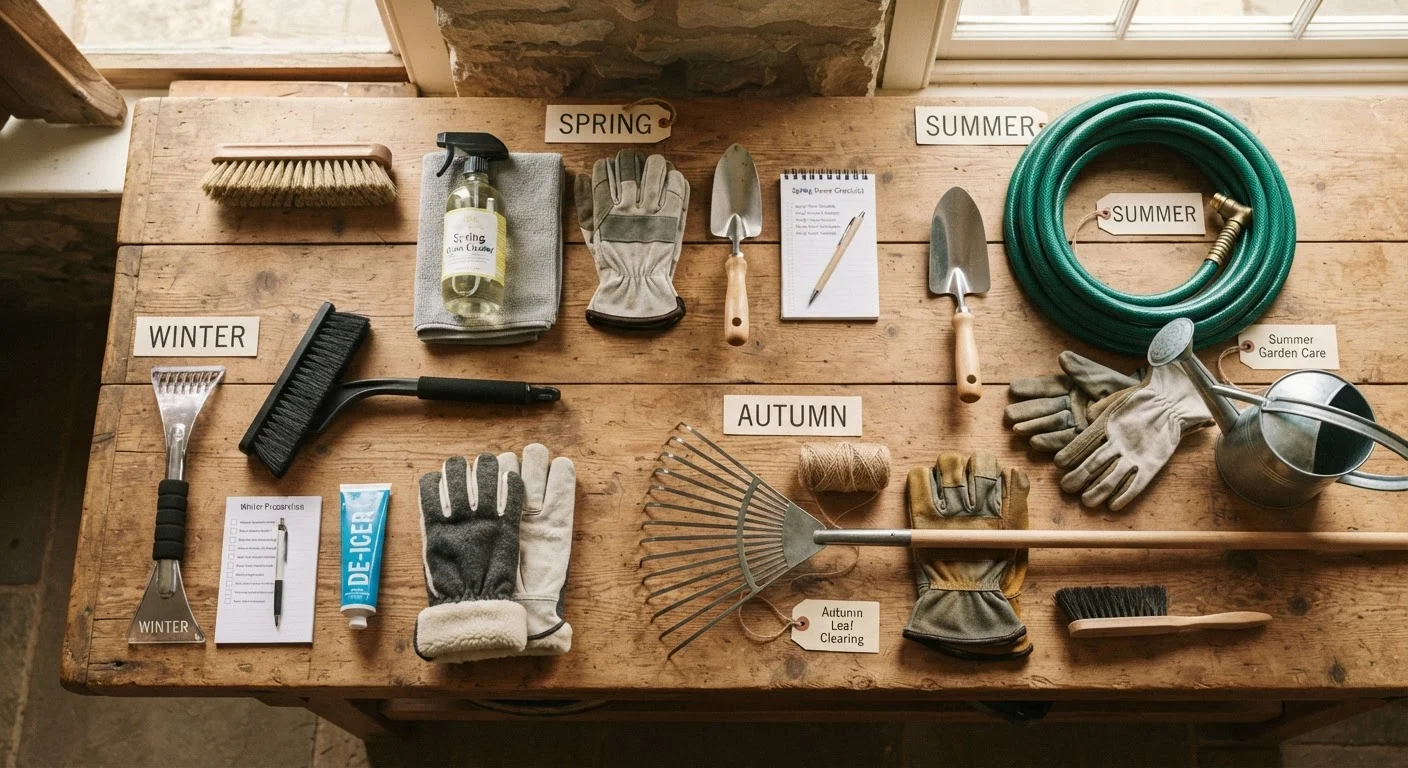
A month-by-month breakdown of the upkeep tasks that keep a home running smoothly, season by season.
Key Takeaways
Breaking maintenance into seasonal tasks makes the workload manageable and prevents overwhelm.
Most routine checks take under an hour and require no specialized trade skills.
Catching small issues early — a dripping faucet, a clogged gutter — avoids expensive repairs later.
Some tasks, like electrical panel work or gas line checks, always require a licensed professional.
A printed or digital copy of this checklist used annually can extend the life of major home systems.
Why a Scheduled Approach Beats Reactive Repairs
Most first-time homeowners fall into the same trap: they fix things only when they break. The problem is that homes are interconnected systems — a neglected roof lets in moisture that rots framing, which invites mold, which affects air quality. One skipped task quietly creates three expensive ones.
A year-round maintenance schedule flips that dynamic. By spreading tasks across the four seasons, you keep each session short, manageable, and far cheaper than emergency calls. Think of it the way you think about oil changes: building a maintenance habit that actually sticks is less about skill and more about routine. The same principle applies to your home.
Use the checklist below as your annual reference. Bookmark it, print it, or add calendar reminders — whatever keeps you accountable. Not every task applies to every home (condos skip gutter cleaning; renters may skip furnace ownership tasks), so adapt as needed.
Required
Caulk gun and all-purpose caulk
Seals gaps around windows, doors, and the foundation to block drafts, moisture, and pests.
Required
Flathead and Phillips screwdrivers
Needed for tightening outlet covers, door hardware, and appliance panels throughout the year.
Required
Extension ladder (6–8 ft minimum)
Provides safe access to gutters, fascia, and low-slope roof edges for seasonal inspections.
Optional
Wet/dry shop vacuum
Clears gutters, dryer ducts, and HVAC vents of debris quickly and without mess.
Required
Non-contact voltage tester
Allows you to verify safely that power is off before investigating outlets or light switches — never skip this step.
Required
Digital calendar or reminder app
Schedules recurring tasks (filter changes, detector tests) so nothing gets forgotten between seasons.
Your Season-by-Season Checklist
The groups below follow a seasonal rhythm — Spring through Winter — plus a set of monthly tasks that run all year. Complete each group as its season arrives. If you're starting mid-year, pick up the current season and work forward.
Monthly (Year-Round)
Test smoke detectors and carbon monoxide alarms by pressing the test button on each unit.Must
Check and replace HVAC (heating, ventilation, and air conditioning) filters if visibly grey or clogged — typically every 1–3 months depending on filter type and household.Must
Run water in infrequently used sinks, showers, and tubs to prevent drain traps from drying out and letting sewer gases in.Should
Spring (March–May)
Inspect the roof from the ground using binoculars for missing, curled, or cracked shingles; call a licensed roofer if damage is visible.Must
Clean gutters and downspouts of winter debris, and confirm downspouts direct water at least three feet away from the foundation.Must
Walk the exterior and seal any new cracks in siding, trim, or the foundation with appropriate caulk or weatherstripping.Should
Service the air conditioning system — replace the filter, clean the condenser fins with a soft brush, and schedule a professional tune-up if the unit hasn't been serviced in over a year.Should
Check window and door screens for tears; patch or replace so you can ventilate without letting insects in all summer.Nice to have
Test outdoor GFCI (ground-fault circuit interrupter) outlets — the ones with the test/reset buttons — by pressing the test button and confirming power cuts off.Must
Summer (June–August)
Inspect deck, porch, and fence boards for rot, loose fasteners, or splinters; tighten hardware and replace damaged boards before fall.Should
Check outdoor hose bibs (spigots) for drips and tighten packing nuts or replace washers if leaking.Should
Trim back trees and shrubs so branches stay at least 3 feet from the roof and siding to reduce moisture risk and pest access.Should
Inspect the attic for signs of pests, moisture staining, or inadequate insulation while temperatures make it accessible but before peak summer heat.Nice to have
Test and clean the clothes dryer exhaust duct — a clogged duct is a leading cause of home fires; disconnect and vacuum it if lint buildup is visible.Must
Fall (September–November)
Have the furnace or heating system inspected and serviced by a licensed HVAC technician before the first cold snap.Must
Clean gutters again after leaves have fallen to prevent ice dams (blockages that cause water to back up under roofing material) in colder climates.Must
Shut off and drain outdoor hose bibs and irrigation systems before the first hard freeze to prevent burst pipes.Must
Check weatherstripping around doors and windows; replace any that lets light or a draft through to lower heating costs.Should
Stock an emergency kit: flashlight, batteries, a portable phone charger, a few days of bottled water, and basic first aid supplies.Should
Test the garage door auto-reverse safety feature by placing a 2x4 flat on the ground in the door's path and pressing close — the door must reverse on contact.Must
Winter (December–February)
Know where your main water shut-off valve is and confirm it operates smoothly — this knowledge is critical if a pipe bursts.Must
Keep cabinet doors under sinks open during extreme cold spells to allow warm interior air to reach pipes along exterior walls.Should
Check the attic and exterior eaves for ice dams forming at the roof edge; consult a roofer if persistent — attempting removal with tools can damage shingles.Should
Inspect and clean the fireplace or wood-burning stove flue — hire a certified chimney sweep annually if the fireplace is used regularly.Must
Review your homeowners insurance policy to confirm coverage limits still reflect the home's current value and contents.Nice to have
Never DIY Electrical, Gas, or Structural Work
Tasks involving your electrical panel, gas lines, load-bearing walls, or main plumbing stack require a licensed professional — full stop. Unpermitted or improperly done work can void homeowners insurance, create safety hazards, and cause legal complications when you sell. When in doubt, get a licensed contractor and pull the required permit through your local building department.
For the recurring monthly items — things like testing smoke detectors and swapping furnace filters — see our companion guide on monthly tasks new residents forget for step-by-step detail on each one.
Ladder Safety Is Not Optional
Falls from ladders are among the most common causes of serious home-improvement injuries. Always set the ladder on firm, level ground, maintain three points of contact (two hands and one foot, or two feet and one hand), and never lean past the ladder's side rails. Have a second person steady the base when working on gutters or rooflines.
This checklist is general educational information. Always verify local building codes, permit requirements, and safety regulations before starting any project, and consult a licensed professional for electrical, gas, structural, or other regulated work.
Your First Home Editorial Team is the collective byline for our editorial team and contributor network. Articles published under this byline or an editorial pen name are researched, written, and reviewed according to our editorial standards for clarity, consistency, and independence before publication.
The content provided on our blog site traverses numerous categories, offering readers valuable and practical information. Readers can use the editorial team’s research and data to gain more insights into their topics of interest. However, they are requested not to treat the articles as conclusive. The website team cannot be held responsible for differences in data or inaccuracies found across other platforms. Please also note that the site might also miss out on various schemes and offers available that the readers may find more beneficial than the ones we cover.