
Why Reading Every Clause Actually Matters
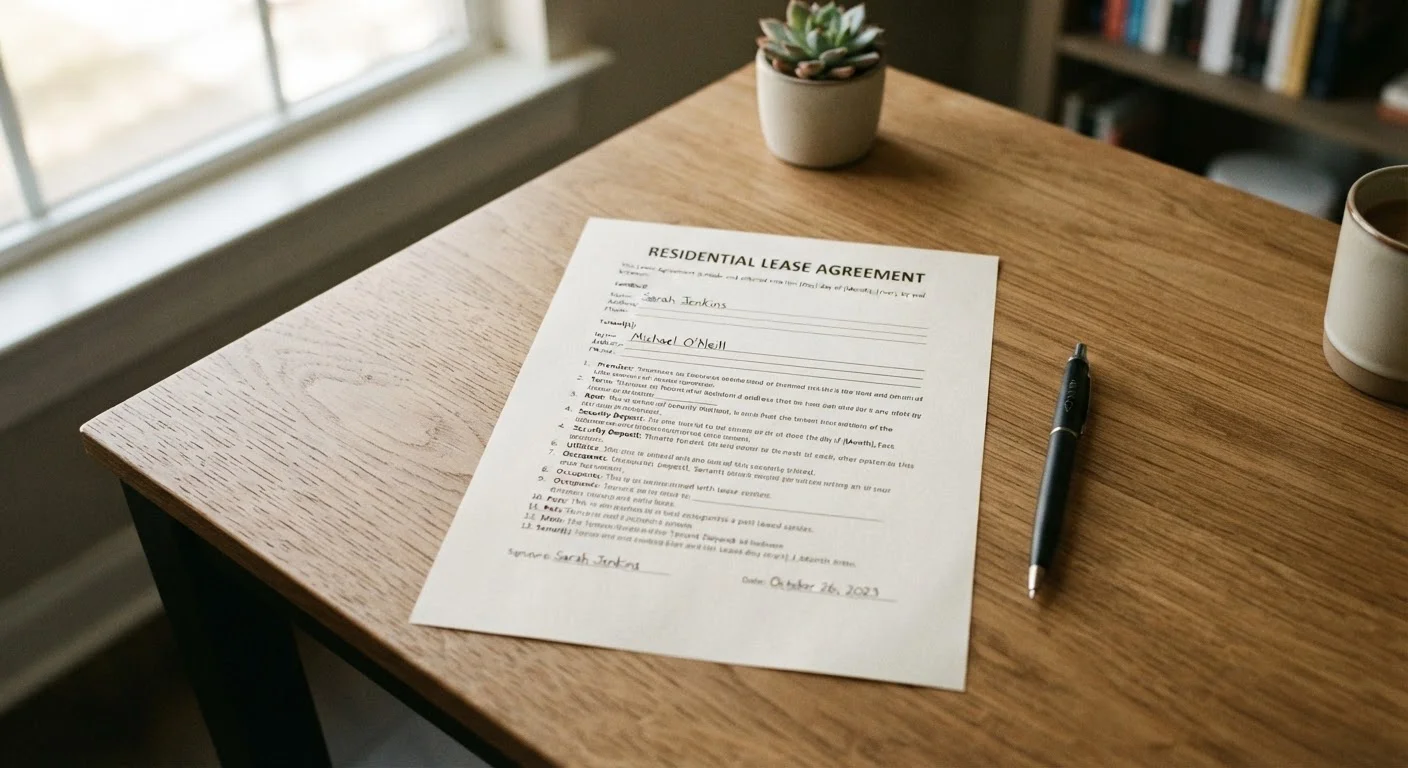
A lease is a legally binding contract. Once you sign, you are agreeing to every clause in it — even the ones printed in small type at the bottom. Yet many first-time renters skim, or skip entirely, the sections that end up causing the most friction later: the early termination fee, the guest policy, the pet clause.
This guide walks through the clauses you'll find in a typical US residential lease and explains what each one actually means in plain English. Think of it as a decoder ring you can keep open in one tab while you review the document in another.
If you're also weighing lease structure — how long to commit — see our breakdown: month-to-month vs. fixed-term lease.
| Typical security deposit limit | 1–3 months' rent (varies by state) (State landlord-tenant statutes) |
| Grace period for late rent | 3–5 days (state-dependent) (State landlord-tenant statutes) |
| Notice required to enter unit | 24–48 hours (most states) (State landlord-tenant statutes) |
| Standard lease term | 12 months |
| Security deposit return window | 14–30 days after move-out (varies by state) (State landlord-tenant statutes) |
The Core Clauses, One by One
Parties to the Agreement
The lease opens by identifying the lessor (landlord) and the lessee (you). Verify that the person or entity named as landlord actually owns or is authorized to rent the property. This matters if you ever need to take legal action.
Lease Term
Specifies the start and end dates. A fixed-term lease locks in your rent and tenancy for that period. When it ends, check whether your lease auto-renews or converts to month-to-month — and at what rent. Learn more about how each structure affects your flexibility: comparing lease arrangements.
Rent and Payment Terms
States the monthly rent amount, due date, accepted payment methods, and the grace period before a late fee applies. Most states mandate a grace period of at least three to five days, but your lease may be stricter — confirm it doesn't contradict local law.
Security Deposit
Details the deposit amount, what it can be used for, and the timeline for its return after you move out. Landlords can deduct for damages beyond normal wear and tear and unpaid rent, but not routine aging of the property. Document the unit's condition with photos on move-in day and keep a copy.
Early Termination
If you need to leave before the lease ends, this clause spells out the consequences — often a flat fee or forfeiture of one to two months' rent. Some leases include a lease break provision with advance notice requirements. Understand this before you sign, not after you need it.
Maintenance and Repairs
Clarifies who is responsible for what. Landlords are generally required by law to maintain habitability — heating, plumbing, structural safety. To understand what your landlord is legally obligated to provide regardless of what the lease says, see what landlords are legally required to provide.
Lease Terms Vary by State
US landlord-tenant law is largely governed at the state level, meaning rules around security deposits, notice periods, and eviction procedures differ significantly across states. Always verify that specific clauses in your lease comply with your state's laws. Your state attorney general's office or a local tenant rights organization can be a reliable starting point.
Entry and Privacy
Defines when and how your landlord may enter the unit. Most states require at least 24 to 48 hours of written notice except in genuine emergencies. If your lease grants the landlord unrestricted access, that may conflict with your state's tenant privacy protections.
Guest and Occupancy Policy
Limits who can live in the unit and for how long guests may stay. Exceeding the guest limit — even temporarily — can technically constitute a lease violation. If you plan to have roommates, verify whether they need to be named on the lease. How joint leases and liability actually work is worth reading before anyone co-signs.
Pet Policy
Spells out whether pets are permitted, which species and sizes qualify, whether a pet deposit or monthly pet fee applies, and what happens if you violate the policy. Before bringing an animal home, review navigating pet ownership as a renter.
Subletting and Assignment
Most leases prohibit subletting without written landlord approval. Subletting without permission is a common cause of eviction proceedings — even when the subtenant pays on time.
Red Flags Worth Negotiating Before You Sign
Not every clause is take-it-or-leave-it. Here are provisions that are worth questioning or requesting in writing before signing:
- Automatic rent increases on renewal — Some leases build in a set percentage increase at renewal. Know the number upfront.
- Broad damage liability language — Clauses holding tenants responsible for any and all damage, regardless of cause, may exceed what your state law allows.
- Waiver of notice to enter — A clause stating the landlord may enter at any time without notice may be unenforceable depending on your state, but it's still a red flag.
- Mandatory arbitration — Requires disputes to go to private arbitration rather than a court. This limits your legal options if a serious conflict arises.
If something in the lease is unclear or seems unusual, ask for clarification in writing before signing. A signed lease is difficult to dispute later on the grounds that you misunderstood it.
This article is for general informational purposes only and does not constitute legal or financial advice. Lease terms and landlord-tenant laws vary by state and locality. Consult a qualified attorney or your local tenant rights organization if you have questions about a specific lease or legal situation.