

What Each Lease Type Actually Means
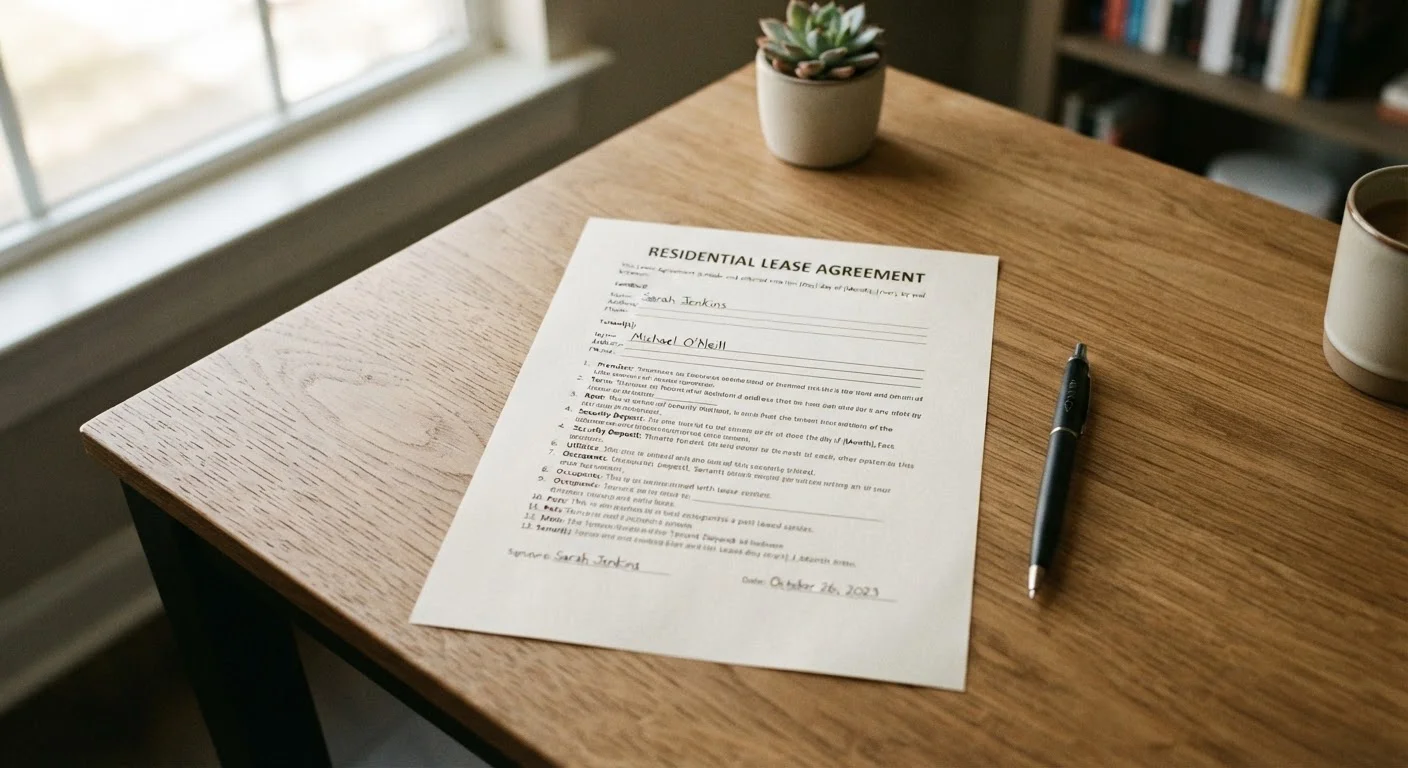
A fixed-term lease is a rental contract with a defined start and end date — most commonly 12 months. Once signed, both you and your landlord are bound to the terms until that date arrives. Your rent amount is set in writing and generally cannot change mid-lease, and the landlord cannot ask you to leave without legal cause during that period.
A month-to-month lease (sometimes called a periodic tenancy) has no fixed end date. Instead, it automatically renews each month until either party gives written notice to end it. The notice period required — typically 30 days, though it varies by state — is spelled out in the agreement. Some month-to-month arrangements start that way from day one; others begin as a 12-month lease and convert automatically when the fixed term expires.
Both arrangements are legally binding contracts. The core difference is time horizon: one trades commitment for stability, the other trades stability for freedom.
When a Fixed-Term Lease Converts to Month-to-Month
Many fixed-term leases include automatic conversion language: if neither party gives notice before the lease expires, it rolls into a month-to-month arrangement under the same terms. This is worth confirming before your end date approaches. If you want to stay but renegotiate rent or terms, start that conversation with your landlord at least 60 days before expiration.
The Real Cost Difference
Flexibility has a price. Landlords typically charge a rent premium on month-to-month leases — often 10–25% above the equivalent fixed-term rate — to compensate for the uncertainty of not knowing how long you'll stay. In a high-demand rental market, that premium can be even steeper.
On a fixed-term lease, your rent is protected for the duration. In cities where rents rise quickly, a 12-month lock-in can represent real savings compared to a month-to-month rate that climbs with the market.
~20%
Typical month-to-month rent premium over fixed-term
Industry practice commonly places month-to-month surcharges in the 10–25% range, though this varies by landlord and local market conditions.
30 days
Minimum notice period in most US states
Most states require landlords to provide at least 30 days' written notice before ending or materially changing a month-to-month tenancy; some states require more.
12 months
Most common fixed-term lease length in the US
Annual leases are the standard offering from the majority of US residential landlords, though 6- and 18-month terms do exist in some markets.
The other cost to weigh on a fixed-term lease is the early termination clause. Most fixed-term leases specify a penalty for leaving before the end date — commonly two to three months' rent, or liability for rent until a new tenant is found (whichever comes first). Read this clause carefully before signing. Some states limit what landlords can charge; others give tenants more discretion. This is general information — check your state's landlord-tenant law or consult a local tenants' rights organization for rules that apply to you.
Side-by-Side: Key Differences at a Glance
Use this comparison to spot the trade-offs quickly before reading deeper into whichever option applies to your situation.
| Criterion | Month-to-Month | Fixed-Term (12-Month) |
|---|---|---|
| Commitment length | Renews monthly until notice given | Set end date, usually 12 months |
| Typical rent cost | Often 10–25% higher | Usually lower; locked in for the term |
| Rent increase risk | Possible with notice each month | Generally protected until lease ends |
| Early exit penalty | Give notice; no penalty | Often 2–3 months' rent or equivalent |
| Landlord termination notice | Typically 30 days | Cannot terminate without legal cause mid-term |
| Best market conditions | Falling or stable rents | Rising or competitive rental market |
| Stability for planning | Low — situation can change monthly | High — guaranteed housing for full term |
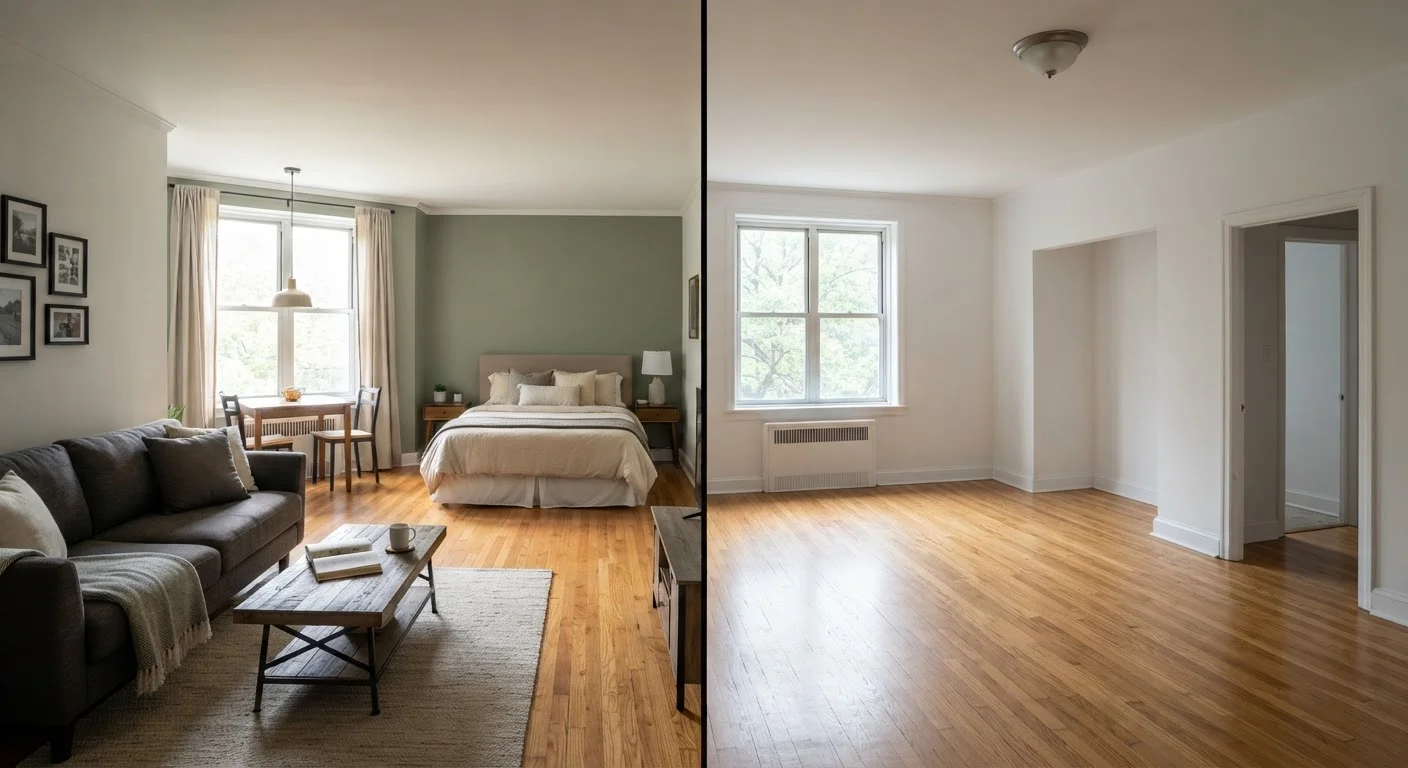
If you're weighing a furnished unit alongside lease type, note that furnished rentals are more commonly offered on month-to-month terms. Our guide to furnished vs. unfurnished rentals explains what else changes beyond just the furniture.
Situations Where Each Arrangement Makes Sense
Month-to-month tends to suit you if:
- You're relocating for work and aren't sure the role or city will stick.
- You're actively saving for a down payment and expect to buy within the year. Our overview of buying your first home can help you map that timeline.
- You're between longer-term leases and need a temporary landing spot.
- Your household situation is likely to change — a partner may move in, or you may need to downsize.
Fixed-term tends to suit you if:
- You've found a unit you're happy with and want to protect your rent from increases.
- You're co-signing with roommates and need shared accountability for the same defined period.
- Your income and job are stable and you have no firm plans to move.
- You're in a competitive rental market where losing the apartment is a real risk.
Lease type can also affect whether you can keep a pet. A month-to-month arrangement may give you more time to search for a landlord who permits animals. For a full breakdown, see pet ownership and renting.
What to Check Before You Sign
Regardless of which type you choose, these clauses deserve close attention before you put pen to paper:
- Notice requirements: How many days must you give — or receive — before the lease ends or changes? Thirty days is common, but some agreements require 60.
- Rent increase rules: On a month-to-month lease, how much notice must the landlord give before raising rent? Many states require at least 30 days for increases under a certain percentage.
- Early termination: What is the exact penalty for breaking a fixed-term lease early? Is the landlord required to mitigate (i.e., try to re-rent) before charging you?
- Auto-conversion language: Does a fixed-term lease convert to month-to-month automatically at expiration, or does it terminate entirely? This matters if you want to stay without renegotiating.
- Subletting: Can you sublet if your plans change? The rules differ sharply between lease types and landlords.
Renting — whether short- or long-term — is just one part of a larger housing picture. If you're beginning to think about ownership, compare how renting stacks up financially in our article on renting vs. buying.
This article provides general information about lease types for educational purposes only. Landlord-tenant laws vary significantly by state and locality. Consult a licensed attorney or your local tenants' rights organization for guidance specific to your situation.