

The Two Main Lease Structures for Roommates
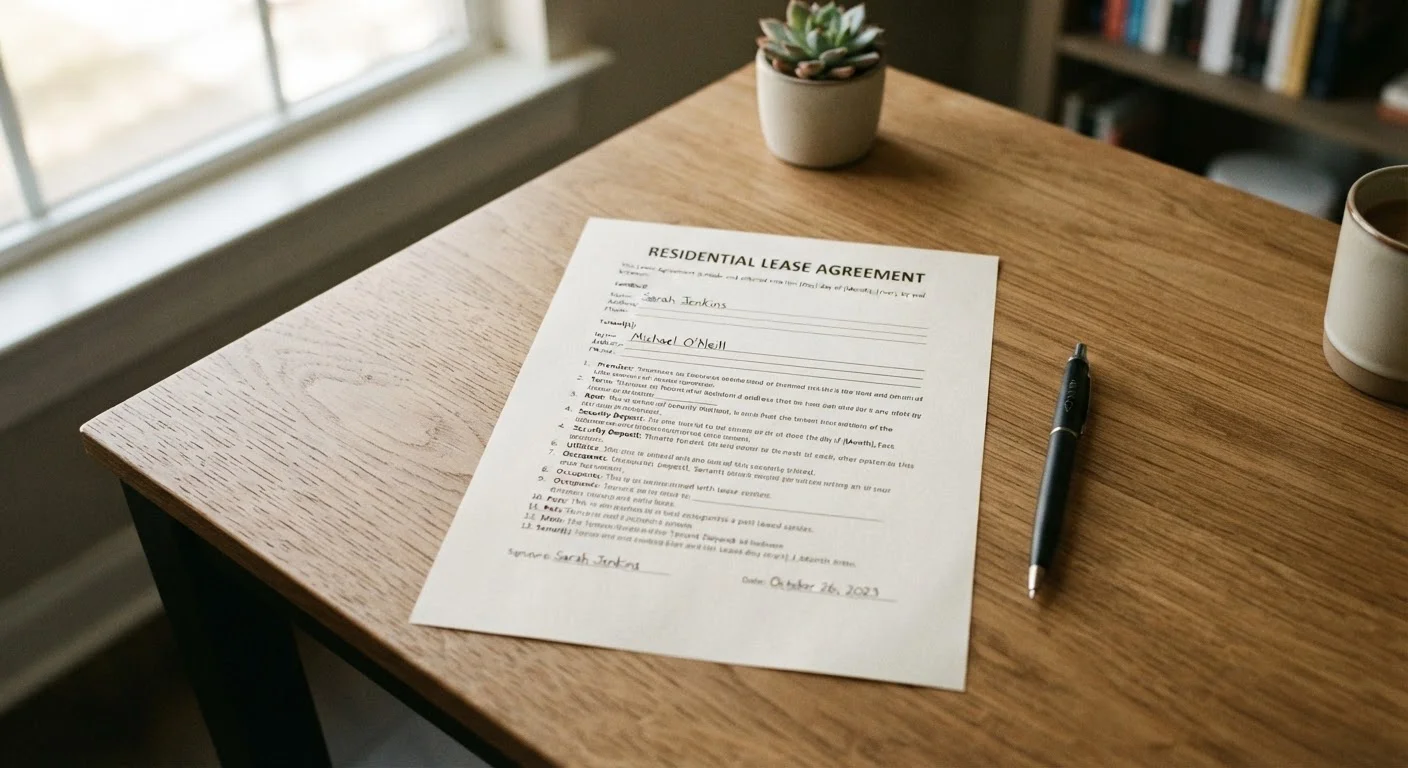
When multiple people rent one unit, the lease structure determines everything about who owes what. There are two common arrangements:
- Joint lease: All roommates sign one lease and share collective legal responsibility. The landlord treats the group as a single tenant entity.
- Individual or separate leases: Each tenant signs a separate agreement with the landlord, typically for a specific bedroom. Each person's financial exposure is limited to their own contract.
Individual leases are more common in purpose-built student housing or some large apartment complexes. In most private rentals, a joint lease is the default — which is why understanding what you're agreeing to before you sign is essential. See our plain-English lease breakdown to understand exactly what each section commits you to.
Lease Type Isn't Always Your Choice
In most private rentals, the landlord decides whether to offer a joint lease or individual leases — tenants rarely negotiate the structure itself. If a landlord only offers a joint lease and you're uncomfortable with the liability, that's worth factoring into your decision to rent there at all. See month-to-month vs. fixed-term leases for more on the agreements landlords typically offer.
Joint and Several Liability: What It Really Means for You
Most shared leases include joint and several liability, which sounds technical but has a very practical consequence: the landlord doesn't care whose idea it was to split rent three ways. If your roommate loses their job and stops paying in February, you and any remaining roommates become responsible for covering the gap — in full.
Landlords won't chase your roommate separately. They'll pursue whoever is easiest to collect from, and that may be you. This also means that if a roommate causes property damage, the repair bill can fall on all tenants collectively.
“Tenants often assume that paying their share of rent protects them. But on a joint lease, the landlord's contract is with all signers collectively — not with each person individually. That distinction matters enormously when something goes wrong.”
— National Housing Law Project, National tenant rights advocacy organization
To protect yourself, document your individual rent contributions. Pay your share via a traceable method — bank transfer, check, or a payment app with a clear paper trail — so you can demonstrate what you personally paid if a dispute arises. This connects directly to your broader credit and debt health, since an eviction or collections account can follow you for years.
Subletting and Adding Roommates: Getting It in Writing
Life changes — a roommate graduates early, takes a job in another city, or simply wants out. When that happens, two options usually come up: subletting or a lease reassignment.
- Subletting (subleasing): The departing roommate finds someone new to take over their portion and remains on the original lease as a guarantor. If the subtenant stops paying, the original tenant is still liable.
- Lease reassignment: The departing roommate is formally removed and the new person is added directly. This requires landlord approval and often a new application process.
Never let a new person move in on a handshake. If they're not on the lease and haven't been approved by the landlord, you may be violating your agreement. Check the subletting clause in your lease — and if it requires written landlord consent, get that consent before anyone moves in. Common rental myths often include the idea that verbal landlord permission is enough. It isn't.
Roommate Agreements: Your Internal Safety Net
A roommate agreement is a private contract between the people sharing the unit — separate from the lease. It won't change what your landlord can demand from you, but it gives you a legal basis to recover money from a roommate who doesn't hold up their end.
A solid roommate agreement should cover:
- Each person's monthly rent contribution and due date
- How the security deposit was split and how it will be divided at move-out
- Rules around guests, quiet hours, and shared spaces
- A process for what happens if someone wants to leave early
Written agreements can generally be enforced in small claims court, which handles disputes up to a few thousand dollars in most states without requiring an attorney. Keep your copy somewhere safe. For more on what you're responsible for day-to-day inside the unit, see what renters are responsible for maintaining.
Draft Your Roommate Agreement Before Move-In
Don't wait until there's a dispute to put things in writing. Draft a simple roommate agreement on the day you move in, when everyone is on good terms. Free templates are available through many state attorney general websites and legal aid organizations. Have everyone sign and keep a copy.
One more layer of protection worth considering: renter's insurance. Policies are typically individual, meaning each roommate should carry their own — your policy generally won't cover a roommate's belongings or liability.
This article provides general information about lease structures and tenant responsibilities and is not legal advice. Lease terms and landlord-tenant laws vary significantly by state and locality. Consult a licensed attorney or your local tenant rights organization for guidance specific to your situation.