
Why Renters Underestimate the Paper Trail
Most renters don't think about documentation until something goes wrong — a landlord disputes damage, a repair request goes ignored for months, or a deposit comes back short with vague explanations. By then, it's often too late to reconstruct what happened.
The fix is simple: treat your rental like a paper trail from day one. That means saving specific documents, communicating in writing, and organizing everything so it's easy to retrieve. The cost is minimal; the protection is substantial. Our guide on why renters lose their deposit explains just how often missing documentation is the root cause.
The Documents You Should Never Throw Away
Certain documents have lasting relevance throughout your tenancy and beyond. Keep every single one of the following:
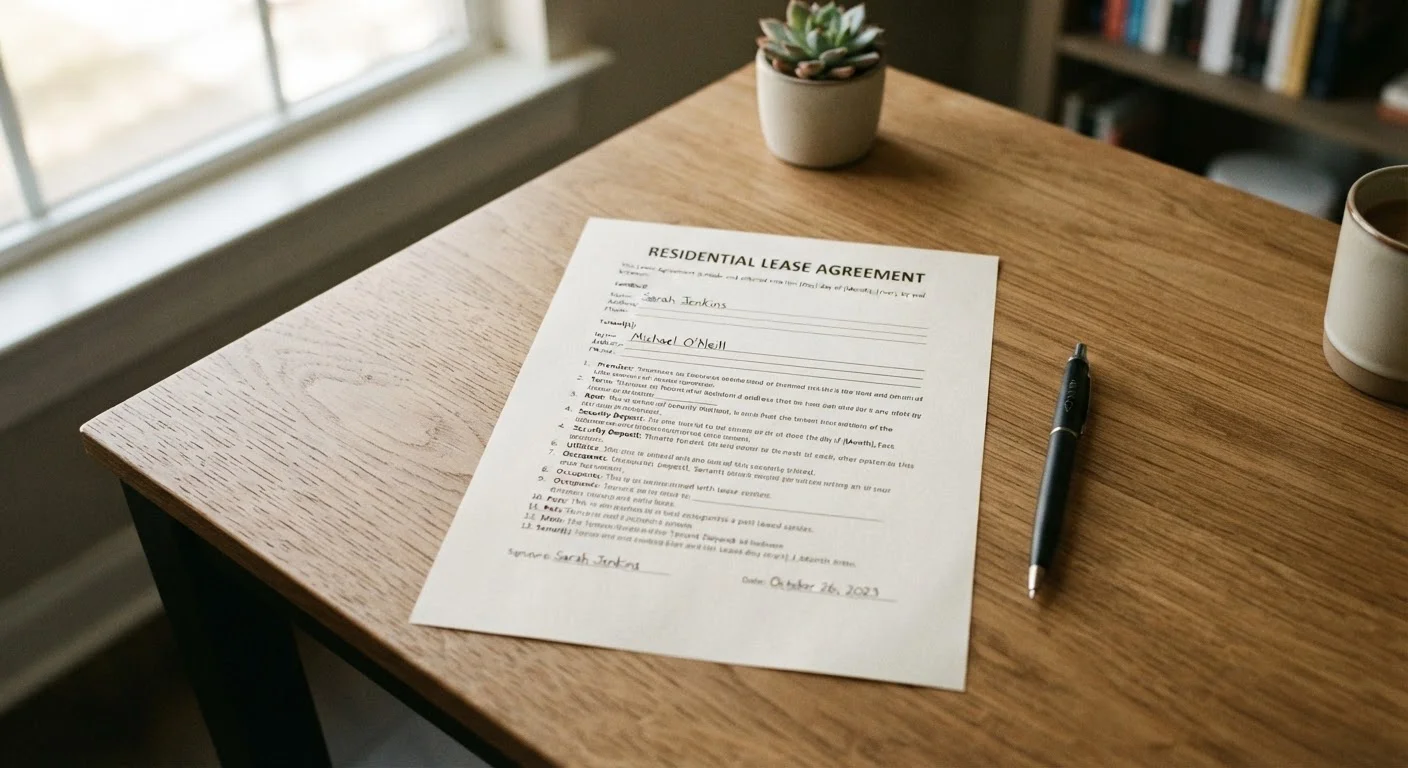
- Signed lease agreement — the legal contract defining your rights and obligations.
- Move-in inspection report — a written record of pre-existing damage, signed by both parties if possible.
- Security deposit receipt — proof of how much you paid and when.
- Rent payment records — bank statements, receipts, or money-order stubs for every month.
- Correspondence with your landlord — emails, texts, and written notices, including any promises made verbally that you then confirmed in writing.
- Repair and maintenance requests — every request you sent and every response you received.
- Move-out inspection report and notice — your formal notice to vacate and any condition report at the end of the tenancy.
For end-of-tenancy specifics, see our checklist on moving out without losing money or your reference.
Photographing and Documenting the Property
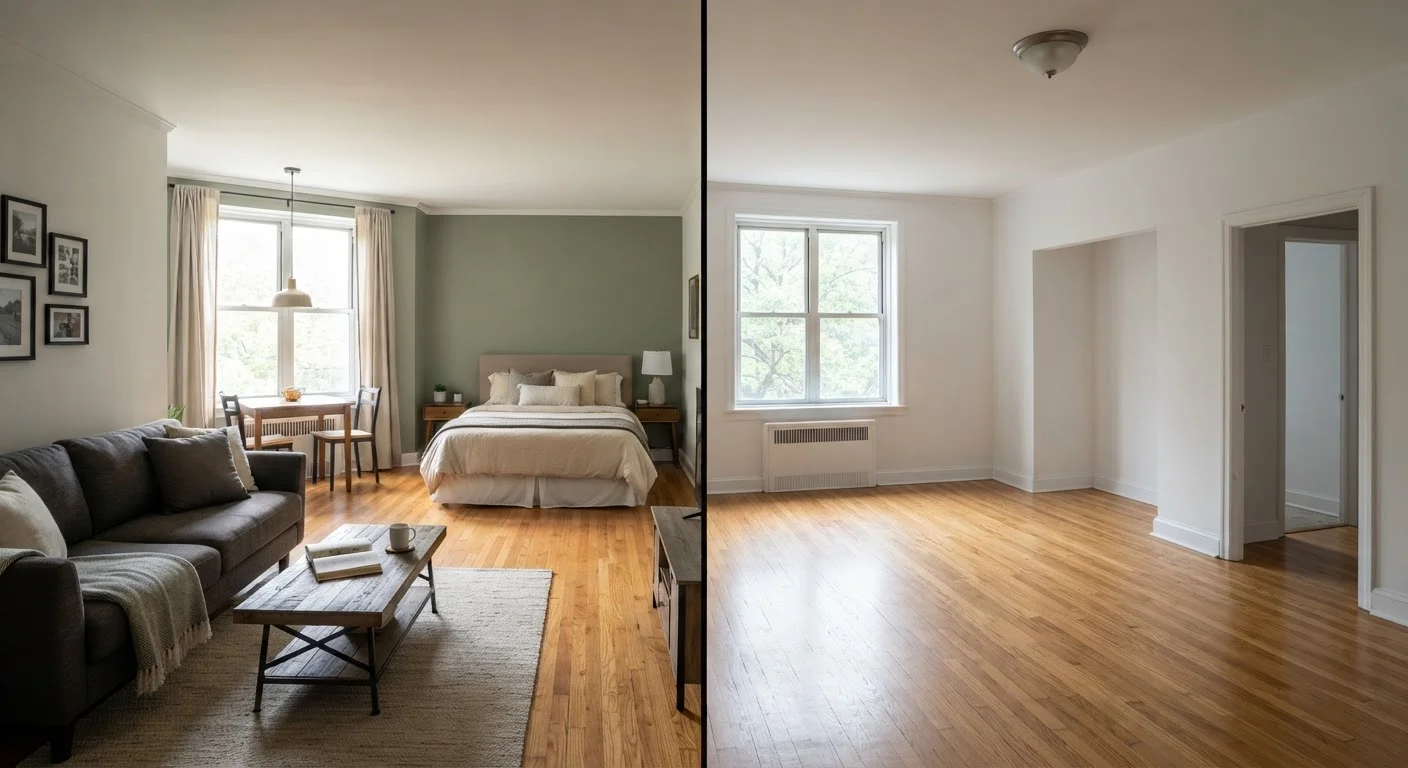
Before you bring in a single box, do a thorough walkthrough of every room. Photograph and video every wall, floor, appliance, fixture, and fitting — with timestamps enabled on your camera app. Open cupboards, photograph inside them. Check the oven, test the taps, flush every toilet.
Upload this media to a cloud storage service (your email provider or a dedicated service) immediately, so it's date-stamped and backed up. If the landlord provides a move-in inspection form, complete it carefully, note every scuff, stain, or broken item, and keep a copy. If they don't provide one, create your own and email it to the landlord on moving day — the sent email itself becomes evidence.
What Counts as a Maintenance Request?
Any issue that affects the habitability or safe use of the property — a broken heater, plumbing leak, pest infestation, or faulty lock — should be reported to your landlord in writing without delay. Minor cosmetic issues are worth logging too, even briefly. Some states have specific legal timelines within which landlords must respond to habitability issues; documenting when you reported the problem places you firmly on the right side of those rules.
This same habit applies to any repair issues that emerge during your tenancy. Photograph the problem before you report it, and again after it's fixed. This protects you if a landlord later claims you caused damage that was actually pre-existing or a maintenance failure.
How to Organize and Store Everything
A document you can't find quickly is almost as useless as one you never saved. Set up a simple, two-layer system:
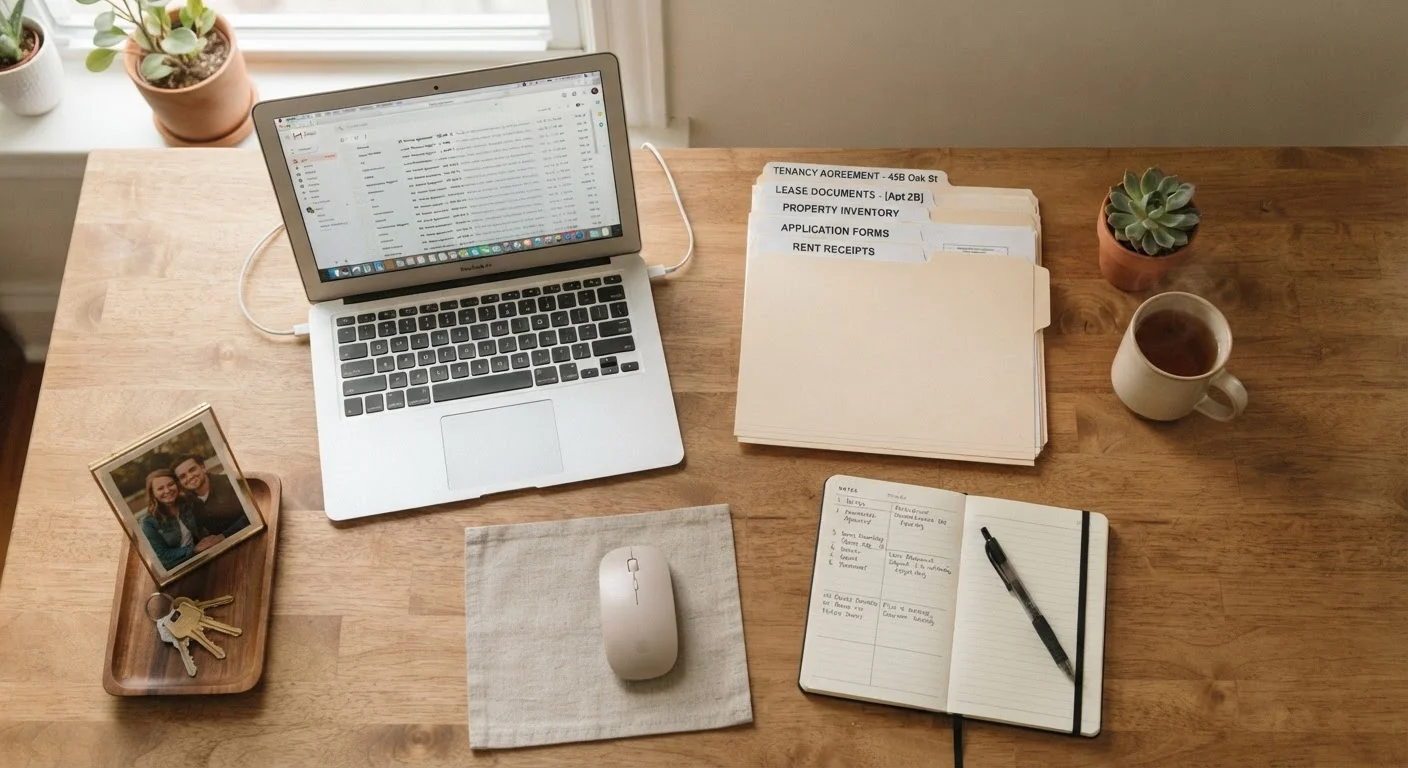
- Physical folder — a labelled accordion folder or binder with sections for your lease, deposit, payments, correspondence, and inspection records. Keep this somewhere accessible, not at the back of a closet.
- Digital backup — scan or photograph every physical document and store it in a dedicated cloud folder. Label files clearly:
Lease_Signed_2024.pdf,MoveIn_Photos_Jan2024.
For maintenance communications, consider using email rather than texts wherever possible — emails are easier to search and export. If your landlord prefers text, follow up any important conversation with a brief email summarizing what was agreed: "Just confirming our conversation — you'll arrange a plumber by Friday." See our guide on what maintenance you're responsible for to understand which issues are yours to flag and which fall to your landlord.
Use Email as Your Default Communication Channel
Even if your landlord prefers texting, email has a clear advantage: messages are easier to search, harder to accidentally delete, and simpler to export or print for evidence. If you do communicate by text, follow any significant exchange with a short email summary to the landlord confirming what was discussed. This creates a searchable paper trail without requiring the other party to change their habits.
Putting It Together Before You Even Sign
The paper trail actually begins before you move in. Before signing, read the lease in full, note anything unclear, and ask questions in writing. Keep the landlord's replies. If you're not sure what to ask, our article on questions worth asking a landlord before you sign is a practical starting point.
Also confirm in writing where and how to pay rent, how maintenance requests should be submitted, and who the point of contact is for emergencies. These answers — captured in email — prevent a lot of ambiguity later. Good documentation doesn't require much effort upfront, but it provides a clear, factual record that takes the guesswork out of any dispute, big or small.
This article provides general information for renters and does not constitute legal or financial advice. Tenancy laws vary by state and locality — consult a local tenant rights organization or qualified professional for guidance specific to your situation.