
Why Seasonal Maintenance Matters for New Owners
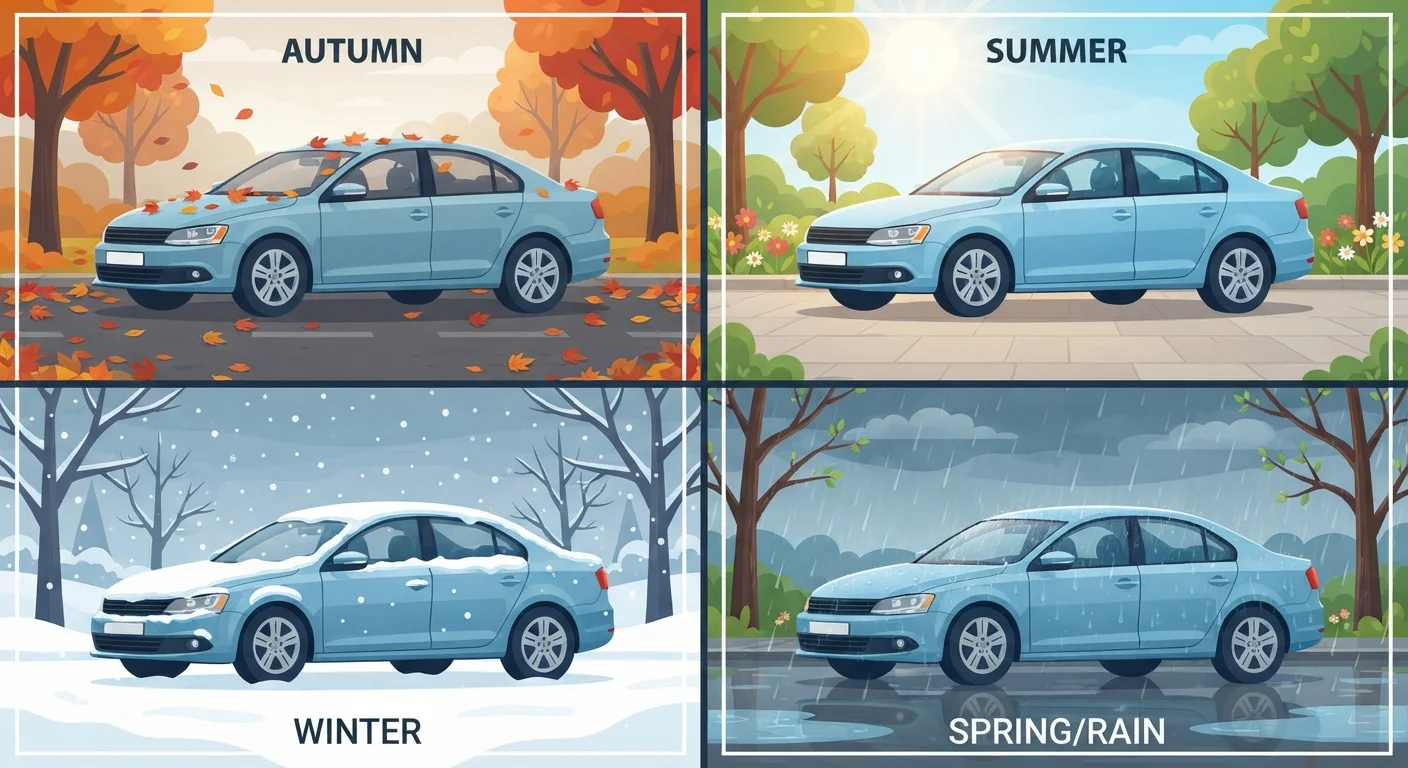
Most car problems don't appear out of nowhere - they develop gradually, often made worse by weather. Extreme heat degrades rubber hoses and overworks your cooling system. Cold snaps drain batteries and thicken fluids. Rain and road salt accelerate rust and compromise visibility. Understanding how each season stresses your car is the first step to staying ahead of breakdowns.
If you're new to ownership, start with the essentials every new owner should know before working through this seasonal checklist. Once you're familiar with what your car needs, use the maintenance schedule in your owner's manual to layer in manufacturer-specific timing.
The checklist below is organized by season. Work through each group when the weather shifts - or about two weeks before it does if you can plan ahead.
Tire pressure gauge
Used to check tire inflation every season - digital or analog gauges are inexpensive and accurate.
Coolant/antifreeze tester
A simple strip or float tester confirms your coolant is rated for the temperatures in your region.
Battery tester or multimeter
Checks your battery's voltage and charge state before cold weather exposes a weak cell.
Flashlight or phone torch
Helps you see clearly under the hood and beneath the car when checking belts, hoses, and undercarriage.
Jumper cables or portable jump-start pack
An essential backup for cold-weather battery failures - a compact jump-start pack works without needing another vehicle.
Ice scraper and snow brush
Required for safe winter driving - clearing snow and ice from all windows before every trip.
The Seasonal Maintenance Checklist
Run through each group at the start of the relevant season. Items marked must are non-negotiable for safety and reliability. Should items are strongly recommended. Nice to have items are optional enhancements worth doing when time allows.
Spring Check (after winter, before warm weather)
Summer Check (before and during hot weather)
Fall Check (before cold weather arrives)
Winter Check (ongoing through cold months)
Don't Skip the Brake Check Before Winter
Worn brake pads in dry conditions become dangerous brake pads on wet or icy roads. If your brakes squeal, grind, or the pedal feels soft, have them inspected by a qualified mechanic before cold weather arrives - this is not a task to defer. Brake system work should always be performed by a professional unless you have confirmed mechanical training.
Not sure what a fluid reservoir looks like or where to find it under the hood? The fluid checks guide walks you through each one with clear instructions. And if your car develops an unusual noise during or after a seasonal check, this guide to car sounds can help you identify what's happening before you visit a mechanic.
Batteries deserve special attention during both summer and winter. Heat is actually harder on batteries than cold - it accelerates internal corrosion - so a battery that barely survived summer may fail on the first cold morning in November. Read more about battery lifespan and warning signs so you know when replacement is overdue.
Overheating Is a Roadside Emergency
If your temperature gauge climbs into the red or a warning light illuminates while driving, pull over safely as soon as possible and turn off the engine. Do not open the radiator cap while the engine is hot - the system is pressurized and can cause serious burns. Call for roadside assistance rather than attempting to diagnose the problem yourself on the side of the road.
To make sure these checks don't fall through the cracks, pair this list with a simple reminder habit. The practical approach to building a maintenance habit shows how to set recurring reminders and keep a basic log without it feeling like a chore.
This article provides general maintenance guidance for informational purposes only. For tasks beyond your comfort level - especially anything involving brakes, suspension, or electrical systems - consult a qualified mechanic. Always follow the safety instructions in your vehicle's owner's manual.