
How Long Does a Car Battery Last?
A typical lead-acid car battery lasts three to five years, though this range varies based on climate, driving habits, and how well the vehicle's charging system is functioning. If you drive short trips frequently - say, under 20 minutes - your battery may never reach a full charge, which gradually reduces its capacity over time.
The AAA recommends having your battery tested annually once it's three years old, regardless of whether you've noticed any symptoms. This is especially worthwhile to build into your routine - see our day-one maintenance guide for a complete first-year checklist.
3-5 years
Typical car battery lifespan
Industry estimates from AAA and the Battery Council International suggest most lead-acid batteries last three to five years under normal conditions.
~50%
Power loss in extreme cold
At 0°F, a car battery can lose up to half its cranking power compared to its performance at 80°F, according to AAA research.
1 in 5
Roadside calls linked to batteries
Battery-related failures are consistently among the top reasons drivers call for roadside assistance, per AAA annual breakdown data.
What Drains a Battery Faster Than Normal
Several factors accelerate battery wear beyond the typical timeline:
- Extreme heat: High temperatures cause battery fluid to evaporate and speed up internal corrosion. The Southwest US is particularly hard on batteries.
- Extreme cold: Cold weather reduces a battery's ability to deliver current. Starting a cold engine also demands significantly more power than a warm one.
- Parasitic drain: Electronics that stay active when the car is off - like a trunk light left on or a faulty module - can slowly drain a battery overnight.
- Infrequent driving: Vehicles that sit unused for days or weeks lose charge gradually. A battery maintainer (sometimes called a trickle charger) can help if the car is stored for extended periods.
Our guide to seasonal car maintenance covers what to check before each season to protect your battery and other components.
Simple Habit to Extend Battery Life
On shorter trips, consider combining errands into a single longer drive a few times per week. This gives the alternator time to fully recharge the battery. Consistently short trips are one of the most underappreciated contributors to premature battery failure.
Warning Signs Your Battery Is Failing
Batteries rarely die without warning. Watch for these signals:
- Slow or labored engine crank: If the engine turns over sluggishly when you start the car, especially on a cold morning, the battery may be struggling to deliver adequate current.
- Dimming headlights or interior lights: Noticeably dimmer lights when the engine is idling can indicate the battery isn't holding a charge well.
- Dashboard battery warning light: This light typically indicates a charging system issue rather than a dead battery, but it warrants prompt inspection either way.
- Swollen or bloated battery case: Visible bulging on the battery casing is a sign of excessive heat damage - do not attempt to jump-start or handle a swollen battery without guidance from a mechanic.
- Corrosion on terminals: A white or blue-grey crusty buildup around the battery terminals can interrupt the electrical connection and is worth cleaning or having a technician address.
If your car hesitates to start on a warm morning - not just a cold one - that's a stronger warning sign than most drivers realize. Cold-weather sluggishness can be normal; warm-weather sluggishness almost never is.
A battery struggling in mild conditions has typically lost significant capacity and is close to complete failure, leaving little time to act before being stranded.
Keep a pair of quality jumper cables in your trunk at all times - ideally with cables at least 20 feet long so you can reach a good Samaritan parked beside you rather than nose-to-nose.
Short cables limit positioning options and can make a safe jump-start impossible if vehicles can't align closely, turning a minor inconvenience into a much longer wait.
Ignoring these signals can lead to cascading electrical problems. The consequences of skipped maintenance article explains how small issues like a weak battery can snowball into expensive repairs.
How to Jump-Start a Car Battery Safely
Jump-starting a flat battery is a skill every driver should know - but the order of the cable connections matters. Follow these steps carefully:
Get the Cable Order Wrong and You Risk Damage
Connecting jumper cables in the wrong sequence can cause sparks near the battery, potentially igniting hydrogen gas that batteries emit. It can also damage sensitive electronics in modern vehicles. Always follow the positive-first, ground-last connection order described below - and double-check before clipping anything.
- Position the vehicles: Park the working vehicle so the batteries are close but the cars are not touching. Turn off both engines.
- Identify the terminals: Each battery has a positive terminal (marked +, usually red) and a negative terminal (marked −, usually black).
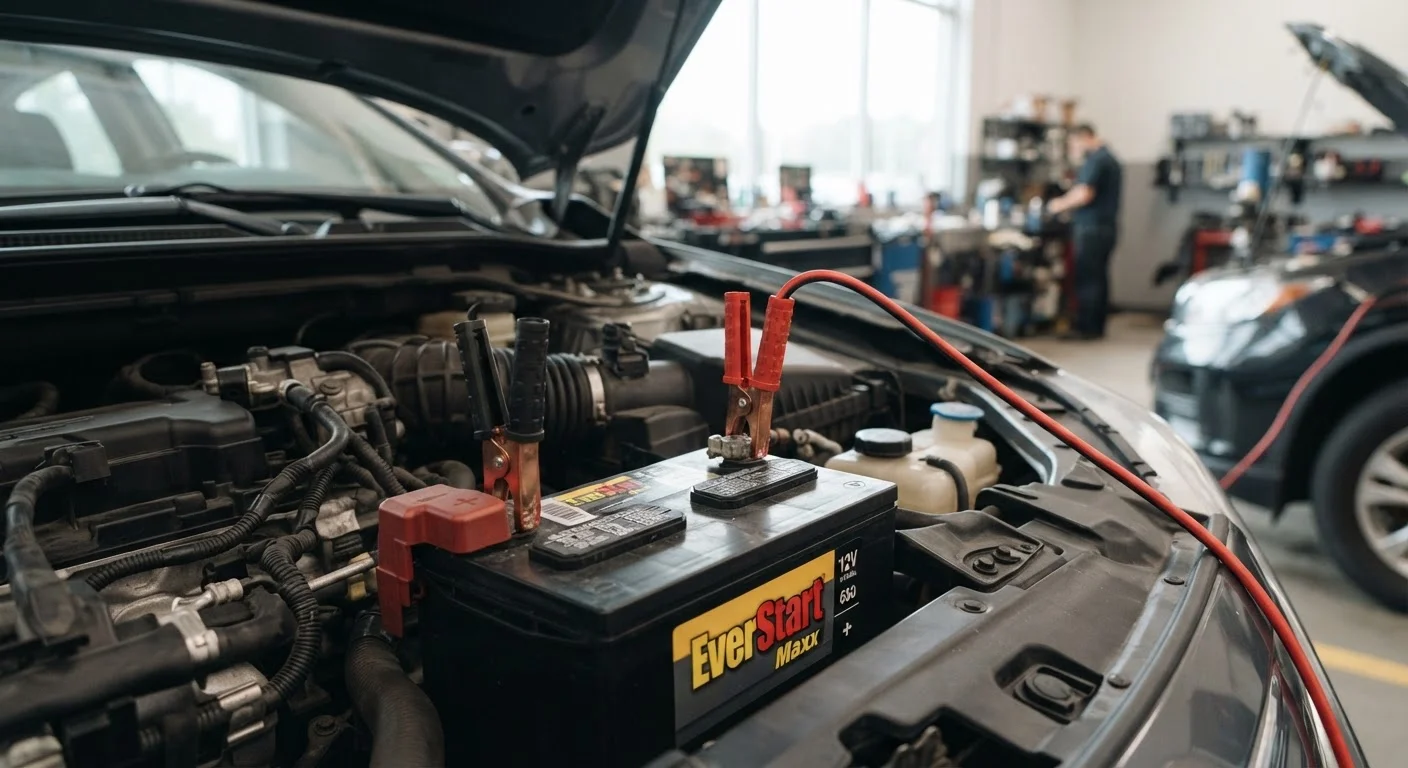
- Connect the RED cable first: Attach one red clamp to the dead battery's positive terminal, then the other red clamp to the good battery's positive terminal.
- Connect the BLACK cable: Attach one black clamp to the good battery's negative terminal. Attach the final black clamp to an unpainted metal surface on the dead car - such as a bolt on the engine block - not to the dead battery's negative terminal. This reduces spark risk near the battery.
- Start the working vehicle and let it run for two to three minutes.
- Start the dead vehicle. If it starts, let both cars run for a few minutes. If it doesn't start within two attempts, stop and call for roadside assistance.
- Disconnect in reverse order: Black clamp from the metal ground, black clamp from the good battery, red clamp from the good battery, red clamp from the previously dead battery.
After a successful jump-start, drive the vehicle for at least 20-30 minutes on a highway or steady-speed road to allow the alternator to recharge the battery. Avoid turning the engine off until you reach your destination.
When to Replace Instead of Jump-Start
A jump-start is a temporary fix, not a cure. If your battery requires a jump-start more than once in a short period, it almost certainly needs to be replaced. Similarly, if a battery test (available at most auto parts stores at no charge) shows that the battery is below its rated capacity, replacement is the practical next step.
Battery replacement is generally considered a manageable DIY task for those comfortable working around vehicle components, though the process differs by vehicle - some modern cars place the battery in the trunk or under a seat. If you're unsure about the location or the replacement process, knowing when to call a mechanic can help you decide when to hand the job to a professional.
Never Attempt to Jump a Swollen Battery
A battery with a visibly swollen or cracked case may contain pressurized gas and should not be jump-started or handled without professional assistance. Take the vehicle to a mechanic or call roadside assistance instead. Attempting to charge or jump a damaged battery can cause leaks or, in rare cases, rupture.
When shopping for a replacement, match the battery's group size, cold-cranking amps (CCA), and reserve capacity to your vehicle's specifications - these are listed in your owner's manual. Proper disposal of the old battery matters too: lead-acid batteries are recyclable and most retailers accept them when you purchase a new one.
This article is for general informational and educational purposes only. Always consult a qualified mechanic if you are uncertain about any procedure involving your vehicle's electrical system.