

Why Maintenance Matters From the Start
Getting a car - whether it's brand new or used - comes with a responsibility most new owners underestimate: keeping it maintained. Cars are mechanical systems, and like any system, they degrade faster without regular attention.
The good news is that the majority of costly breakdowns are preventable. Routine maintenance doesn't require a mechanical background or an expensive toolkit. What it does require is knowing which checks matter, how often to do them, and when to call a professional.
Neglecting the basics rarely saves money. As our article on what happens when basic maintenance gets skipped explains, small oversights tend to compound into expensive failures. Starting strong on day one puts you ahead of the curve.
Start With What You Already Have
Before spending money on tools or accessories, open your glove box and read the maintenance section of your owner's manual. It tells you exactly what your car needs and when - information that's specific to your model, not generic advice. This one step puts you ahead of most new owners.
Your Owner's Manual: The Most Underused Tool You Own
The single most useful resource for any new car owner costs nothing and is already in your glove box: the owner's manual. Most people never open it. That's a significant mistake.
Your manual contains your manufacturer's actual maintenance schedule - the intervals for oil changes, tire rotations, fluid checks, filter replacements, and major service milestones. These recommendations are specific to your engine, climate conditions, and driving patterns. They are not generic.
Our guide to reading the maintenance schedule section of your owner's manual walks through exactly how to find and use this information. If you bought a used vehicle and the manual is missing, most manufacturers make digital versions available on their official websites.
Owner's manual
The official document provided by your vehicle's manufacturer that explains how to operate and maintain your specific car, including its recommended service schedule.
Dipstick
A long metal rod in your engine bay used to measure the current level and condition of your engine oil. It's typically marked with a brightly colored handle for easy identification.
Coolant
A liquid mixture (also called antifreeze) that circulates through your engine to regulate temperature and prevent overheating or freezing in extreme weather.
Tire tread depth
The measurement of the grooves on your tire surface that channel water away and maintain grip. As tread wears down, wet-weather traction decreases significantly.
Cabin air filter
A replaceable filter that cleans the air coming into your car's interior through the ventilation system. It typically needs replacing every 12,000 to 15,000 miles, but check your manual.
Diagnostic code
A code stored by your car's computer when a sensor detects a problem. It can be read with an inexpensive scanner and helps identify why a warning light is on.
The Checks Every New Owner Should Know
A handful of basic checks can be done in your driveway in under ten minutes and catch most problems before they become serious. Here's what to make part of your regular routine:
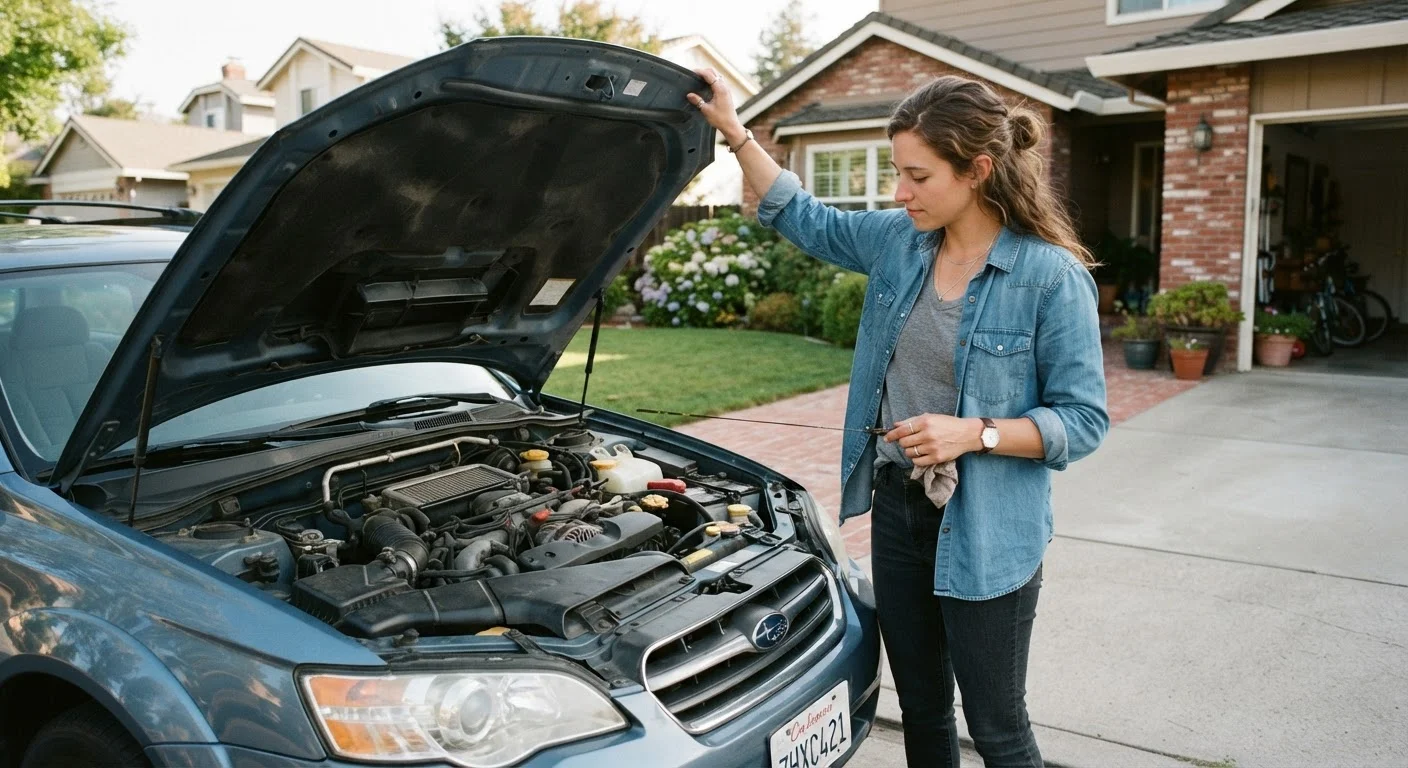
- Engine oil: Pull the dipstick (usually marked with a yellow handle), wipe it clean, reinsert fully, then pull it again. Oil should sit between the two marks and appear amber to light brown - not gritty or black.
- Coolant level: Check the translucent overflow reservoir when the engine is cold. It should sit between the min and max lines. Never open the radiator cap on a warm engine.
- Tire pressure: The correct pressure is on a sticker inside your driver's door jamb. Check all four tires monthly using a gauge, and don't forget the spare.
- Tire tread depth: Insert a quarter into a tread groove with Washington's head pointing down. If you can see the top of his head, the tread is low and the tire needs replacing.
- Brake fluid, power steering fluid, and windshield washer fluid: All are visible in clearly labeled reservoirs under the hood. Most have min/max markings.
- Windshield wipers: If they streak or skip, they need replacing - a simple job most owners can do themselves.
It's also worth familiarizing yourself with your dashboard warning lights before one surprises you. Your owner's manual explains each one.
When to Go to a Mechanic - and When to Learn the Job
Part of being a confident car owner is knowing the difference between jobs you can learn and jobs that need a professional. Attempting the wrong repair without experience can cause injury or make the problem worse.
Generally safe for new owners to learn:
- Checking and topping off fluids
- Replacing windshield wipers
- Swapping a cabin air filter (usually behind the glove box)
- Monitoring tire pressure and inflating tires
- Replacing a battery in many vehicles (consult your manual first)
Leave to a qualified mechanic:
- Brake pad and rotor replacement
- Suspension and steering components
- Timing belt or chain service
- Anything requiring the car to be safely raised on a lift
- Electrical diagnosis and repair
Our article on DIY car maintenance versus taking it to a mechanic goes deeper on how to draw this line confidently. When in doubt, a professional inspection is worth the cost.
Don't Work Under a Car on a Jack Alone
A standard floor jack is for lifting only - never crawl under a vehicle supported only by a hydraulic jack. If a task requires getting underneath the car, it requires proper jack stands or a professional lift. This is one of the most common causes of serious injury during DIY vehicle work.
Building a Simple Maintenance Routine
Consistent upkeep is less about skill and more about habit. The owners who avoid expensive surprises aren't necessarily more knowledgeable - they're more organized.
A practical approach:
- Monthly: Check tire pressure and visually inspect all four tires. Glance at fluid levels under the hood.
- Every oil change: Ask your mechanic to do a quick inspection of belts, hoses, brake pads, and filters. Many shops include this at no extra charge.
- Seasonally: Adjust your checklist for weather - coolant concentration matters more in winter, tire condition matters more in wet seasons. See our seasonal car maintenance guide for specifics.
- By mileage: Use your owner's manual milestones as triggers for bigger services.
Setting a recurring calendar reminder - even just once a month - is one of the simplest things you can do. Our article on building a car maintenance habit that actually sticks covers practical systems for staying consistent without it feeling like a chore.
Also worth reading: common maintenance myths that cost owners money - several widely repeated rules of thumb, like the 3,000-mile oil change, are outdated for most modern vehicles.
Reading Your Owner's Manual: The Maintenance Schedule Explained
A practical walkthrough of how to find and use the maintenance schedule your manufacturer already built for your specific vehicle.
What Goes Wrong When Basic Car Maintenance Gets Skipped
Understand the real-world chain of events that follows missed oil changes, ignored tire wear, and delayed brake checks - and why small skips become big bills.
Seasonal Car Maintenance: Preparing for Each Time of Year
A season-by-season breakdown of what to check before summer heat, winter cold, and wet-weather months affect your vehicle's performance.