
Why the Maintenance Schedule Is the Most Useful Page in Your Manual
Most owner's manuals spend hundreds of pages explaining features you'll rarely use. The maintenance schedule section is different - it's a direct, practical roadmap written by the engineers who designed your specific engine, transmission, and braking system. It tells you precisely what needs attention, and when, to keep your vehicle running as intended.
Ignoring this section is one of the most common - and costly - mistakes new owners make. As our article on what happens when maintenance gets skipped explains, small delays compound into large repair bills. The schedule exists so you never have to guess.
What you will need
Once you understand how to read it, the schedule becomes your single most reliable reference for ownership decisions - more trustworthy than a dealership's upsell suggestion or a general online recommendation that may not apply to your make and model.
How to Read and Use the Schedule
Locate the Maintenance Schedule in Your Manual
Owner's manuals are typically 200-500 pages, so go straight to the index. Look for entries like "Maintenance Schedule," "Scheduled Maintenance," or "Service Intervals." In most manuals this section appears in the final third of the book. Some manufacturers separate it into two sub-sections: Normal and Severe driving conditions.
Understand the Schedule's Structure
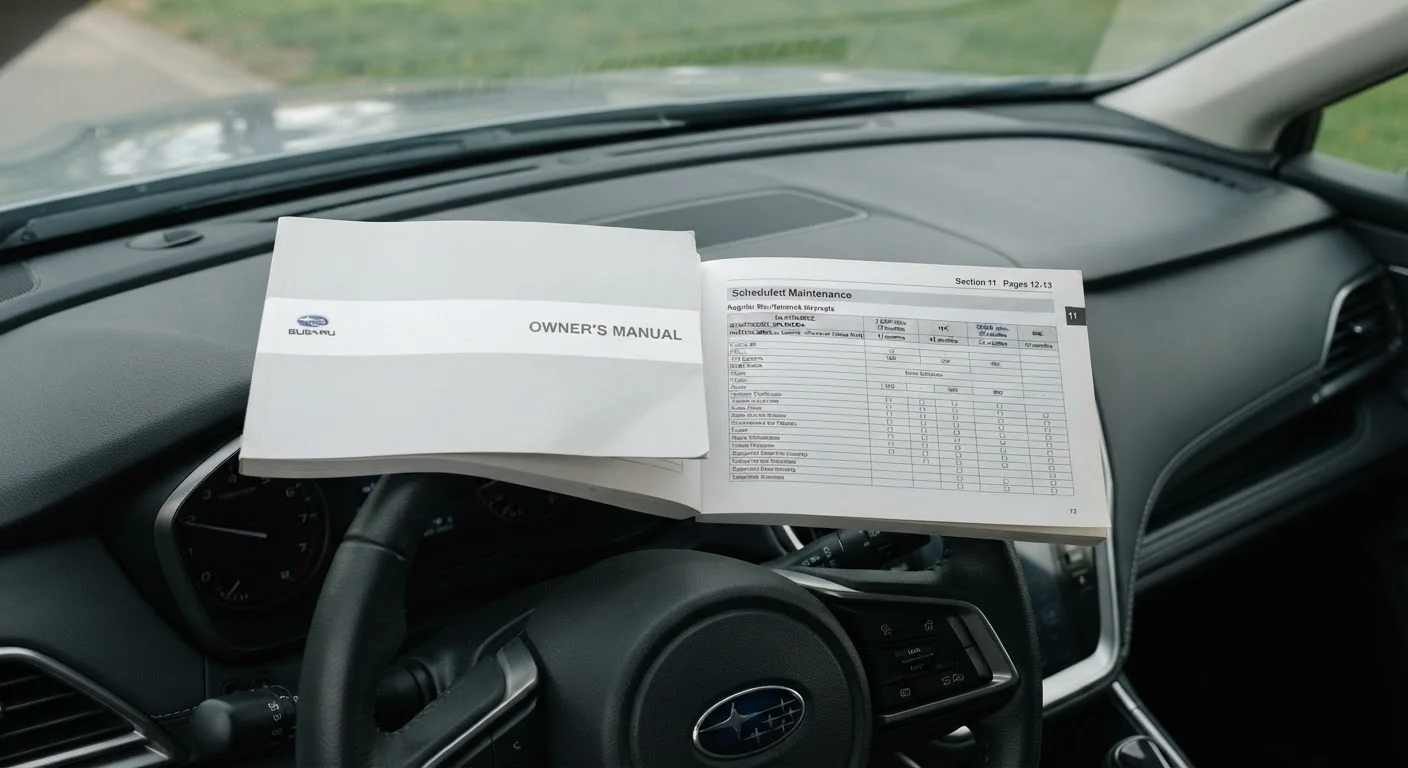
Maintenance schedules are usually formatted as a table. Columns represent mileage milestones (e.g., 5,000 / 10,000 / 15,000 miles), and rows list the specific component or fluid being checked or replaced. Some manuals also include a time-based column (e.g., every 12 months). A checkmark or bullet in a cell means that item is due at that interval.
Common items you'll see listed include engine oil and filter, tire rotation, cabin air filter, engine air filter, brake fluid, spark plugs, and transmission fluid.
Identify Whether You Drive Under 'Normal' or 'Severe' Conditions
Most manuals define severe-use driving separately from normal use. Severe conditions typically include: frequent short trips under 5 miles, stop-and-go city traffic, towing or hauling, driving in extreme heat or cold, or operating on dusty or unpaved roads. If any of these apply to you regularly, use the severe-use schedule - it calls for more frequent service. Many city commuters fall into this category without realizing it.
Check Where You Currently Stand
Note your current odometer reading, then find the nearest upcoming milestone in the schedule. If you have service records, mark off the intervals already completed. If records are unavailable - common with used vehicles - a mechanic can inspect key fluids and components and advise which services are overdue. This is a worthwhile investment when you first take ownership of a used car.
Create a Simple Maintenance Log
Each time a service is completed, write down the date, mileage, what was done, and where. A small notebook kept in the glove compartment works well. This log serves three purposes: it helps you track what's next, it can protect your warranty if a dispute arises, and it adds documented value when you eventually sell the car. Consistent records signal to buyers that the vehicle was well cared for.
Set Forward-Looking Reminders
Once you know when your next service is due, set a calendar reminder for roughly 500 miles or 30 days before that date. This gives you time to schedule an appointment without rushing. If your vehicle has a built-in maintenance reminder system on the dashboard, learn how to reset it after each service - your manual will explain that process too.
Follow Mileage OR Time - Whichever Comes First
Most maintenance schedules list two triggers: a mileage milestone (e.g., every 5,000 miles) and a time interval (e.g., every 6 months). If you don't drive much, you can still hit the time threshold before the mileage one. Always act on whichever limit you reach first - fluids and components degrade with time, not just use.
Dealer 'Recommended' Services Aren't Always Required
Service advisors sometimes suggest add-on services - fuel system cleanings, coolant flushes, cabin treatments - that aren't in your manufacturer's schedule. These may or may not be necessary for your vehicle at that mileage. When in doubt, cross-reference any recommendation against your owner's manual before agreeing to the work.
Can't Find Your Physical Manual?
Most automakers publish owner's manuals as free PDFs on their official websites. Search for your vehicle's year, make, and model followed by 'owner's manual PDF.' Many manufacturers also have dedicated owner portal apps where you can access your manual and even set service reminders.
Understanding engine oil grades and change intervals is a good complement to reading the schedule - your manual specifies the correct oil type and interval together, and knowing why those choices matter helps you make confident decisions at the service counter.
Once you've worked through these steps, consider building a broader maintenance routine around your schedule. The habits covered in our guide to building a car maintenance habit show how to make staying current feel automatic rather than stressful.