

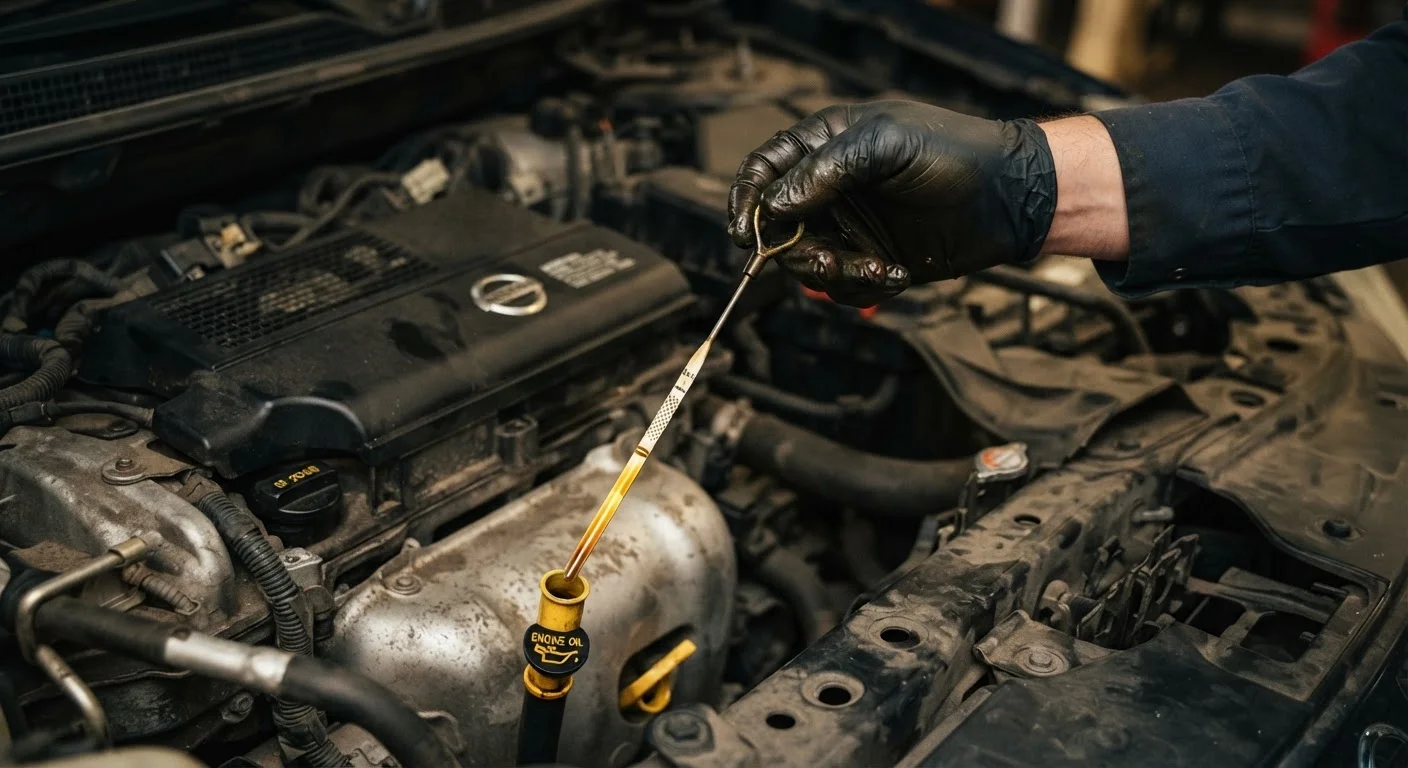
What Engine Oil Actually Does
Think of your engine as thousands of metal parts moving against each other at high speed, many times per second. Engine oil is what keeps them from tearing each other apart. It coats surfaces with a thin lubricating film that reduces friction and heat, while also carrying microscopic debris and combustion byproducts away from sensitive components toward the oil filter.
Oil also acts as a mild coolant, absorbing heat from parts that coolant can't reach directly, and contains chemical additives that neutralize acids formed during combustion. Over time, those additives deplete and the oil itself degrades - which is why regular changes matter, not just topping up the level.
For a broader look at the fluids that keep your car running, see our guide to fluid checks every driver should know.
5,000-10,000 mi
Typical modern oil change interval
Most vehicle manufacturers now recommend this range depending on oil type and driving conditions, per their owner's manual specifications.
~40%
Engine wear occurring at startup
Industry estimates suggest a significant share of engine wear happens in the first moments after starting, when oil hasn't yet fully circulated - underscoring why the right viscosity grade matters.
How to Read an Oil Grade
Oil grades look intimidating at first - 5W-30, 0W-20, 10W-40 - but the logic is straightforward. The number before the W (which stands for winter) describes how the oil flows in cold temperatures. A lower number means it flows more easily when cold, which matters most at startup when parts need immediate lubrication. The number after the W describes viscosity at normal operating temperature - higher means thicker.
Your owner's manual will specify the correct grade for your engine. Using too thick an oil in a cold climate can slow startup lubrication; using too thin an oil in a hot engine can reduce the protective film. Neither extreme is good for longevity.
Always Check Your Owner's Manual First
The grade printed on an oil bottle is not a universal recommendation - it's a match only if your manufacturer approves it for your engine. Your owner's manual lists the exact grade (or grades) that are safe and effective for your vehicle. This is especially important if you drive in temperature extremes, since some engines require a different grade for very cold or very hot climates.
For a deeper look at how oil types differ, our synthetic vs. conventional oil explainer covers what sets them apart and when each makes sense.
How Often Should You Actually Change Your Oil?
The old "every 3,000 miles" rule was based on older engine designs and conventional oil formulations - it no longer applies to most vehicles on the road today. Most modern cars using conventional oil are rated for changes every 5,000 to 7,500 miles. Many using full synthetic oil can go 10,000 miles or more between changes, according to manufacturer specifications.
The most reliable guide is your owner's manual maintenance schedule and, if your car has one, the built-in oil life monitor. These systems use real driving data - trip length, temperature, load, and engine cycles - to estimate when oil has actually degraded, rather than just counting miles. See our guide to reading your maintenance schedule for help interpreting those intervals.
Drivers with "severe" conditions - lots of short trips, extreme heat or cold, towing, or stop-and-go traffic - should typically change oil more often than the standard interval. Check your manual's severe-duty schedule if any of those apply to you.
Oil Life Monitors Are Not Odometers
If your car has an oil life monitor - shown as a percentage on your dashboard - it's measuring real-world conditions, not just distance. A reading of 15% doesn't mean you've driven 85% of your interval in miles; it means the system estimates the oil has 15% of its useful life remaining based on how you've actually been driving. Reset it after every oil change so the data stays accurate.
Checking Your Oil Between Changes
You don't need to wait for a service appointment to know whether your oil level is healthy. Most cars have a dipstick - usually a brightly colored handle near the engine - that lets you check oil level in under two minutes. Park on a flat surface, wait for the engine to cool slightly, pull the dipstick, wipe it clean, reinsert it fully, then pull it out again and read where the oil sits between the min and max marks.
Color matters too: fresh oil is amber or light brown. Very dark, opaque oil that's been in service a while is normal. Milky or frothy oil could indicate a coolant leak - a serious issue that warrants a mechanic's attention. Gritty oil suggests contamination.
Making this a monthly habit - especially on older vehicles - is one of the simplest ways to catch a problem before it escalates. Our article on what happens when maintenance gets skipped explains exactly what's at stake when small signals go ignored.