

Why These Checks Matter
Most fluid-related car problems don't happen overnight - they build gradually, and catching them early is what separates a minor top-up from an expensive repair. Running low on coolant can lead to an overheated engine. Neglected brake fluid absorbs moisture over time, which degrades braking performance. Even an empty washer reservoir becomes a safety issue when road grime blocks your visibility at highway speed.
The good news: none of these checks require mechanical expertise. If you can open a bottle and read a ruler, you can do every check on this list. Understanding where the line is between DIY and professional work is worth thinking about too - see DIY vs. taking it to a mechanic for a practical breakdown.
What you will need
Before you start, gather your tools and supplies:
Owner's Manual
Identifies exact fluid types, reservoir locations, and acceptable fill ranges for your specific vehicle.
Clean Rag or Paper Towels
Used to wipe dipsticks clean before taking an accurate fluid reading.
Funnel
Helps pour fluid accurately into narrow reservoir openings without spilling.
Flashlight or Phone Torch
Illuminates the engine bay to locate reservoirs and read MIN/MAX lines in low light.
How to Check Each Fluid
Work through each fluid in order. The steps below cover the five most important reservoirs found on the majority of passenger vehicles sold in the US. If your car's layout looks different, your owner's manual will have a labelled diagram of the engine bay.
Park, cool down, and open the hood
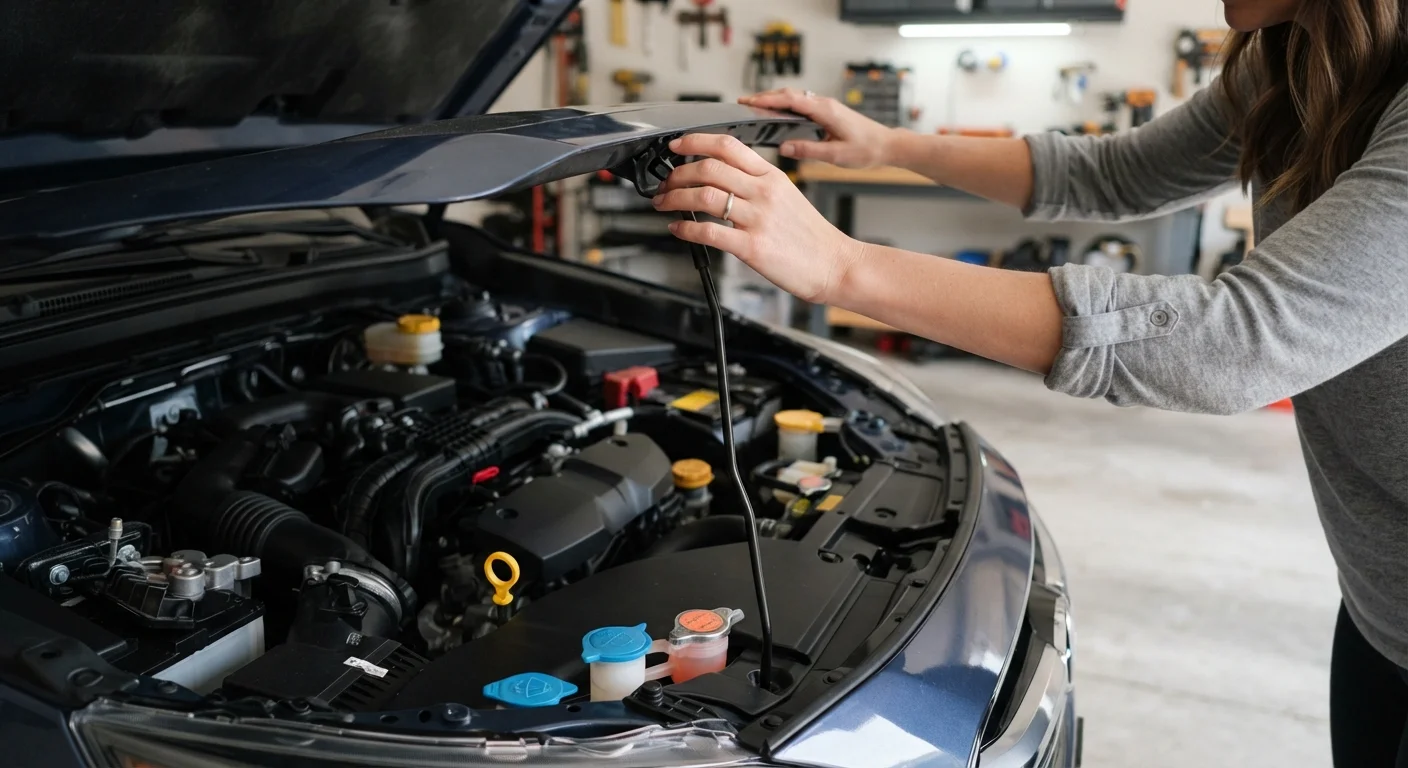
Park on a level surface and turn the engine off. Wait at least 30 minutes - ideally longer - before opening the hood. Hot engines can give inaccurate fluid readings and some reservoirs are pressurised. Once cool, locate the hood release lever (usually inside the driver's footwell), pull it, then release the secondary latch under the front edge of the hood and prop it open.
Check the engine oil
Find the oil dipstick - it usually has a brightly coloured ring handle and is labelled with an oil can symbol. Pull it out, wipe it clean with a rag, reinsert it fully, then pull it out again. The oil level should sit between the MIN and MAX marks on the dipstick. Also note the colour: healthy oil is amber to dark brown. Black, gritty, or milky oil warrants a visit to a mechanic. For a deeper look at oil grades and change intervals, see Engine Oil Explained.
Check the coolant (antifreeze) level
Locate the coolant reservoir - a translucent plastic tank, often with a coloured cap marked with a thermometer or wave symbol. You can read the level from the outside without opening it; look for the MIN and MAX lines on the side. If the level is low, use the fluid type specified on the cap or in your manual - mixing coolant types can damage the cooling system.
Check the brake fluid
The brake fluid reservoir is a small translucent plastic container near the back of the engine bay on the driver's side, usually marked with a warning symbol. Like coolant, you can often read the level through the casing - it should sit between MIN and MAX. The fluid should be pale yellow to light brown; dark or cloudy fluid may need flushing by a mechanic. To understand how brake fluid fits into your overall braking system, see how your braking system works.
Check the power steering fluid
Not all modern cars have a power steering fluid reservoir - electric power steering systems don't use one. If your car does have one, it's a small reservoir often near the front of the engine, marked with a steering wheel icon. Check the level against the MIN/MAX markings. Low power steering fluid can make steering feel heavy and may indicate a leak worth having inspected.
Check and top up the windshield washer fluid
This is the easiest check of all. Find the washer fluid reservoir - typically the largest translucent tank, marked with a spray nozzle symbol - and look at the level. Unlike other fluids, washer fluid is safe to top up freely and won't harm your car if it's a different brand, as long as it's a purpose-made washer solution. Plain water is not recommended, as it can freeze in winter and doesn't clean as effectively. Staying on top of seasonal checks like this is part of a broader maintenance routine - seasonal car maintenance covers what else changes throughout the year.
Brake Fluid Warnings Require Mechanic Attention
If your brake fluid reservoir is consistently low after topping it up, do not treat this as a routine maintenance issue. A persistent drop usually signals a leak or worn brake pads - both are safety-critical. Have a qualified mechanic inspect your braking system before driving further. General information here is no substitute for professional diagnosis.
Keep a Small Top-Up Kit in Your Trunk
A quart of the correct coolant, a bottle of brake fluid (matched to your car's spec), and a jug of washer fluid take up little space and can save you from a breakdown or visibility problem on the road. Check your owner's manual for the right product types before buying.
Once you've made fluid checks part of your regular habit, you'll find it easier to spot when something looks off - which is exactly the point. For a broader framework on staying consistent, building a car maintenance habit walks through practical approaches that actually hold up over time. Pairing fluid checks with your tyre pressure checks makes for a complete 20-minute walkaround you can do monthly.
Never Open the Coolant Cap on a Hot Engine
Coolant is under pressure when the engine is warm. Opening the reservoir or radiator cap while the engine is hot can cause scalding fluid to spray out forcefully. Always wait at least 30 minutes after driving before touching anything in the cooling system.