

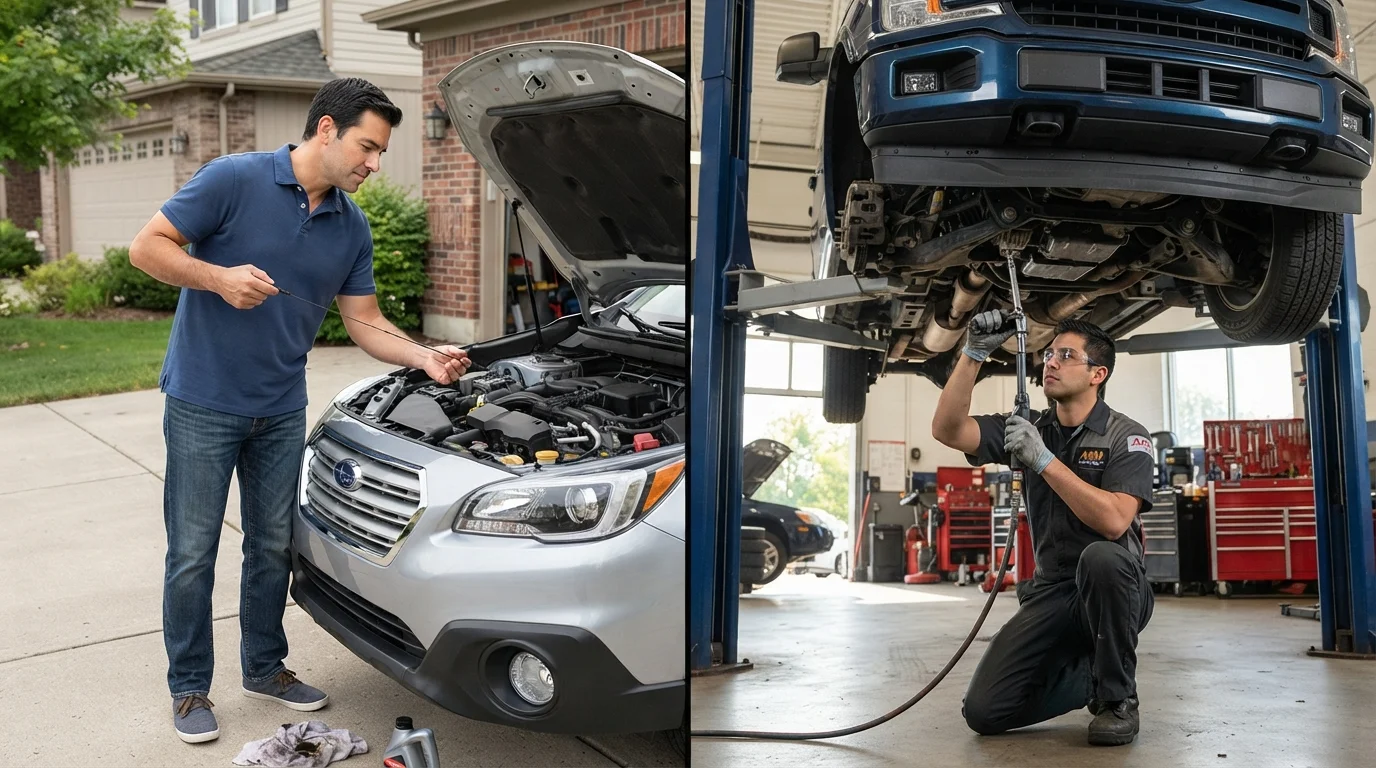
Why the DIY vs. Mechanic Question Matters
As a new car owner, you're probably looking for ways to stay on top of costs without cutting corners on safety. The good news: plenty of routine maintenance tasks are genuinely beginner-friendly. The challenge is recognizing which ones stop being safe the moment you lack the right tools or knowledge.
Getting this wrong in either direction costs you. Outsourcing every oil top-up is unnecessarily expensive. Attempting a brake job without training is genuinely dangerous. Our goal here is to help you draw that line with confidence.
For a broader introduction to what regular upkeep actually involves, see our guide to car maintenance from day one.
What You Can Safely Handle at Home
These tasks are low-risk, require minimal tools, and are well-documented in most owner's manuals. Doing them yourself builds mechanical familiarity and keeps routine costs manageable.
- Checking and topping up fluids: Engine oil, coolant, brake fluid, and windshield washer fluid all have clearly marked reservoirs. Checking levels takes two minutes and costs nothing.
- Replacing engine air filters: Typically involves opening a plastic housing secured by clips - no tools needed in most vehicles.
- Swapping wiper blades: Most wiper arms have a simple release tab. New blades usually include instructions for multiple attachment styles.
- Changing a cabin air filter: Usually located behind the glove box. Your owner's manual will show the exact location and steps.
- Checking tire pressure: A basic tire pressure gauge costs a few dollars. Correct pressure affects fuel economy, handling, and tire wear - all worth monitoring monthly.
- Replacing a dead battery: Manageable at home with some caution. Our car battery basics guide covers safe procedures in detail.
Your Owner's Manual Is Your Best Tool
Before attempting any DIY task, check your owner's manual for model-specific fluid types, filter part numbers, and torque specs. Generic online tutorials may not account for your vehicle's exact setup. Spending five minutes with the manual can prevent an expensive mistake.
Always consult your vehicle's owner's manual before attempting any maintenance. Specifications vary by make and model, and the manual is the authoritative source for your specific car.
When You Should Call a Professional
Some jobs look approachable until something goes wrong - and in cars, that "something" can affect your ability to stop, steer, or survive a collision. The following categories warrant a qualified mechanic.
- Brake system work: Worn pads, leaking calipers, or warped rotors require proper torque specifications, bleeding procedures, and safety knowledge. A brake failure is not recoverable at speed.
- Suspension and steering components: Incorrect reassembly affects vehicle handling in ways that may not be immediately obvious but become catastrophic under stress.
- Timing belt or chain replacement: An engine can be destroyed if this is done incorrectly. The tolerance for error is essentially zero.
- Electrical diagnosis and repairs: Modern vehicles have complex computer systems. Diagnosing faults without an OBD-II scanner and manufacturer data leads to expensive guesswork.
- Airbag or safety restraint systems: These systems can deploy unexpectedly during disassembly, causing serious injury. They must be handled by trained technicians.
- Transmission service: Involves specialized fluid, precise procedures, and often requires a lift - not a driveway job.
Don't Let Deferred Repairs Compound
Postponing a professional repair doesn't make the problem smaller - it usually makes it more expensive. A worn brake pad that costs relatively little to replace can damage the rotor if ignored, multiplying the repair cost significantly. If a warning light appears or something feels or sounds wrong, get it assessed promptly.
Skipping or improperly completing safety-critical repairs doesn't just risk your vehicle - it can create serious liability if an accident results. Our article on what goes wrong when maintenance is skipped explains how deferred repairs escalate.
Side-by-Side: DIY vs. Professional for Common Tasks
The table below gives a quick overview of how DIY and professional service compare across tasks that new owners commonly face.
| Task | DIY-Friendly | Professional Recommended | |
|---|---|---|---|
| Oil check / top-up | Yes - simple and low-risk | Not necessary for basic checks | |
| Oil and filter change | Possible with right tools | Preferred if no lift or drain access | |
| Air filter replacement | Yes - typically tool-free | Rarely needed | |
| Brake pad replacement | Not recommended for beginners | Yes - safety-critical | |
| Tire pressure check | Yes - quick and inexpensive | Not required | |
| Timing belt replacement | No - high risk of engine damage | Yes - specialized skill needed | |
| Battery replacement | Yes - with proper precautions | Option if uncomfortable | |
| Electrical fault diagnosis | Limited without scan tools | Yes - requires diagnostic equipment |
Building Good Habits Around Both Approaches
The most reliable car owners aren't the ones who do everything themselves - they're the ones who know their car, track its needs, and make smart calls about when to act and when to call in help. A consistent maintenance routine is more valuable than mechanical skill alone.
Start by reading your owner's manual cover-to-cover. It tells you exactly what your car needs and when, so you're not guessing based on generic advice. Use a simple calendar or app to track service intervals.
If you want help building that routine, our article on building a car maintenance habit that actually sticks is a practical starting point.
This article is for general informational purposes only and does not constitute professional mechanical advice. Always consult a qualified mechanic for safety-critical repairs and refer to your vehicle's owner's manual for model-specific guidance.