
Why Car Noises Deserve Your Attention
Modern cars are engineered to run quietly. When a new sound appears - a squeal, a clunk, a hiss - it almost always means something mechanical has changed. Ignoring it rarely makes it better, and sometimes turns a minor fix into an expensive repair. The good news: many car sounds map to specific causes, and knowing the difference can help you describe the problem clearly to a mechanic (and avoid being caught off guard by the bill).
This guide is a reference, not a substitute for a professional inspection. If a sound is sudden, severe, or accompanied by a warning light on your dashboard, treat it as urgent and have the vehicle checked without delay.
| Brake squeal cause | Worn brake pad wear indicator (metal tab) (Standard automotive design across most passenger vehicles) |
| Clunk over bumps | Likely suspension: shocks, ball joints, or sway bar links |
| Engine knock urgency | High - stop driving and seek inspection promptly |
| Wheel bearing rumble | Changes pitch when steering left or right at speed |
| Heat shield rattle | Often present at idle; typically a low-cost repair |
| Hissing after engine off | May indicate coolant leak onto hot engine components |
Common Car Sounds and Their Likely Causes
Squealing or Screeching When Braking
A high-pitched squeal when you press the brake pedal is usually a built-in wear indicator - a small metal tab deliberately designed to squeal when brake pads get thin. This is the system working as intended: alerting you before the pad wears completely through. If the squeal progresses to a grinding or metal-on-metal scrape, the pad material may already be gone. Grinding brakes need immediate attention because the rotor can be damaged quickly. For a full picture of how brakes work, see our article on how your braking system actually works.
Clunking or Thudding Over Bumps
A dull clunk felt through the steering wheel or floor when you hit a pothole typically points to suspension components - worn shock absorbers, ball joints, sway bar links, or bushings. These parts cushion the car's movement; when they wear out, metal pieces that should have a rubber buffer between them make contact instead.
Knocking From the Engine
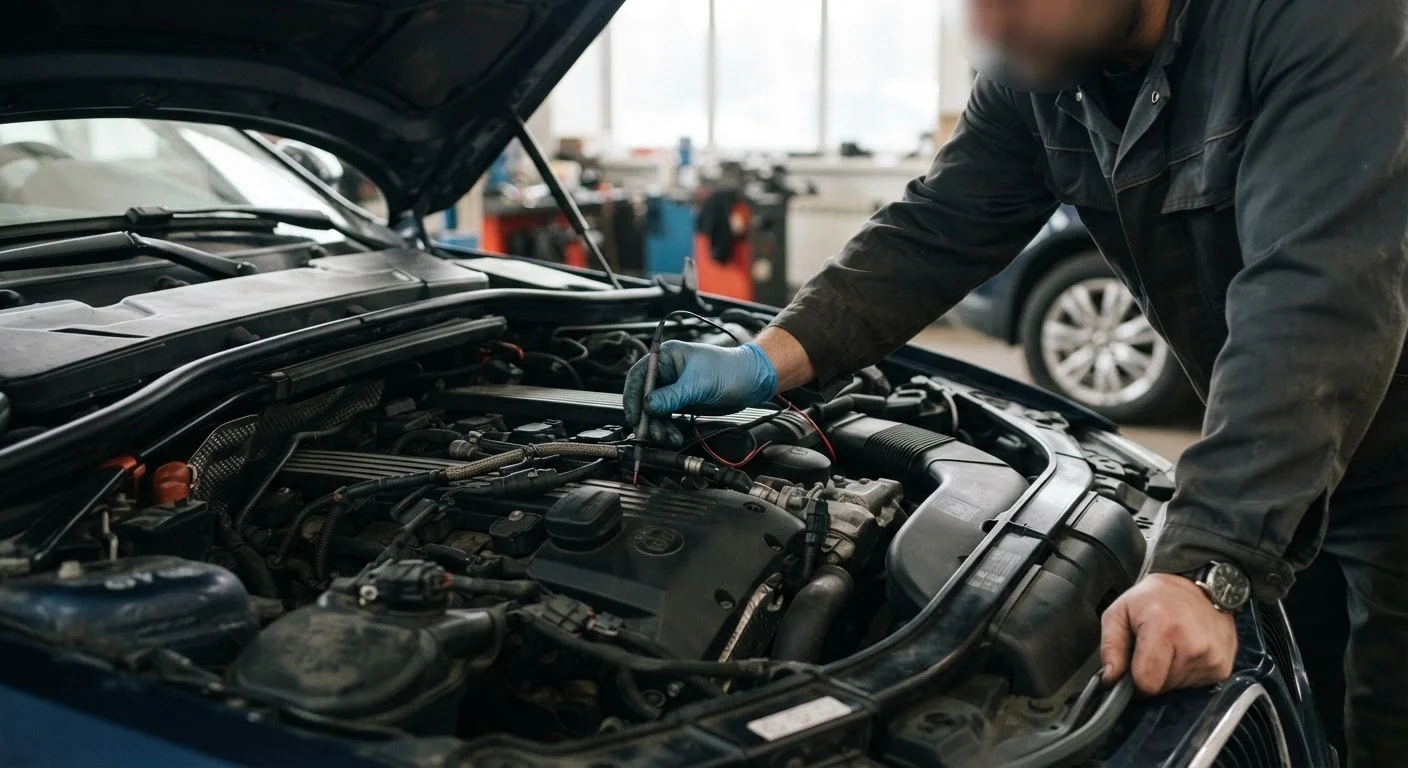
A repetitive knock from the engine bay - especially under acceleration - can indicate issues ranging from low oil pressure to worn connecting rod bearings. Engine knocking should be assessed by a mechanic promptly; running an engine with low oil or damaged bearings can cause serious internal damage.
Hissing or Whistling Under the Hood
A hiss after you turn the engine off often signals a coolant or vacuum leak. Coolant hissing against a hot surface has a distinct steamy quality; a vacuum leak tends to produce a steadier whistle while the engine runs. Both affect engine performance and should be investigated.
Rumbling or Humming From the Wheels
A low drone that changes pitch with vehicle speed - but not with engine speed - is a classic sign of a worn wheel bearing. The rumble often shifts in intensity when you gently steer left or right at highway speed. Wheel bearings are safety-critical; a failed bearing can affect steering control.
Rattling at Idle
A rattle that disappears once the engine warms up can point to a heat shield that has come loose around the exhaust system. A rattle that persists may suggest loose exhaust hardware, a failing catalytic converter, or debris that has worked its way into an underbody component.
Wear indicator
A small metal tab built into a brake pad that contacts the rotor and squeals when the pad material wears thin. It is designed to warn you before damage occurs.
Wheel bearing
A set of steel balls or rollers housed in a ring that allows the wheel to spin smoothly on the axle. Worn bearings produce a humming or rumbling noise and can affect vehicle control.
Sway bar link
A short rod connecting the sway bar (anti-roll bar) to the suspension. When the link or its bushings wear out, it often produces a clunking sound over bumps.
Vacuum leak
A break in the sealed system of rubber hoses and lines that manage engine air pressure. A leak causes a hissing or whistling noise and can affect fuel efficiency and engine performance.
Heat shield
A metal panel fitted around exhaust components to protect nearby parts from heat. Over time the mounting hardware can loosen, causing a rattle at idle or low speeds.
How to Report a Sound to a Mechanic
Mechanics rely on your description to narrow down where to look, so being specific helps. Before your appointment, try to note: when the sound happens (braking, accelerating, turning, always), where it seems to come from (front, rear, driver's side), what it sounds like (squeal, knock, hiss, rattle), and whether anything else changed (vibration, pull to one side, dashboard lights). If it's safe to do so, a short voice memo recorded while driving can be genuinely useful.
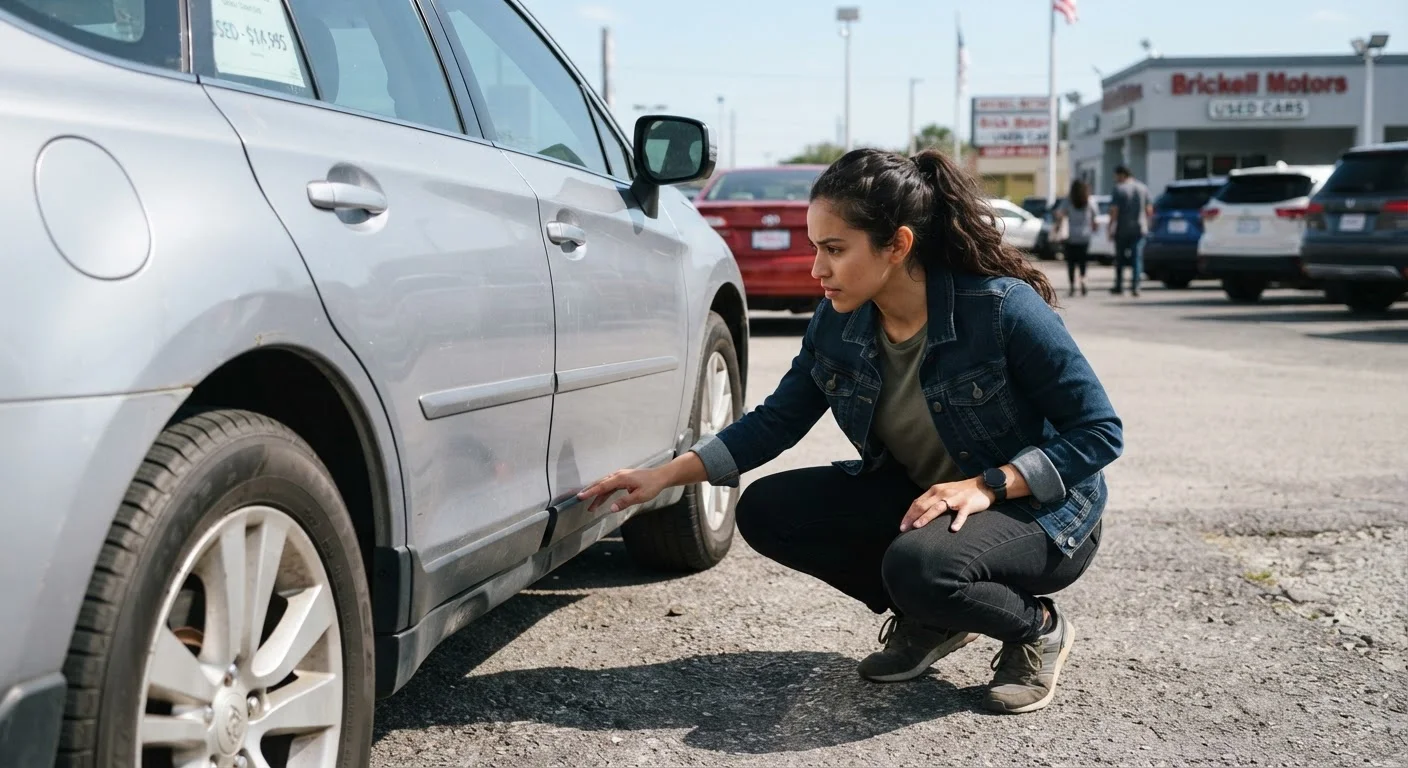
If you're evaluating a used vehicle and want to screen for sounds before committing, our checklist on what to look for before a test drive covers the key things to listen and look for.
When a Sound Means Stop Driving Now
Some sounds warrant pulling over rather than driving to a shop: a grinding brake that pulls the car to one side, a sudden loud bang followed by handling changes, or a hissing accompanied by steam from under the hood. In these cases, continuing to drive can worsen damage or create a safety hazard. Call for roadside assistance or a tow if you are unsure.
This article is for general informational purposes only and is not a substitute for professional mechanical advice. Always consult a qualified mechanic for diagnosis and repair.