
The Three Parts Working Together
Every time you press the brake pedal, three components work in sequence to bring your car to a stop: brake fluid, brake pads, and rotors. Each one plays a distinct role, and when any one of them degrades, the whole system's effectiveness drops.
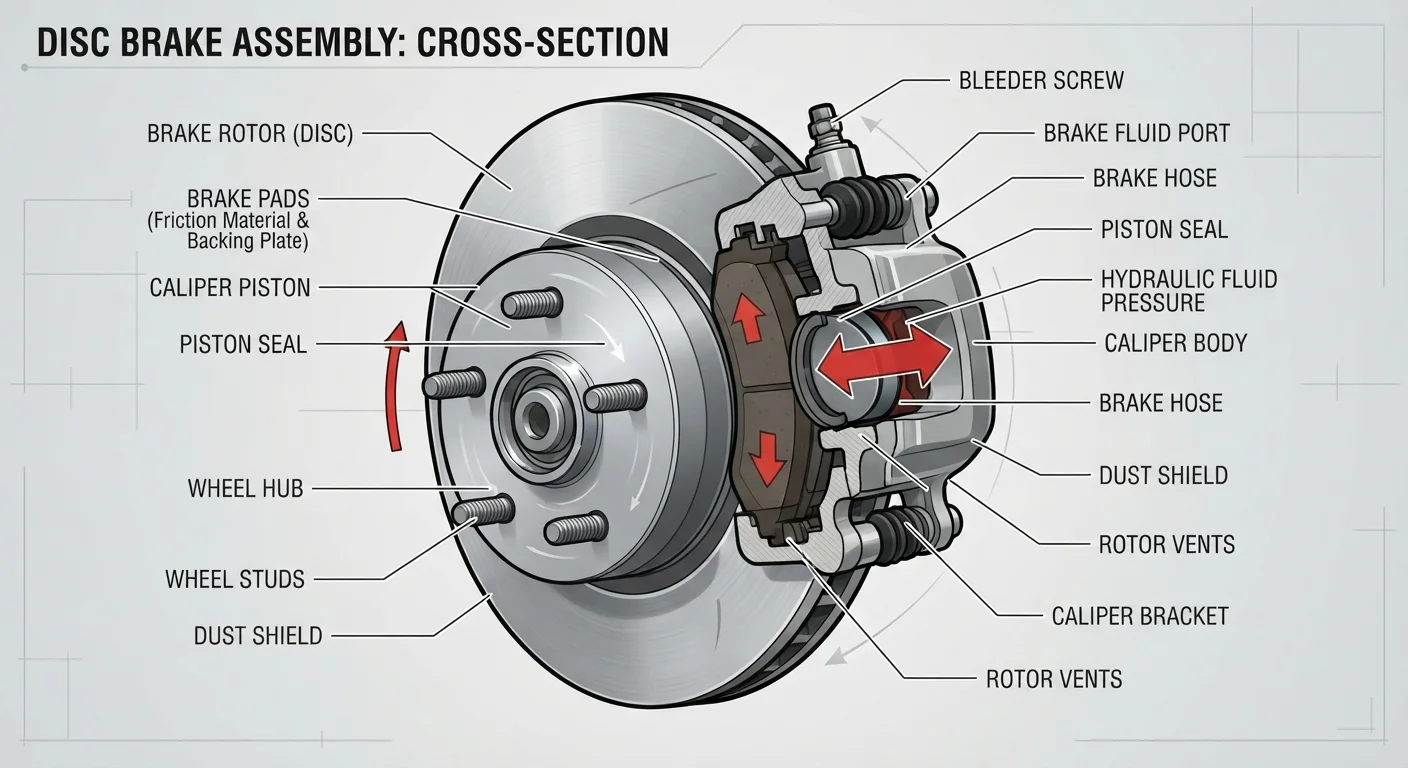
Here is the basic chain of events: pressing the pedal pushes a piston inside the master cylinder, which pressurizes the brake fluid in sealed lines running to each wheel. That pressure activates calipers - clamp-like devices that squeeze the brake pads against the rotors. Friction between the pads and the spinning rotor surface converts your car's kinetic energy into heat, slowing the wheel.
Because the components interact this way, wear in one part often affects the others. Thin pads, for example, can score rotor surfaces. Contaminated fluid can cause inconsistent pressure. Understanding the relationship helps you take early action rather than waiting for a failure.
Front vs. Rear Brake Wear
On most passenger vehicles, front brakes handle a larger share of stopping force and wear faster than rear brakes. This is because weight shifts forward under braking, increasing front wheel load. As a result, front pads may need replacement significantly more often than rear pads - it is normal and expected, not a sign of a problem.
Brake Pads: The Friction Layer
Brake pads are slabs of friction material mounted inside the caliper. When the caliper squeezes, the pad face presses directly against the rotor. Over thousands of stops, that friction material gradually wears away - which is exactly what it is designed to do.
Most pads include a small metal tab called a wear indicator. When the pad wears down to a critical thickness, the indicator contacts the rotor and creates the high-pitched squeal many drivers recognize as a brake warning. If squealing is ignored, the next stage is a grinding noise, which typically means metal-on-metal contact - at that point, the rotor surface is likely being damaged too.
If you are hearing unusual noises from your wheels, our guide to sounds your car makes and what they mean breaks down what different sounds usually signal.
Check Pads Visually at Each Tire Rotation
Many mechanics suggest having brake pads visually inspected every time you rotate your tires - typically every 5,000 to 7,500 miles. This gives you a regular, low-cost checkpoint that catches wear early. Most shops will measure pad thickness and check rotor condition as part of a standard tire rotation service.
Rotors: The Spinning Disc
Rotors - also called brake discs - are the large metal discs you can often see through the spokes of a wheel. They spin with the wheel and provide the surface the brake pads clamp against. New rotors have a smooth, consistent surface. Over time, heat cycling and friction cause wear.
Common rotor problems include:
- Grooving: Deep channels worn into the surface by worn-down pads, which reduces effective friction area.
- Warping: Uneven heating and cooling can cause rotors to develop slight thickness variations, which you often feel as a pulsing or vibration in the pedal when braking.
- Rust: Surface rust appears quickly on rotors that sit unused, but typically clears after a few gentle stops. Persistent rust or pitting is a different concern.
Rotors have a minimum thickness specification - usually stamped directly on the rotor - below which replacement is required regardless of surface appearance. A mechanic uses a micrometer to measure this during a brake inspection.
Brake Fluid: The Hydraulic Link
Brake fluid is the medium that transfers the force of your foot on the pedal into mechanical clamping action at the wheels. It operates under high pressure in a completely sealed system - which means even a small leak can significantly reduce braking ability.
One important property of brake fluid is that it is hygroscopic, meaning it gradually absorbs moisture from the surrounding environment even inside a sealed system. As moisture content increases, the fluid's boiling point drops. Under hard braking, overheated fluid can vaporize, creating air bubbles in the lines - a condition known as vapor lock - which causes the pedal to feel soft or sink toward the floor.
Brake fluid is typically rated by DOT grade (DOT 3, DOT 4, DOT 5.1 are most common in passenger vehicles). Each has a different boiling point. Always use the grade specified in your owner's manual - mixing incompatible types can damage seals. For a broader look at fluid maintenance your owner's manual recommends, see our overview of fluid checks every driver should know.
~$150-$300
Typical cost per axle for brake pad replacement
Estimates from AAA and consumer repair data suggest parts and labor for a standard pad replacement generally fall in this range, though prices vary by vehicle type, region, and shop.
2 years
Common brake fluid change interval
Many vehicle manufacturers and mechanics recommend replacing brake fluid every two years regardless of mileage, due to the fluid's tendency to absorb moisture over time.
30-70k miles
Typical brake pad lifespan range
The National Highway Traffic Safety Administration (NHTSA) notes that driving behavior - particularly frequent city stopping - is the largest variable affecting pad wear rate.
Warning Signs and When to Act
Knowing what to watch for helps you address brake issues before they become expensive - or dangerous. Here are the most common signals:
- Squealing when braking: Often the wear indicator doing its job. Schedule an inspection soon.
- Grinding or metal-on-metal sound: Pads are likely gone. Have this checked immediately - rotor damage may already be occurring.
- Pulsing or vibrating pedal: Typically indicates warped rotors.
- Soft or spongy pedal: Possible air in the lines or degraded fluid. A professional should inspect this promptly.
- Car pulling to one side when braking: Could indicate uneven pad wear or a stuck caliper.
- Brake warning light: Can mean low fluid level or a system fault - never ignore it.
Delaying brake repairs rarely saves money. As our article on what happens when maintenance gets skipped explains, minor brake issues can escalate into far costlier repairs when left unaddressed.
Brake system servicing involves hydraulic components under pressure, and mistakes carry real safety consequences. For guidance on which maintenance tasks are reasonable to learn at home versus which should go to a professional, see our overview of DIY vs. professional car maintenance.
This article is for general educational purposes only and is not a substitute for advice from a qualified automotive technician. Always consult a licensed mechanic for diagnosis and repair of your specific vehicle.