
Why Warning Lights Exist (and Why You Shouldn't Ignore Them)
Modern vehicles monitor dozens of systems simultaneously and use dashboard warning lights to flag when something needs attention. Ignoring a warning light won't make the problem go away - in many cases, it causes the underlying issue to escalate into a much more expensive repair.
Warning lights generally fall into three urgency tiers: red means stop or act immediately, amber/yellow means schedule service soon, and green or blue is informational (a feature is active, not a problem). Knowing which color you're looking at is your first filter.
If you're ever unsure what a light means, your owner's manual is the definitive source for your specific vehicle. See our guide to reading your owner's manual for help navigating that document.
| Number of warning lights in modern vehicles | Up to 200+ (Varies by make and model) |
| Urgency: Red lights | Stop or act immediately |
| Urgency: Amber/yellow lights | Schedule service within days |
| Diagnostic tool used to read CEL codes | OBD-II scanner (Required on all US vehicles made after 1996) |
| Tire pressure reference location | Driver's door jamb sticker (Not the tire sidewall) |
| Best reference for your car's specific lights | Your owner's manual |
The Most Common Warning Lights, Explained
Below are the lights first-time owners encounter most often. Note that icon designs vary slightly by manufacturer - always cross-reference with your owner's manual if you're unsure.
Check Engine Light (CEL)
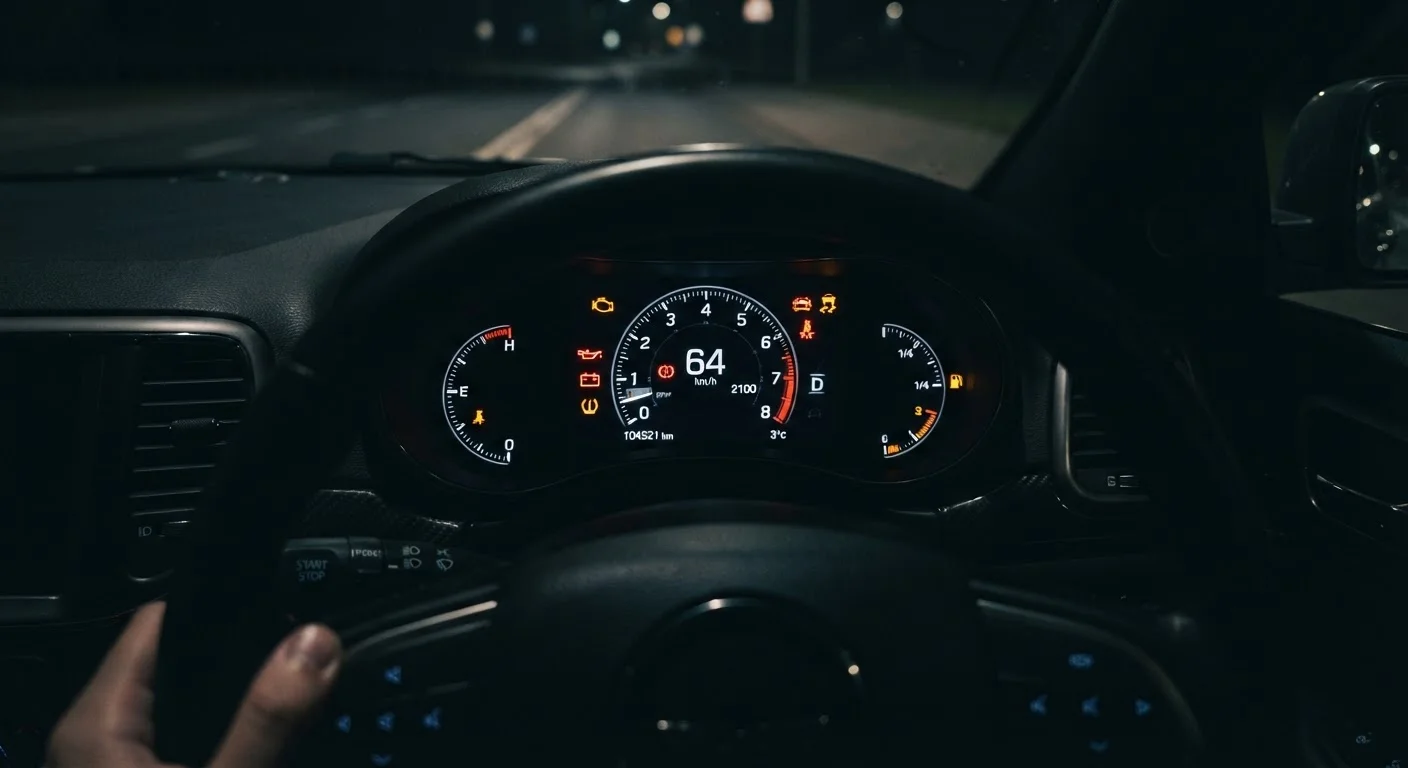
An amber engine-shaped icon that signals the onboard diagnostic system has detected a fault - anything from a loose gas cap to a misfiring engine. A mechanic can read the fault code with an OBD-II scanner to pinpoint the cause. Don't ignore it, but it's rarely an immediate pull-over emergency unless combined with other symptoms.
Oil Pressure Warning
A red oil can icon indicating critically low engine oil pressure. This is a stop-immediately light - driving with low oil pressure can cause catastrophic, irreversible engine damage in minutes. Pull over safely and check your oil level before proceeding.
TPMS (Tire Pressure Monitoring System)
An amber icon resembling a tire cross-section with an exclamation mark. It means at least one tire is significantly under-inflated. Check all four tires with a gauge and inflate them to the pressure listed on the sticker inside your driver's door jamb, not the number on the tire sidewall.
Battery Warning Light
A red battery icon indicating the charging system isn't functioning correctly. The alternator may not be charging the battery while you drive, meaning your car could stall soon. Limit electrical use and head to a mechanic promptly.
Brake Warning Light
A red circle with an exclamation mark or the letter 'P' inside. If the parking brake is fully released and this light is on, it may indicate low brake fluid or a brake system fault - both are safety-critical and need immediate professional attention.
Temperature Warning
A red thermometer-in-liquid icon signals the engine is overheating. Turn off the A/C, pull over safely, and shut off the engine. Do not open the radiator cap while the engine is hot. Call for assistance rather than risking engine damage by continuing to drive.
Traction Control / Stability Control
An amber car-with-skid-marks icon. When flashing, it means the system is actively preventing a skid - this is normal in slippery conditions. If it stays on solid, the system may be disabled or faulty and should be checked by a mechanic.
Airbag / SRS Warning
An amber icon of a person with a deployed airbag. A continuously lit SRS (Supplemental Restraint System) light means the airbag system has a fault and may not deploy correctly in a crash. This should be diagnosed promptly by a qualified technician.
Dashboard lights don't tell the whole story on their own. Unusual sounds often accompany the same problems these lights flag - our article on sounds your car makes and what they mean can help you connect the dots.
When to Pull Over Immediately vs. When to Schedule Service
Not every lit dashboard light is an emergency, but some are. Use this decision framework:
- Red light, especially oil pressure or temperature: Pull over safely as soon as possible, turn off the engine, and do not continue driving. Driving with critically low oil pressure or an overheating engine can cause permanent engine damage within minutes.
- Brake warning light (red): Test your brakes gently. If the pedal feels soft or goes to the floor, stop the car safely and call for roadside assistance. Do not drive the vehicle.
- Amber/yellow lights (e.g., check engine, TPMS, low fuel): You typically have time to drive to a mechanic or auto parts store for a diagnostic scan, but don't delay more than a few days.
- Service reminder lights (wrench or oil can icon): Schedule maintenance within the mileage or time window indicated - these are not emergencies but skipping them degrades your car's reliability.
This article provides general educational information about vehicle warning lights. Always consult a qualified mechanic for diagnosis and repair of your specific vehicle.
Used Cars: Check for Hidden Fault Codes
If you're inspecting a used vehicle, a lit or recently cleared check engine light is a red flag worth investigating. An OBD-II scanner can reveal fault codes even if the seller has cleared the light. See our pre-test-drive inspection checklist for other things to watch for before you buy.