
What State Minimums Actually Require
Every state requires drivers to carry some form of auto insurance, but the specific minimums vary widely. Most states require at least basic liability coverage - this pays for injuries and property damage you cause to other people. Some states also require personal injury protection (PIP) or uninsured motorist coverage, but many do not.
To put a real number on it: a common state minimum is $25,000 in bodily injury coverage per person, $50,000 per accident, and $25,000 in property damage. At a glance, those numbers might sound like a lot. In practice, they can run out quickly. A single emergency room visit after a serious crash can easily exceed $25,000. A newer vehicle can cost $35,000 or more to replace. The gap between the minimum and the actual cost becomes very real, very fast.
Before you do anything else, it helps to understand the types of coverage that exist. Learn what liability, collision, and comprehensive insurance actually cover so you know exactly what each category protects - and what it doesn't.
~1 in 7
US drivers estimated to be uninsured
According to the Insurance Research Council, approximately 14% of US drivers were uninsured in a recent study period - a meaningful risk to drivers who skip uninsured motorist coverage.
$25,000
Common state minimum bodily injury limit per person
Many states set this as the per-person threshold, but average emergency hospitalization costs can easily exceed this figure in a serious accident.
The Gap Between Legal and Protected
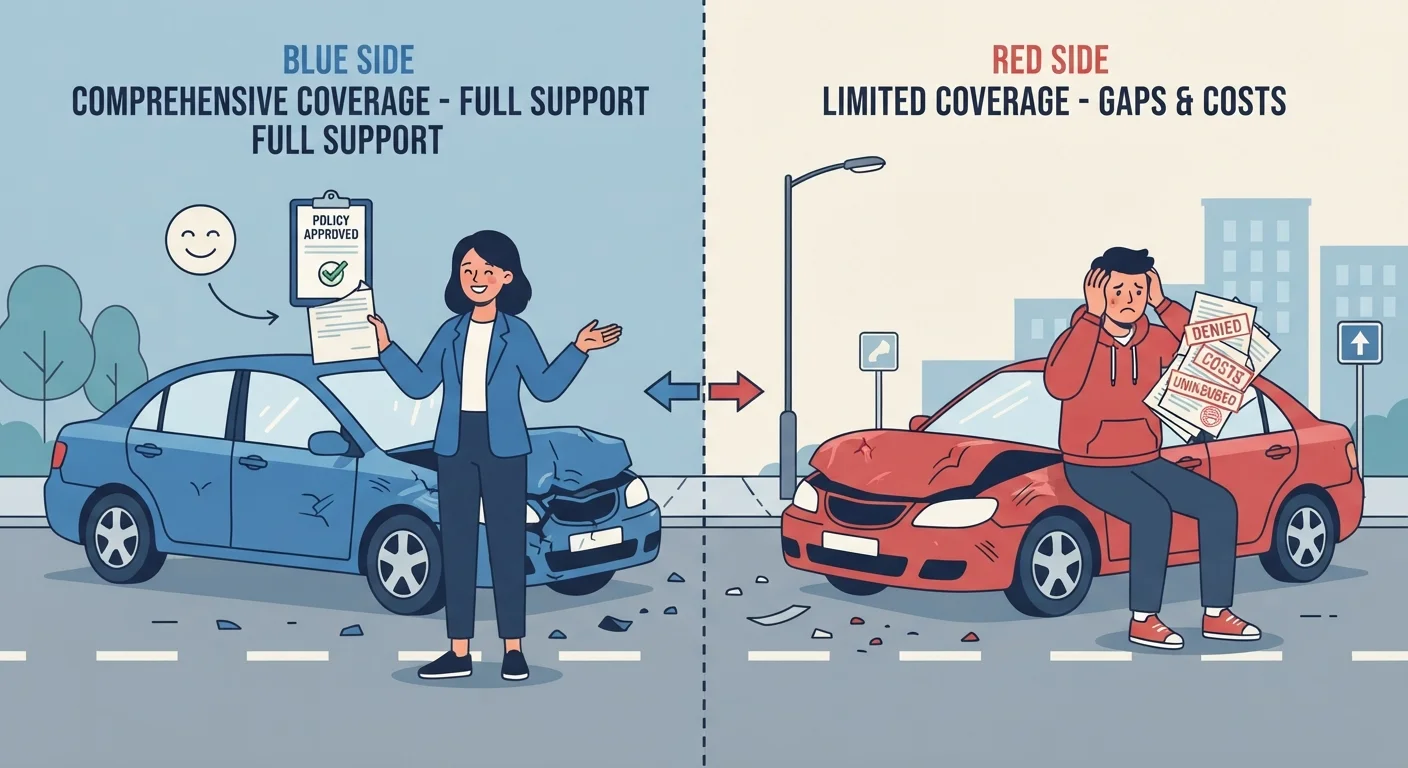
Here's the core issue: state minimum requirements are designed to ensure that drivers can at least partially compensate others for harm caused in an accident. They were not designed to fully protect you as the policyholder. That distinction matters enormously.
If you carry only the minimum liability coverage and cause a serious multi-car accident with injuries, your policy may pay out and then stop - leaving any remaining claims as your personal liability. Courts can garnish wages or pursue assets to recover unpaid damages. For a young adult just starting out financially, that kind of exposure can set you back for years.
Equally important: state minimums say nothing about your own car. If you cause a crash and your vehicle is totaled, you get nothing from a liability-only policy. If a hailstorm damages your car in a parking lot, you get nothing. For that protection, you need collision and comprehensive coverage - coverage that sits entirely outside the minimum legal requirements in most states.
Check What Your State Actually Requires
State minimum requirements are publicly available through your state's department of insurance website. Knowing your state's specific numbers gives you a concrete starting point when comparing policies - and helps you understand exactly what you're required to have versus what you're choosing to skip.
Coverage Types You Won't Get With Just the Minimum
Beyond the liability limits issue, several useful coverage types are optional and not part of any state minimum:
- Collision coverage - Pays to repair or replace your car after an accident regardless of fault.
- Comprehensive coverage - Covers non-collision events like theft, vandalism, fire, or weather damage.
- Uninsured/underinsured motorist coverage - Protects you if the at-fault driver has no insurance or not enough to cover your damages.
- Medical payments (MedPay) or PIP - Covers your medical bills after an accident, regardless of who caused it.
- Rental reimbursement - Pays for a rental car while yours is being repaired after a covered claim.
None of these are automatically included when you buy a policy that meets the state minimum. Each requires an active choice on your part. If you're unsure how to evaluate these options, the comparison between liability-only and full coverage lays out the trade-offs clearly.
If you're just getting started with auto insurance and want a broader foundation, this overview of car insurance basics is a solid starting point.
How to Think About What's Actually Enough
The right level of coverage depends on your personal financial situation - not just your state's legal requirements. A useful framework: ask what you could realistically afford to lose if you were in a serious accident tomorrow. If the answer is "not much," that's a signal you may need more protection than the bare minimum.
Consider your assets. If you were found liable for $80,000 in damages and your policy only covers $50,000, the remaining $30,000 becomes your problem. For someone with savings or a steady income, that's a lawsuit waiting to happen.
Also consider your car's value. If your vehicle is worth under $3,000, paying for collision coverage may cost more than it would pay out. But if you're driving something newer or financed, your lender will typically require collision and comprehensive anyway - so the choice may already be made for you.
Once you've chosen a policy, knowing how to actually read it is just as important. Understanding your declarations page and exclusions helps you spot gaps before they become surprises. And for a closer look at what can go wrong, see coverage gaps that catch first-time policyholders off guard.
“The minimum required by law is not the minimum needed for financial security. Those are two different standards, and confusing them can be costly.”
— Insurance Information Institute, Nonprofit insurance industry education and research organization
This article provides general information about auto insurance concepts and is not personalized insurance or financial advice. Coverage terms, requirements, and limits vary by state and insurer. Consult a licensed insurance agent to understand what coverage is right for your situation.