
Why the Coverage Names Are Confusing - and How to Think About Them
When you shop for auto insurance for the first time, you're handed a list of coverage options that can feel like a foreign language. The three most fundamental types - liability, collision, and comprehensive - sound similar but protect against entirely different situations. The key to understanding them is asking one simple question: whose property is being protected, and what event caused the damage?
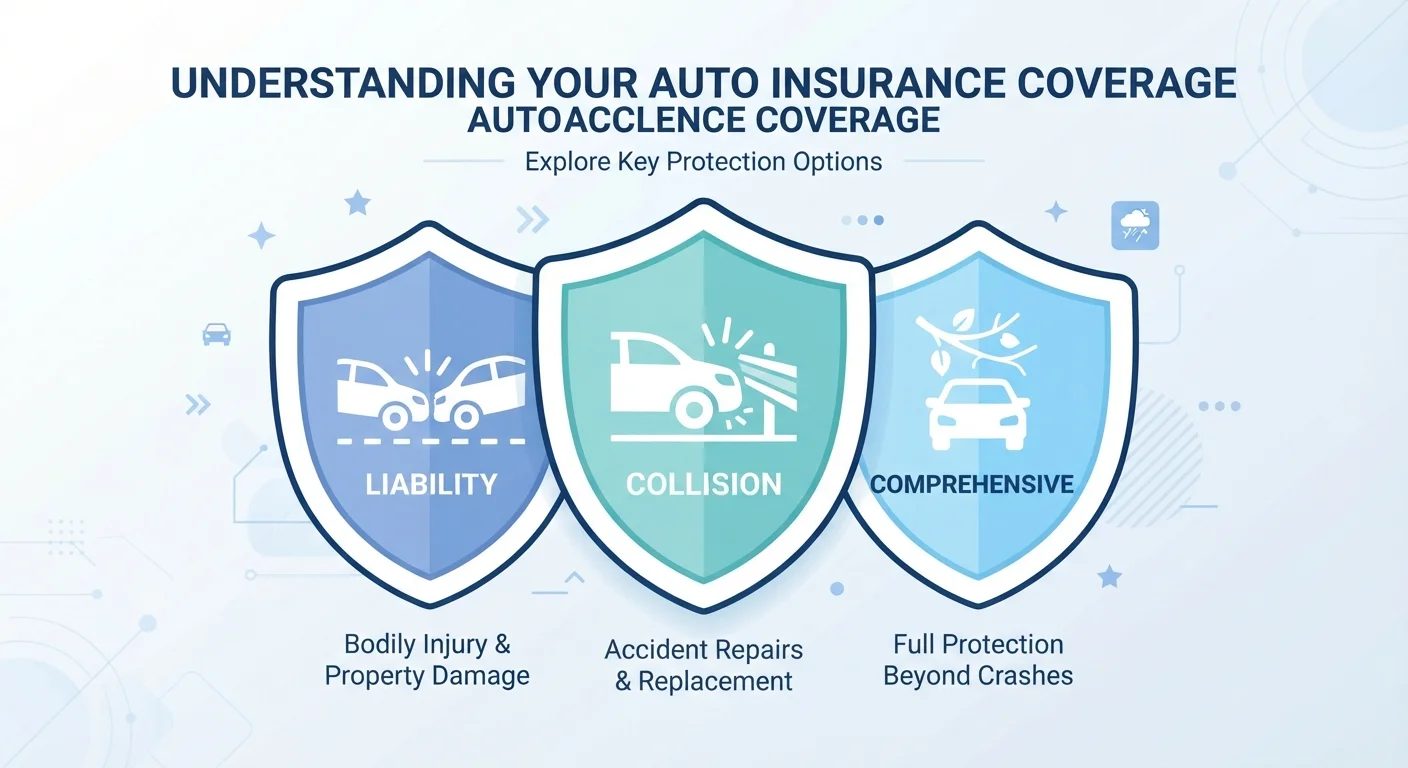
Think of these three types as answering three separate questions. Liability asks, "Did I hurt someone else?" Collision asks, "Was my car damaged in an accident?" Comprehensive asks, "Was my car damaged by something other than a crash?" Each coverage type kicks in under different circumstances, which is why you often need more than one. For a broader introduction to how policies work overall, see our plain-English car insurance guide.
Liability Coverage: What You Owe Others After an Accident
Liability insurance is the foundation of any auto policy - and in most U.S. states, it's legally required before you can register a vehicle. It covers the financial harm you cause to other people when you are responsible for an accident. It does not pay anything toward your own vehicle or your own medical bills.
Liability coverage comes in two parts:
- Bodily injury liability: Pays for injuries to other people - drivers, passengers, or pedestrians - that you cause in an accident. This can include medical bills, lost wages, and legal costs if the injured party sues.
- Property damage liability: Pays for damage you cause to someone else's car, fence, building, or other property.
Liability limits are typically written as three numbers (for example, 25/50/25), representing thousands of dollars for per-person bodily injury, per-accident bodily injury, and property damage. State minimums are often considered low by industry standards, so many drivers opt for higher limits to avoid personal financial exposure if a serious accident occurs.
State Minimums Are a Floor, Not a Recommendation
Every state sets a minimum liability limit that drivers must carry, but those minimums are often quite low relative to the true cost of a serious accident. Carrying only the state minimum may leave you personally responsible for costs that exceed your coverage. Many financial professionals suggest carrying limits well above the state minimum - your specific needs depend on your assets, income, and risk tolerance. A licensed insurance agent can walk you through the options.
Collision Coverage: Repairing Your Car After a Crash
Collision coverage pays to repair or replace your vehicle when it is damaged in an accident - whether you collide with another car, a guardrail, a pothole, or any other object. Importantly, collision pays out regardless of who was at fault. If you caused the accident, liability won't fix your own car; collision will.
You pay a deductible - a set dollar amount you cover before the insurer pays the rest - each time you file a collision claim. Common deductibles range from $250 to $1,500. A higher deductible generally lowers your premium but increases your out-of-pocket cost after an incident.
Collision does not cover:
- Damage from events like flooding, hail, or theft (that's comprehensive)
- Injuries to you or other people (that's covered by medical payments or personal injury protection coverage)
- Damage to the other driver's vehicle when you are at fault (that's liability)
Match Your Deductible to Your Emergency Fund
When choosing a collision or comprehensive deductible, pick an amount you could realistically pay out of pocket on short notice. If your emergency fund holds $500, a $1,000 deductible could leave you stuck after a claim. A lower deductible means a higher premium, but it also means less financial stress if something goes wrong.
Comprehensive Coverage: Protection from Events Outside Your Control
Despite its name, comprehensive coverage is not all-encompassing. It covers damage to your vehicle caused by events that are not a collision with another object. Common covered events include:
- Theft or attempted theft
- Vandalism
- Weather events: hail, flooding, windstorms
- Fire
- Falling objects (like a tree limb)
- Animal strikes (hitting a deer, for example)
Like collision, comprehensive requires a deductible, and the insurer pays up to the vehicle's actual cash value - not necessarily what you paid for the car or what it would cost to buy a replacement today.
If your car is older and its market value is low, the math sometimes works against carrying comprehensive: the maximum payout might barely exceed a year's worth of premiums. That's a judgment call that depends on your financial situation, not a one-size-fits-all rule. To understand the terminology on your actual policy documents, our car insurance glossary can help.
What These Three Types Don't Cover
Even with all three coverage types, there are gaps worth knowing about before you assume you're fully protected. For instance, personal belongings stolen from your car - your laptop, gym bag, or phone - are generally not covered by any of these auto policies. That might fall under renter's or homeowner's insurance instead.
Other common exclusions include: using your vehicle for rideshare or delivery work without a commercial endorsement, mechanical failures unrelated to an accident, and damage that occurs when someone not listed on your policy drives your car (rules vary by insurer and state). Our article on coverage gaps that catch new policyholders off guard goes deeper into these surprises.
This article is for general informational purposes only and does not constitute personalized insurance or financial advice. Coverage terms, requirements, and exclusions vary by policy, insurer, and state. Consult a licensed insurance agent or adviser to understand what coverage is appropriate for your situation.