

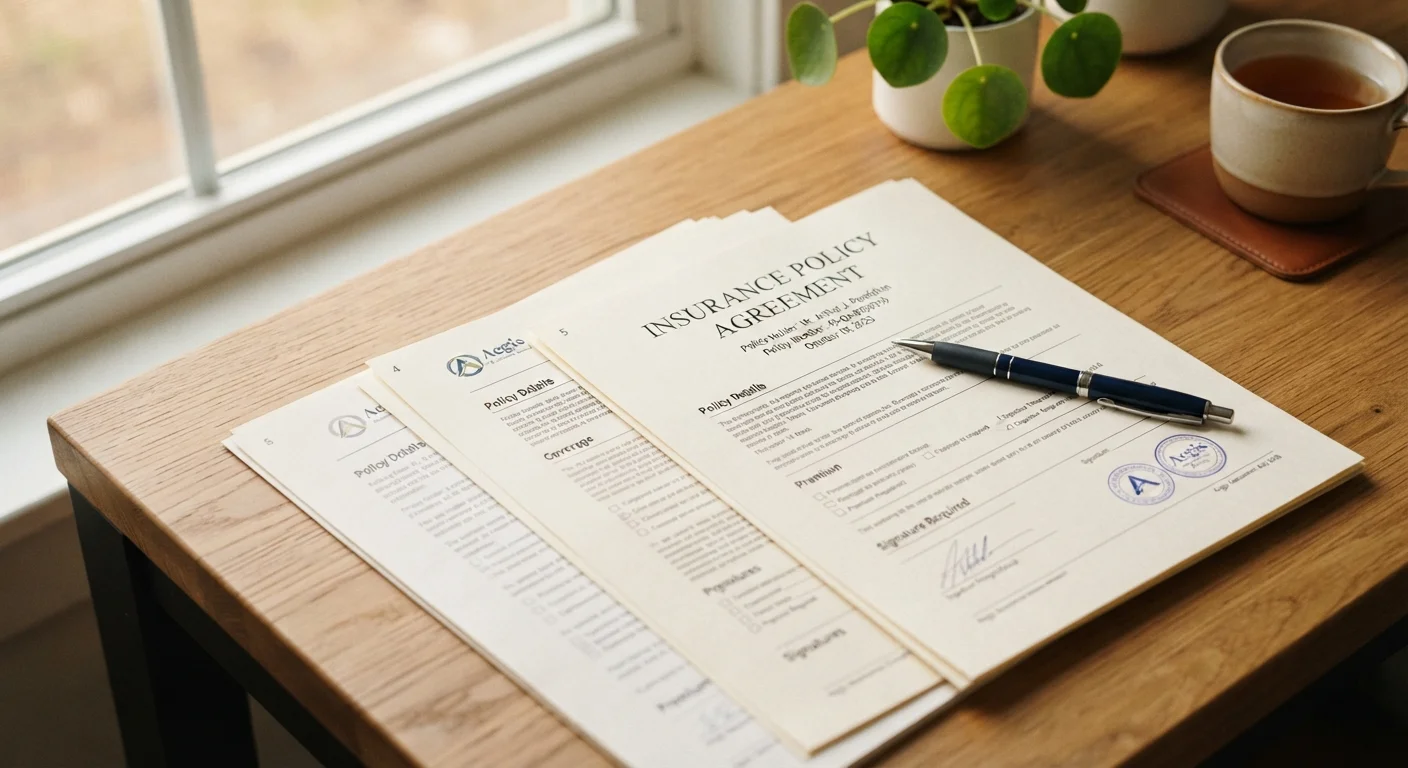
Why Your Policy Document Is Worth Reading
Most people file their insurance policy away without reading it - then discover what it actually says only after something goes wrong. An auto insurance policy is not a receipt; it is a contract that defines your rights and your insurer's obligations in precise, enforceable terms.
Reading your policy before a claim gives you two advantages: you know exactly what protection you have, and you know what actions to take (and avoid) to protect that coverage. If you are just starting out with car ownership in general, the Buying a Car hub is a useful companion resource for understanding the broader financial picture.
What you will need
The steps below walk you through each meaningful section of a standard auto policy in the order that makes the most sense for a first-time reader.
How to Work Through Your Policy Step by Step
Your Insurance Policy Document
The primary document you will read and annotate during this process.
Highlighter or Digital Annotation Tool
Used to mark key figures, limits, and exclusions for quick future reference.
Notepad or Notes App
For recording questions to ask your insurer or agent after your first read-through.
Locate and Read the Declarations Page
The declarations page (often called the "dec page") is almost always the first page of your policy packet. It is your policy at a glance: it lists your name, the covered vehicle's details (year, make, model, VIN), the policy period, your coverage types, your limits, and your premium.
Confirm that your name, vehicle, and address are all accurate. Errors here can complicate a future claim. Note the effective and expiration dates - you must renew before the expiration date to avoid a lapse in coverage.
Understand Your Coverage Types and Limits
After the dec page, the policy lists each type of coverage you purchased. Common types include:
- Liability: Covers injury or property damage you cause to others. Often written as three numbers, such as 25/50/25, meaning $25,000 per person for bodily injury, $50,000 per accident for bodily injury, and $25,000 for property damage.
- Collision: Covers damage to your own vehicle from a crash, regardless of fault.
- Comprehensive: Covers non-collision damage - theft, weather, falling objects, etc.
- Uninsured/Underinsured Motorist (UM/UIM): Protects you if the at-fault driver has no insurance or insufficient coverage.
For each coverage type, record the limit and your deductible - the amount you pay out of pocket before your insurer pays. To understand whether your limits are adequate, see Minimum State Requirements vs Adequate Protection.
Read the Definitions Section
Most policies include a definitions section near the front. This section gives the insurer's precise meaning for terms used throughout the document - words like "insured," "covered vehicle," "occurrence," and "bodily injury." These definitions control how coverage applies.
For example, the definition of "insured" tells you which people are covered when driving your vehicle. A roommate borrowing your car may or may not be covered depending on this definition. The Car Insurance Glossary can help you decode terms you encounter here.
Study the Exclusions Carefully
Exclusions are the conditions and situations your policy will not cover. They are typically listed in a dedicated section and are one of the most consequential parts of the document. Common exclusions include:
- Using your personal vehicle for commercial purposes (e.g., delivery or rideshare) without a commercial endorsement
- Intentional damage caused by the policyholder
- Damage occurring while an unlisted driver uses the vehicle
- Mechanical breakdown or wear and tear
Read every exclusion and ask yourself: Does this situation apply to how I actually use my car? If you drive for a rideshare platform, for instance, you may need a specific endorsement or a separate policy.
Review the Conditions Section
The conditions section outlines your obligations as the policyholder. This includes requirements like reporting an accident promptly, cooperating with the insurer's investigation, and notifying the insurer of major life changes (adding a driver, moving to a new state).
Failing to meet these conditions can give your insurer grounds to deny a claim, even if the loss itself would otherwise be covered. Note any deadlines mentioned for reporting incidents or filing claims.
Write Down Your Questions and Follow Up
After your first read-through, you will almost certainly have questions. That is normal - policies are written in legal language, not plain English. Write every question down and contact your insurer or a licensed agent for clarification before your policy renews or before a claim arises.
If you are still building your overall understanding of how auto insurance works, the comprehensive guide to car insurance covers the full lifecycle - from choosing coverage to filing a claim.
Don't Skip the Exclusions Section
Many first-time policyholders only read what their coverage includes and skip the exclusions entirely. This is where coverage gaps hide - for example, personal belongings stolen from your car or damage caused while using a vehicle for rideshare work may not be covered under a standard policy. For a deeper look at these pitfalls, see Coverage Gaps That Catch First-Time Policyholders Off Guard.
Keep a Personal Summary Sheet
After reading your policy, jot down your coverage types, each limit, and your deductibles on a single sheet of paper. Store it with your registration and proof of insurance card. In a stressful post-accident moment, having a quick reference is far more useful than searching through a 30-page document.
Your Policy Is a Legal Contract
An auto insurance policy is a binding legal agreement between you and your insurer. What is written in the document - not what an agent described verbally - determines what is covered. Always read the full policy, not just the summary, before finalizing coverage.
This article is for general informational purposes only and does not constitute personalized insurance, legal, or financial advice. Coverage terms, exclusions, and requirements vary by insurer and by state. Always read your actual policy documents and consult a licensed insurance agent or adviser for guidance specific to your situation.