
Why a Basic Toolkit Belongs on Your Move-In Checklist
Most first-time homeowners and renters discover they need a tool about 20 minutes after they need it — the towel bar wobbles, a picture falls, a cabinet hinge loses a screw. Having even a small, thoughtful set of hand tools on hand means those small frustrations stay small.
This reference covers the tools that handle the overwhelming majority of routine household tasks. Think of it as the 80/20 rule applied to home repair: a modest collection of well-chosen tools covers most situations you'll encounter in your first year. For a broader look at what to expect as a new homeowner, see What Every New Homeowner Should Know About Home Maintenance.
| Minimum starter kit size | 7–10 tools |
| Most-used tool type | Screwdriver (Phillips-head) |
| Tasks handled by basic hand tools | Roughly 80% of everyday repairs (General home maintenance guidance) |
| When to call a professional | Electrical, gas, structural, or permitted work |
| Tool storage best practice | Dedicated drawer, box, or wall-mounted organizer |
The Essential Tools, Defined
Below is a breakdown of each core tool, what it actually does, and why it earns a permanent spot in the drawer. This list assumes no prior experience — every term is defined the first time it appears.
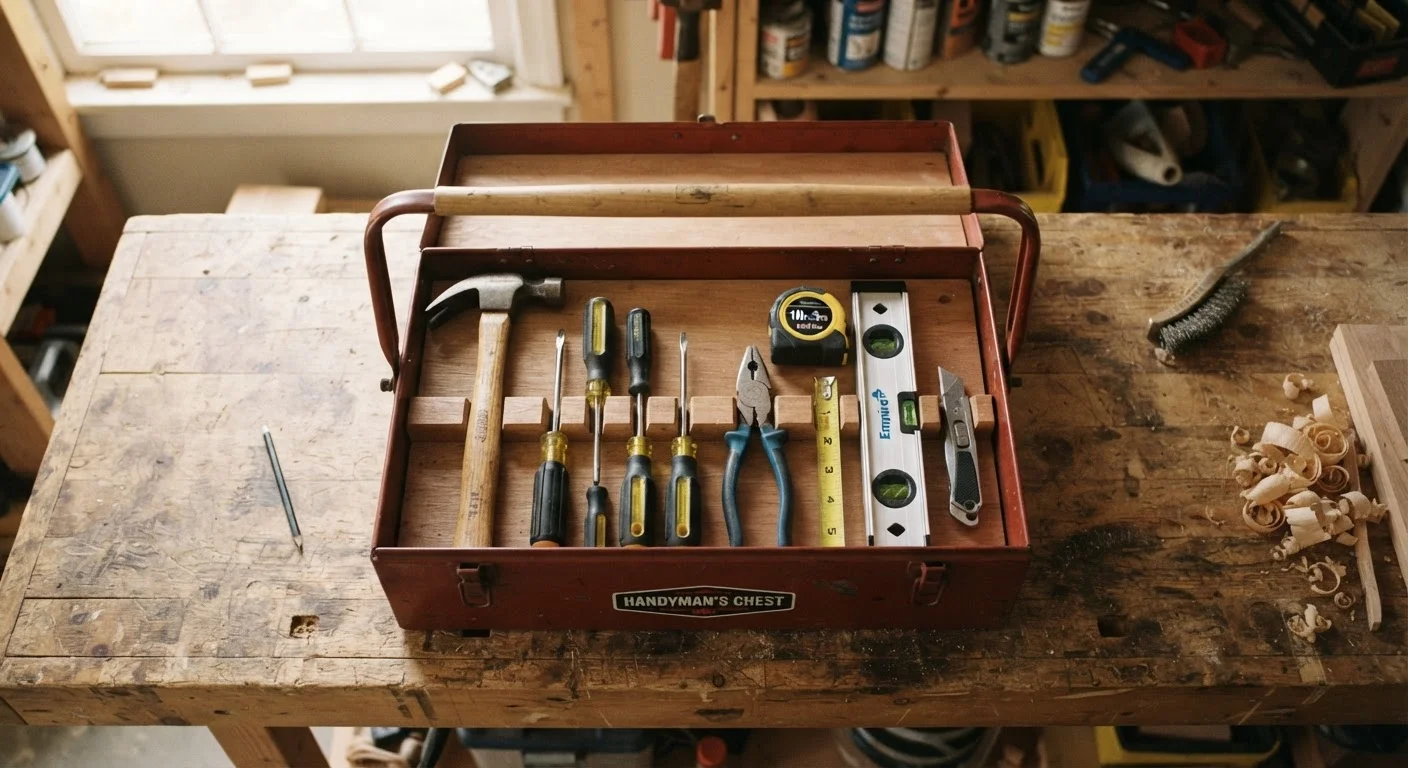
Claw Hammer
A general-purpose hammer with a flat striking face on one end and a forked 'claw' on the other for pulling nails. A 16-ounce head weight suits most household tasks.
Phillips-Head Screwdriver
A screwdriver with a cross-shaped tip designed to fit Phillips screws, which have an X-shaped recess in the head. This is the most common screw type in household furniture and fixtures.
Flathead Screwdriver
A screwdriver with a flat, single-slot tip. Used on slotted screws and also handy for prying open paint cans or small stuck panels.
Tape Measure
A retractable metal measuring tape marked in inches and feet (and often centimeters). Essential for measuring spaces before buying furniture, curtains, or shelving.
Adjustable Pliers
Gripping and twisting tools whose jaw width can be changed to fit different sizes of nuts, bolts, and pipes. Also called slip-joint or tongue-and-groove pliers.
Utility Knife
A retractable blade tool used for cutting cardboard, opening packaging, scoring drywall, and trimming materials. Replace blades when they dull — sharp blades are safer than dull ones.
Level
A tool containing a small liquid-filled vial with a bubble inside. When the bubble is centered between two lines, the surface is perfectly horizontal (or vertical). Prevents crooked picture frames and tilted shelves.
Stud Finder
An electronic device that detects the wooden framing studs hidden behind drywall. Anchoring heavy objects — shelving, TV mounts, large mirrors — into studs rather than just drywall prevents them from pulling free.
Cordless Drill/Driver
A battery-powered tool that both drills holes and drives screws. A variable-speed trigger and a torque clutch (the adjustable collar near the chuck) make it versatile enough for furniture assembly to hanging cabinetry.
Putty Knife
A flat-bladed hand tool used to apply, smooth, and scrape materials like spackling compound, caulk, or old adhesive. Crucial for patching small holes in drywall.
A note on quality: mid-range tools from hardware stores generally outlast the cheapest options without requiring a significant investment. Avoid purchasing tools you'll rarely use — a specialty item you need once is usually better rented. For tasks that go beyond basic repair, Where DIY Ends and a Professional Begins outlines a clear line between DIY-safe and leave-it-to-a-pro work.
Renters: Check Your Lease First
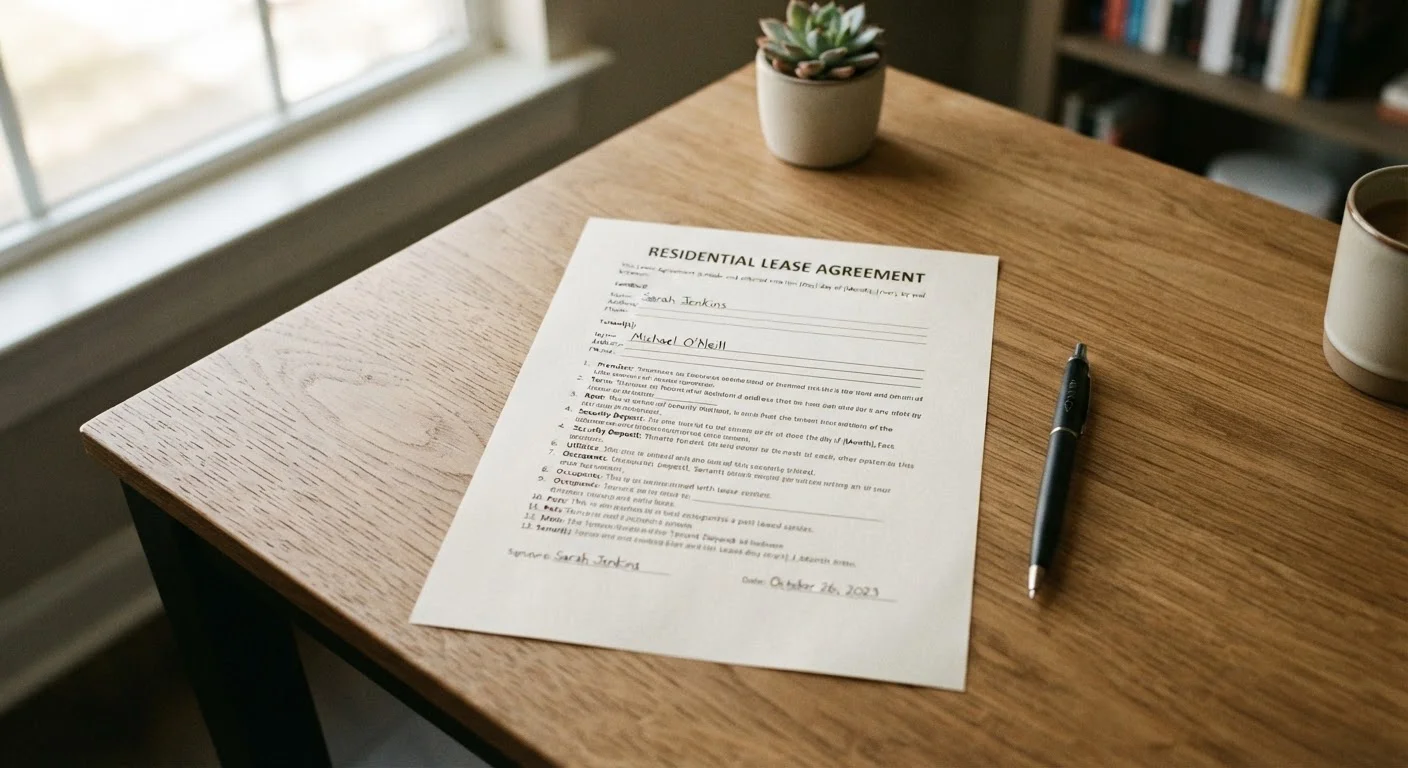
If you rent, your lease may restrict certain modifications — drilling into walls, for example, may require landlord approval or could affect your security deposit. Review your lease or ask your landlord before making any holes or permanent changes. For a full overview of renter rights and responsibilities, see Renting Basics.
Building the Kit Without Overspending
You don't need to buy everything at once. Prioritize the tools you're most likely to use in the first month — a hammer, a set of screwdrivers, and a tape measure will cover a surprising range of tasks. Add a utility knife, pliers, and a level once you start hanging things or making small fixes.
Starter tool sets sold at hardware stores can offer decent value for the price, but read the contents carefully; some skimp on the screwdriver variety. Buying individual tools as you need them is a perfectly valid strategy and helps you avoid accumulating items that never leave the drawer.
80%
Household repairs handled by basic hand tools
Home maintenance educators consistently note that a small set of hand tools covers the large majority of routine fixes a homeowner faces.
10 tools
Items in a functional starter kit
A hammer, two screwdrivers, tape measure, pliers, utility knife, level, stud finder, drill/driver, and putty knife address most day-one needs.
Good home organization habits extend beyond the toolbox. The same discipline that goes into maintaining your home applies to other big life areas — whether that's navigating your first mortgage or building sustainable daily habits. Every organized, prepared start makes the next step easier.
Where DIY Ends and a Professional Begins
A practical guide to identifying which home repairs are safe to tackle yourself and which require a licensed professional. Essential companion reading before you reach for the drill.
What Every New Homeowner Should Know About Home Maintenance
Covers seasonal upkeep, leaky faucets, and the maintenance calendar that keeps small problems from becoming expensive ones.
The Glossary Every First-Time Buyer Should Bookmark
Decodes the terminology you'll encounter throughout the home-buying process — useful context if you're managing a new mortgage alongside a new home.