
Why This Skill Matters Before Any Problem Starts
A burst pipe can discharge dozens of gallons per minute. The difference between a manageable cleanup and a gutted wall often comes down to how quickly you can stop the flow — and that means knowing your shutoff valve's exact location before anything goes wrong.
This is one of the foundational skills covered in what every new homeowner should know about home maintenance — and it applies equally to renters. If you rent, you still need to know where the valve is; you are simply also required to notify your landlord as quickly as possible.
What you will need
Once you have confirmed the above, gather any tools you may need and follow the steps below.
Adjustable wrench or channel-lock pliers
Needed to operate older gate-style shutoff valves that are hard to turn by hand.
Meter key (pentagon/curb key)
Required to open the street-side water meter box lid and operate the utility shutoff.
Flashlight
Helps you see inside dark crawl spaces, utility closets, or meter boxes when locating the valve.
Waterproof marker or adhesive label
Used to label the shutoff valve so it is easy to identify in a future emergency.
Step-by-Step: Shutting Off Your Water
Act First, Investigate Second
If a pipe bursts or you see water spraying, shut off the water immediately — do not spend time searching for the source first. Every second of delay allows more water to damage walls, floors, and electrical systems. Once the water is off, then assess the problem and decide whether to call a licensed plumber.
Find your main interior shutoff valve
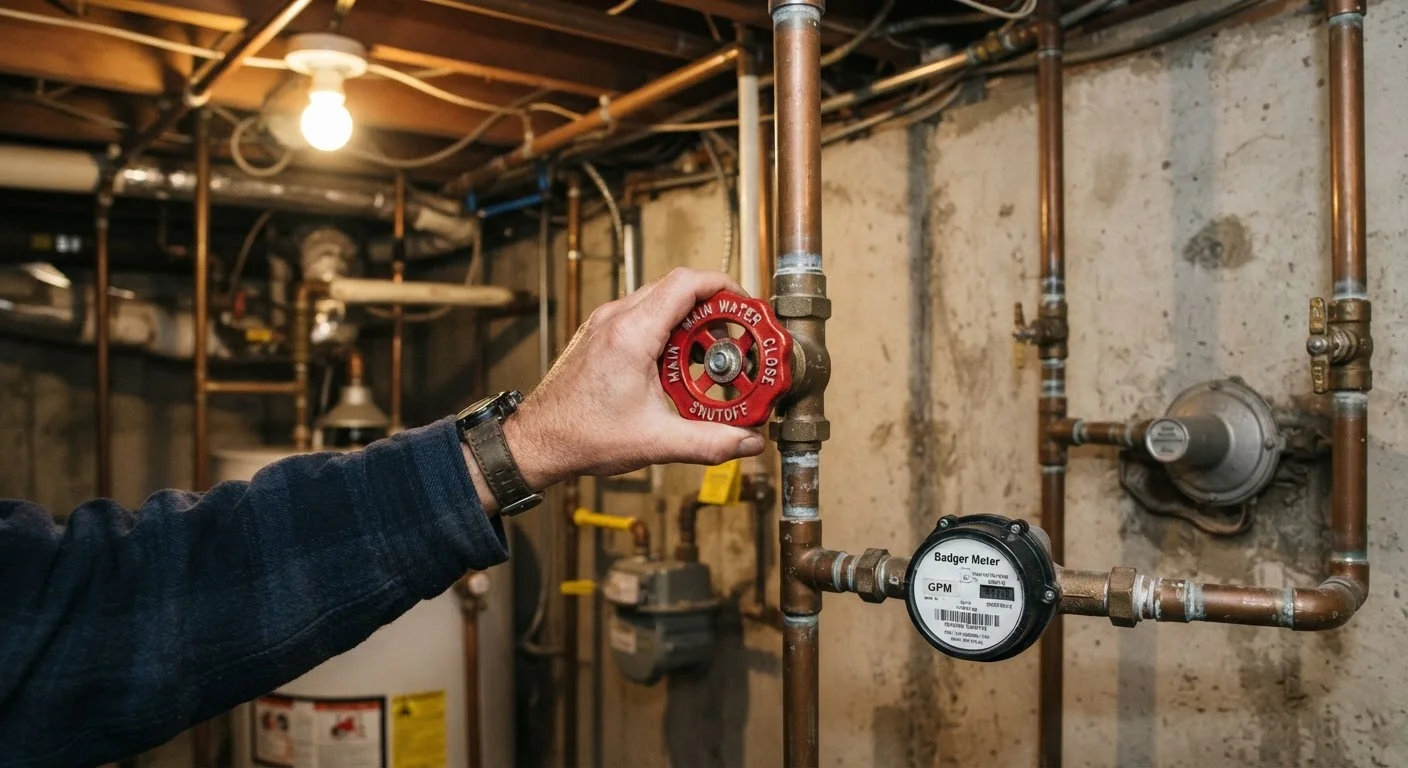
The main interior shutoff valve controls all water flowing into your home from the supply line. Common locations include:
- Basement or crawl space — usually on the wall facing the street, near where the supply pipe enters the foundation.
- Utility closet — in apartments and condos, look near the water heater or under the kitchen sink.
- Garage — in warmer climates where pipes don't need to be buried as deep.
If you are not sure, check your home inspection report or ask your landlord — the location is typically documented.
Identify the valve type
There are two common types of main shutoff valves:
- Ball valve
- Has a lever handle. When the lever is parallel to the pipe, water flows freely. Turning it 90 degrees (perpendicular to the pipe) stops the flow. This is the faster and more reliable type.
- Gate valve
- Has a round wheel handle. You must turn it clockwise multiple times to fully close it. These are older and more prone to seizing from disuse.
Knowing your type now means no guesswork during an emergency.
Shut off the water
Close the valve using the method appropriate to its type:
- Ball valve: Rotate the lever handle one-quarter turn until it is perpendicular to the pipe.
- Gate valve: Turn the wheel clockwise — righty tighty — until it stops. Do not overtighten.
The entire home's water supply should now be off.
Use the street-side meter shutoff if needed
Every home connected to municipal water also has a shutoff at the water meter, located near the street or sidewalk in a underground box (sometimes called a curb stop). Lift the lid — you may need a flathead screwdriver — and you will see a valve near the meter.
Most utility shutoffs require a special pentagon-shaped meter key (also called a curb key) to operate. These are available at hardware stores. Turn the valve a half-turn to close it. Contact your water utility before using this shutoff if possible — some municipalities prefer to handle this themselves.
Relieve pressure and drain the pipes
After shutting off the supply, open a faucet on the lowest floor of your home — a basement utility sink or a ground-floor bathroom tap works well. This releases residual pressure in the pipes and drains any water still sitting in the lines, which reduces further leakage from a burst or damaged section.
Assess the situation and call for help if needed
With the water off and pressure relieved, you can safely look at what caused the problem. Minor issues — like tightening a loose fitting under a sink — may be within DIY reach. A burst pipe, visible wall damage, or any concern about mold or structural impact warrants a call to a licensed plumber.
See when to call a professional for a clear breakdown of which plumbing tasks are safe to handle yourself and which carry real risk.
Do a Practice Run Right Now
Don't wait for an emergency to discover your valve is behind a locked door or rusted shut. Walk through this process on a calm day, confirm the valve works, and label it with a small tag. Thirty minutes of preparation today can save hours of damage control later.
After the Emergency: What Comes Next
Once the immediate crisis is contained, a few follow-up tasks will help you recover smoothly and prevent future incidents.
- Document the damage — take photos before any cleanup. This matters if you need to file a homeowner's or renter's insurance claim.
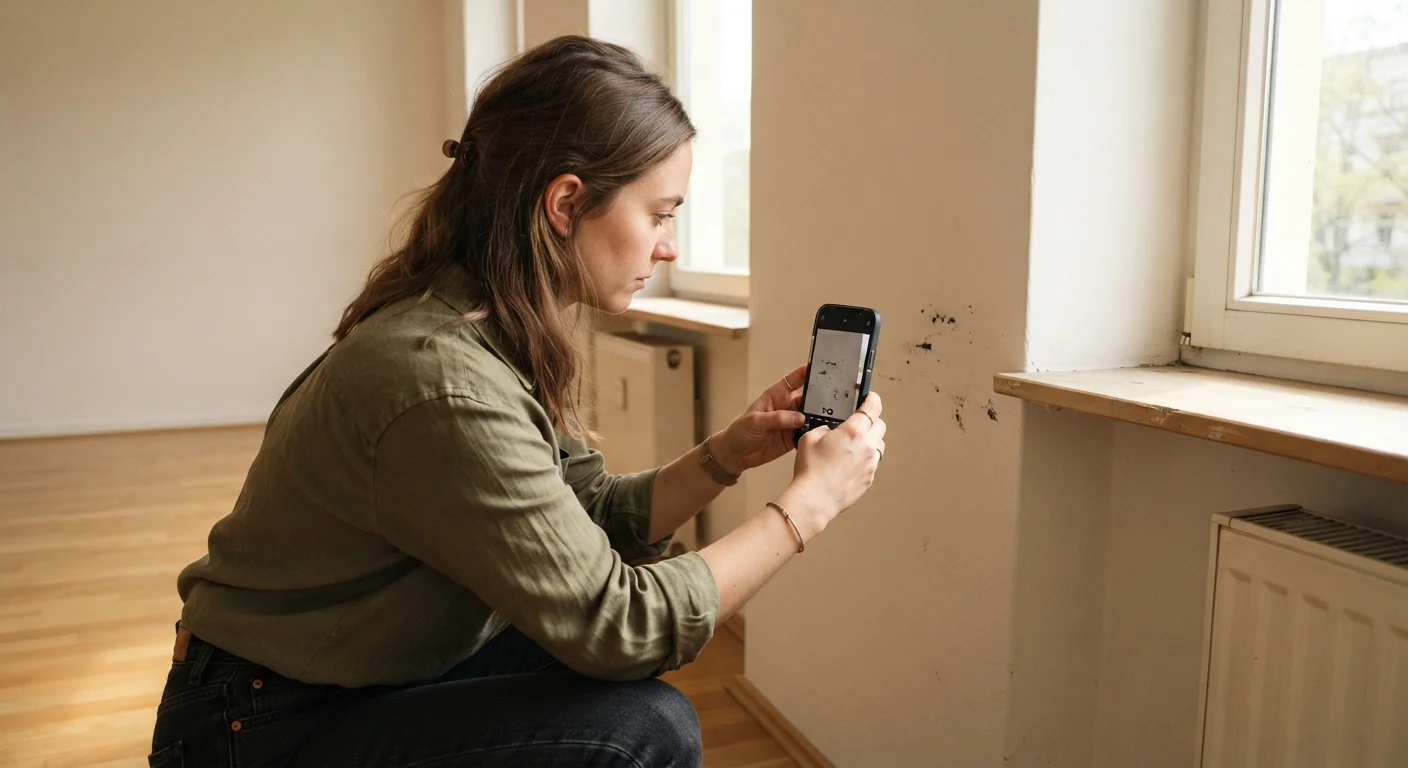
- Check for mold risk — if water soaked into drywall or flooring, mold can develop within 24–48 hours. A restoration professional can assess whether materials need to be removed.
- Test your valve periodically — shutoff valves that are never used can seize. Exercise (open and close) yours once a year to keep it functional.
- Build an emergency fund — plumbing repairs can be expensive and unexpected. Understanding how to build a savings buffer means you're financially prepared for moments like this.
For related maintenance you can handle yourself, see our guide to unclogging a drain without calling a plumber.
Don't Force a Stuck or Corroded Valve
Old gate valves (the wheel-style kind) can seize over time. If the valve won't budge with firm hand pressure, do not use a wrench or excessive force — you risk snapping the valve stem or cracking the fitting. In that case, go directly to the street-side meter shutoff or call your water utility for help.