

What the Vocational Route Actually Looks Like
Vocational or trade programs train you for a specific skilled occupation - electrician, dental hygienist, HVAC technician, welder, medical coder, plumber, and many others. Programs run anywhere from several months to two years depending on the credential and field. You spend most of that time on applied, hands-on learning rather than general education requirements.
The route splits broadly into two models: trade or vocational school (classroom-first, credential at the end) and apprenticeships (paid on-the-job training combined with some classroom instruction). These are meaningfully different in structure and cost. See our comparison of both models if you're trying to decide between them.
If you're brand new to this path, our introductory guide for school leavers is a good starting point before reading further.
What You Gain
Faster path to employment than a four-year degree
Most vocational programs run one to two years, meaning graduates can enter the workforce and start earning two to three years before a typical bachelor's degree holder.
Significantly lower tuition and student debt
Trade school tuition is generally a fraction of four-year college costs. This translates to less debt at graduation and a shorter time to financial stability.
Training is directly tied to job-ready skills
Curriculum is built around what employers in the field actually need, so there's little gap between what you learn and what you'll do on day one.
Strong and growing demand in many skilled trades
Fields like electrical, HVAC, plumbing, and healthcare support are facing worker shortages in many regions, creating favorable conditions for qualified graduates.
Competitive earning potential in experienced roles
Experienced tradespeople in high-demand fields can earn wages that exceed many roles typically associated with four-year degrees, particularly with licensure and specialization.
The headline advantages are real and well-documented. Faster completion time means earlier entry into the workforce and earlier earnings. Lower tuition - combined with the availability of grants and federal aid - tends to mean substantially less debt at graduation. For context, financial aid for trade students works differently from university aid, but options do exist.
Perhaps most importantly, demand for skilled tradespeople is strong in many regions. Retiring workers are creating real gaps in fields like electrical, plumbing, and construction - gaps that data from the U.S. Bureau of Labor Statistics consistently reflects. Wage data for the trades often surprises people: experienced electricians, elevator installers, and radiation therapists regularly earn above national median wages.
~$33,000
Median trade school tuition (total program)
According to the Education Data Initiative, the average total cost of a trade school program is substantially lower than even two years at a four-year university.
6%+
Projected growth in construction and extraction trades
The U.S. Bureau of Labor Statistics projects above-average employment growth in several skilled trade categories over the coming decade.
$60,000+
Median annual wage for electrical and elevator trades
BLS Occupational Outlook data shows that experienced licensed electricians and elevator installers regularly earn above the national median wage for all occupations.
What You Give Up
Narrow credential limits career pivoting later
Vocational credentials are occupation-specific. If your interests change, transitioning to roles requiring a bachelor's degree means returning to school, usually without much credit transfer.
Physical demands can be challenging over a long career
Many trades involve physical labor, outdoor conditions, or repetitive motion that can accumulate strain over decades, though this varies significantly between fields.
Program quality varies widely - not all credentials are equal
Some vocational schools have poor accreditation, low job placement rates, or credentials that employers don't recognize. Due diligence before enrolling is critical.
Fewer general networking and academic opportunities
Four-year colleges offer extracurriculars, alumni networks, and academic exploration that vocational programs typically don't - which can matter in some career trajectories.
Limited advancement without additional credentials
Moving into management or supervisory roles in some industries may eventually require a degree or additional coursework beyond a trade certificate.
The trade-offs are equally real and worth taking seriously before you commit. Vocational credentials are occupation-specific by design - which is a strength if you stay in that field, but can become a limitation if your interests shift. Pivoting later to a role that requires a bachelor's degree means going back to school, often without much credit transfer.
Physical demands are also a genuine factor in many trades. Careers that involve heavy lifting, outdoor exposure, or repetitive motion can become harder to sustain over decades - though this varies significantly by trade. Some trades involve far less physical strain than others.
Program quality is another variable that directly affects your outcome. Not every vocational school is equal. Checking accreditation and job placement data before enrolling is not optional - it's the difference between a credential employers respect and one they don't.
How This Compares to a Four-Year Degree
Neither path is objectively superior - they serve different goals. A four-year degree offers broader exposure, greater flexibility across industries, and access to certain management or professional-track roles. A vocational credential offers faster, cheaper, more targeted preparation for a specific skilled role.
A side-by-side comparison of cost, duration, and earning potential makes this clearer. If you're weighing both seriously, it's worth reading alongside information from the college and degrees hub.
Vocational vs. Community College: Not the Same Thing
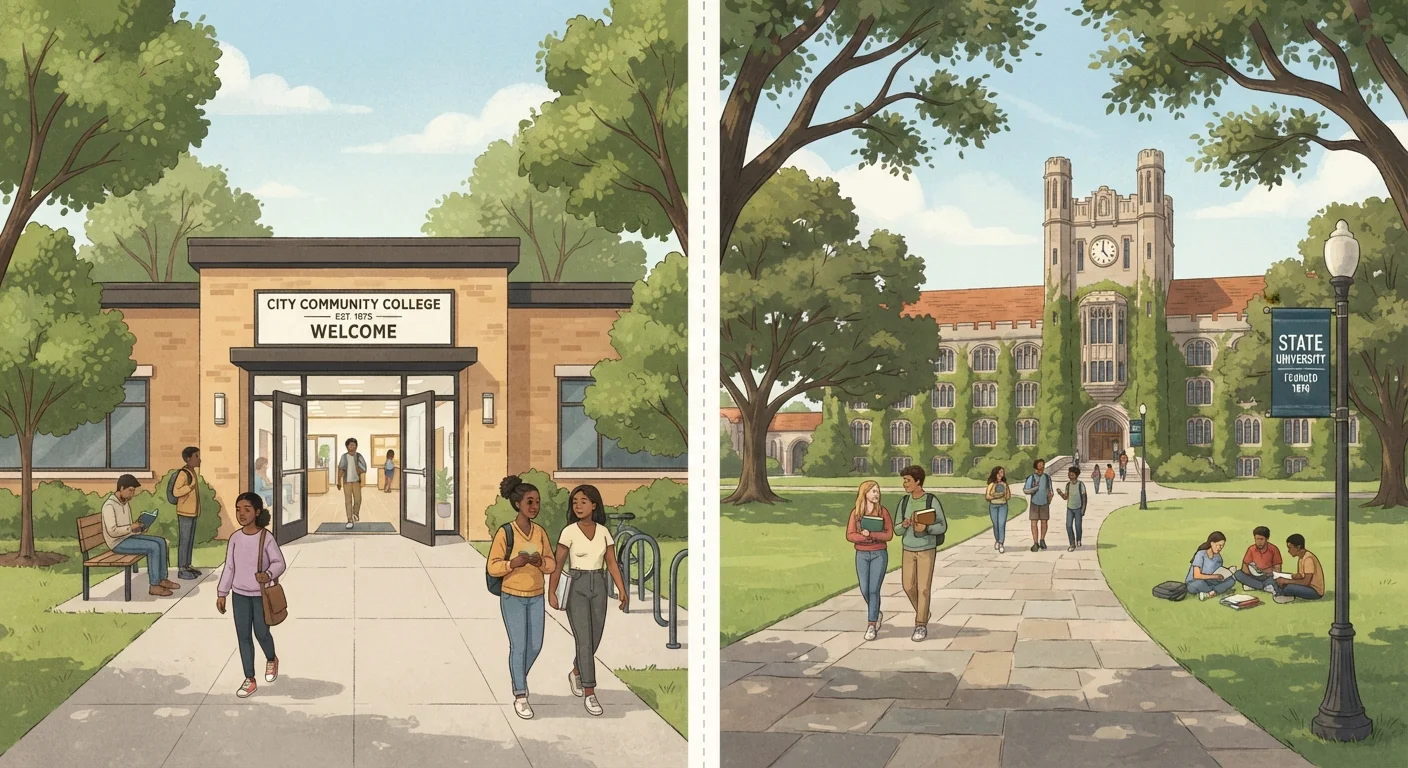
Trade or vocational schools and community colleges overlap in some areas but are structured differently. Community colleges often offer associate degrees alongside vocational certificates and may have clearer transfer pathways to four-year programs. If you're unsure which setting fits better, see our guide on apprenticeships, trade programs, and community college.
It's also worth knowing that online learning can complement either path. Short-term certifications and skills-based courses through online platforms can supplement a vocational credential - particularly for roles that blend technical skill with digital tools. See the online learning hub for an overview of what's available.
Making the Decision Work in Your Favor
The vocational route rewards deliberate choice. Students who struggle after graduating often do so for predictable, avoidable reasons - a mismatch between their trade and local job market demand, a program with weak employer connections, or a credential that wasn't properly vetted. Understanding why some trade graduates struggle to find work is useful reading before you enroll anywhere.
If you're still deciding which trade to pursue, a structured approach to matching your strengths to a viable trade can help you avoid picking randomly. And once you're ready to move forward, the complete roadmap to starting a career in the trades covers every stage from enrollment to first job.