
Cost and Time: The Numbers Up Front
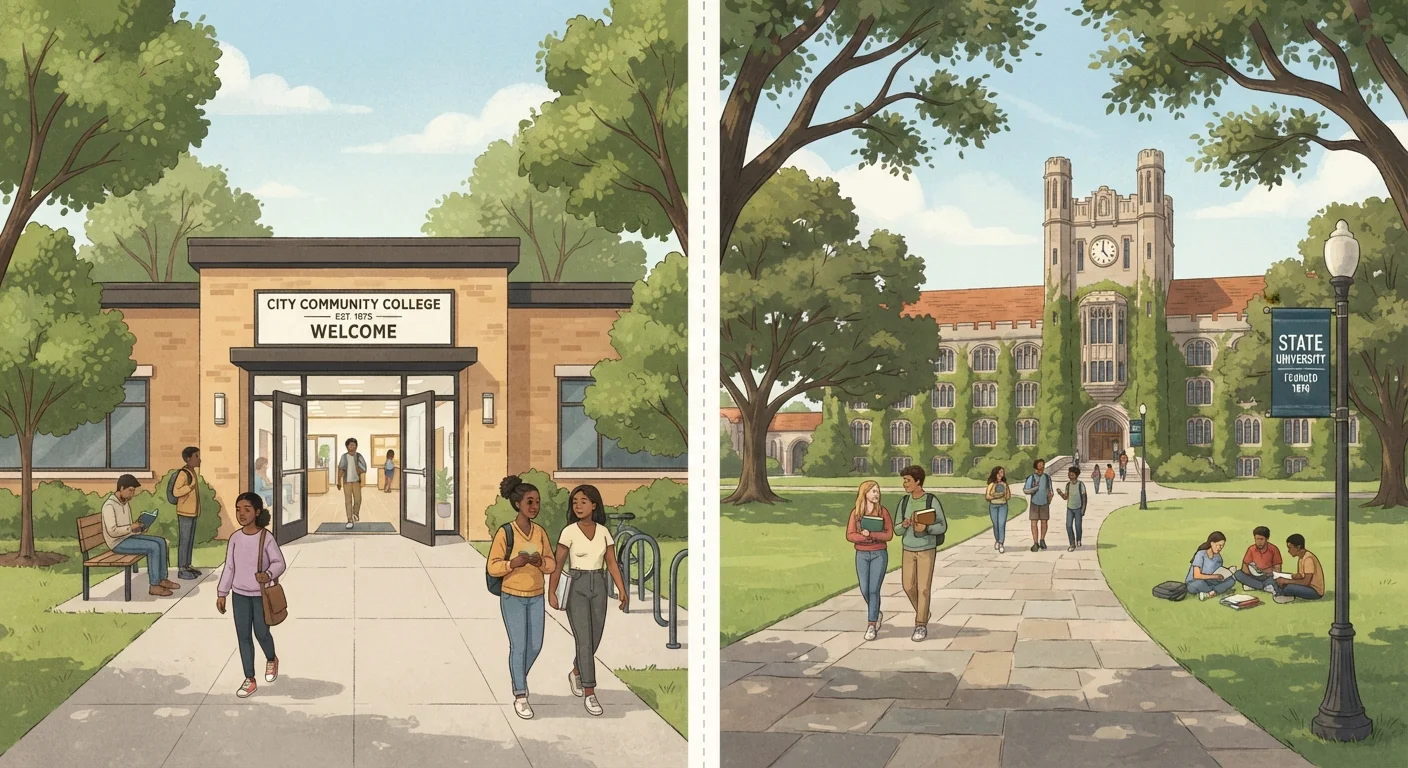
The starkest difference between these two paths shows up immediately in cost and duration. According to the National Center for Education Statistics, average annual tuition and fees at a public four-year university run roughly $10,000-$12,000 for in-state students - and considerably more at private institutions. Over four years, total costs including room, board, and living expenses commonly reach $100,000 or more.
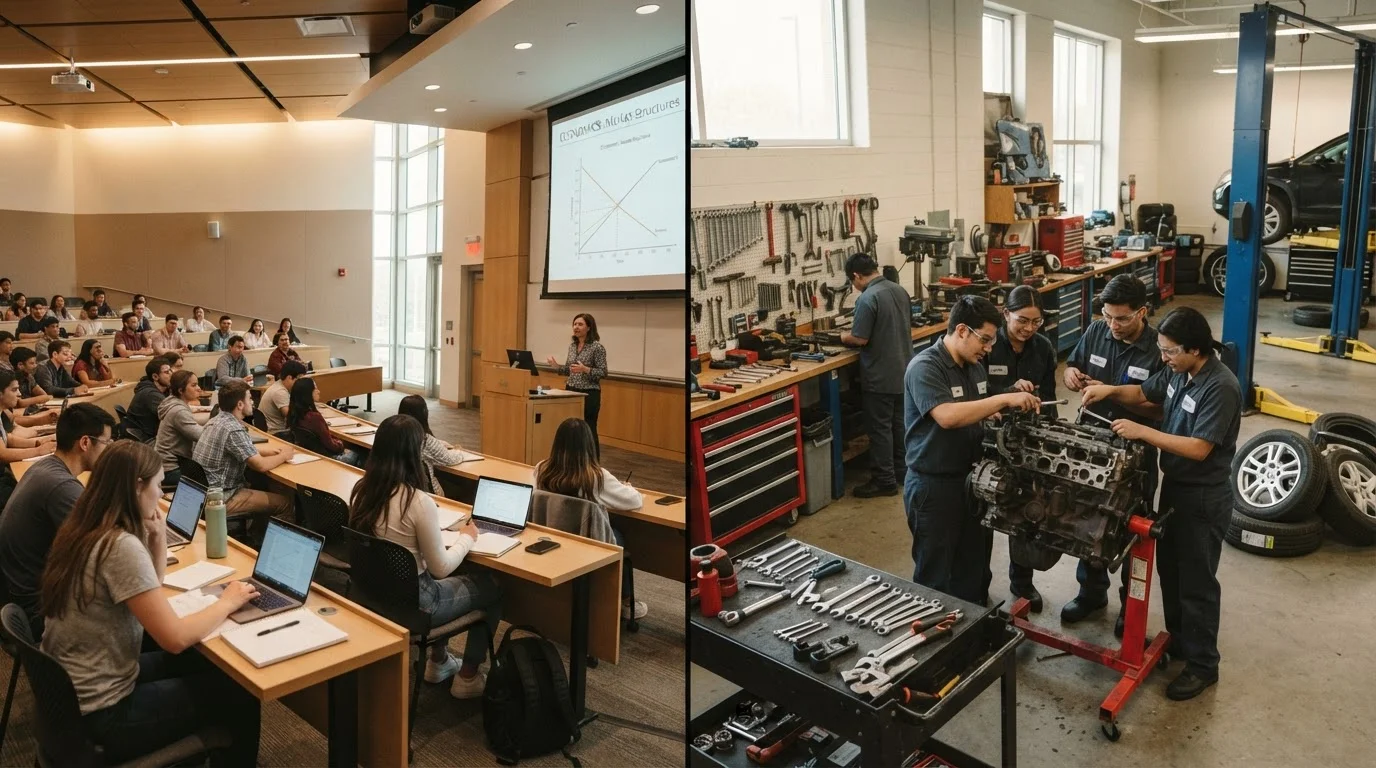
Vocational and trade programs present a very different picture. Certificate and diploma programs at community colleges or accredited trade schools frequently cost between $5,000 and $20,000 in total - for the entire program. Most run 12 to 24 months. That gap in time is significant: a student completing a two-year HVAC or medical coding program may be two years into a paying career before a university-track peer walks across a graduation stage.
| Criterion | Four-Year Degree | Vocational Training |
|---|---|---|
| Typical duration | 4 years | 1-2 years |
| Average total program cost | $40,000-$120,000+ | $5,000-$20,000 |
| Time to first full wage | 4+ years | 1-2 years |
| Breadth of study | Broad, multi-discipline | Focused, occupation-specific |
| Graduate school eligibility | Yes (standard prerequisite) | Generally no |
| Hands-on training emphasis | Varies widely by major | Core to the curriculum |
| Typical student debt at completion | Often $30,000-$50,000+ | Often under $10,000 |
| Career flexibility | High across many sectors | Focused on specific trade |
For a fuller picture of what vocational programs cover and how they're structured, see our overview of trade and vocational programs.
Earning Potential: What the Data Actually Shows
The conventional narrative - that a bachelor's degree always leads to higher earnings - deserves scrutiny. The U.S. Bureau of Labor Statistics Occupational Outlook Handbook consistently reports median annual wages for licensed electricians, plumbers, and dental hygienists in ranges that overlap substantially with many bachelor's-level starting salaries. Electricians, for example, had a median annual wage of around $61,000 in recent BLS data, with experienced journeymen earning considerably more. HVAC technicians, radiologic technologists, and industrial machinery mechanics show similar patterns.
That said, lifetime earnings data from the Georgetown Center on Education and the Workforce does show that bachelor's degree holders, on average, earn more over a full career than workers without a four-year credential. The important nuance: that average reflects enormous variation by field. A philosophy graduate and a petroleum engineering graduate both hold bachelor's degrees, but their wage trajectories look nothing alike.
$61,000+
Median annual wage for electricians (U.S.)
Per U.S. Bureau of Labor Statistics Occupational Outlook Handbook data; experienced workers in high-demand areas often earn more.
65%
U.S. jobs not requiring a four-year degree
Georgetown Center on Education and the Workforce research estimates that a majority of jobs in the U.S. economy are accessible without a bachelor's credential.
1-2 years
Typical vocational program length
Most accredited certificate and diploma programs at trade schools and community colleges complete within 24 months, per NCES program data.
The honest takeaway is that field of work matters more than credential type in many cases. Before assuming either path leads to a specific salary, research the specific occupation you're targeting. Our article on skilled trades that don't require a four-year degree includes typical wages and credential requirements by occupation.
Flexibility, Career Mobility, and What Each Path Closes Off
A four-year degree offers breadth by design. Most programs require courses across multiple disciplines, which can be genuinely useful if your career goals shift - and they often do in your twenties. A bachelor's credential also serves as the baseline for most graduate and professional programs (medicine, law, MBA), making it the required foundation if advanced study is part of your plan.
Vocational training is purpose-built: you train for a specific role, and that focus pays off in speed and cost. The trade-off is narrower portability. A HVAC certification doesn't translate directly into a management role without additional training or credentials. That said, many trades have clearly defined advancement ladders - apprentice to journeyman to master, or from technician to supervisor - and some employers actively fund continuing education for skilled workers.
It's also worth noting that vocational and university education aren't mutually exclusive. Some workers complete a trade credential first, enter the workforce, and pursue additional study later - sometimes online. Our online learning hub covers how flexible digital credentials are reshaping continuing education for working adults. For a side-by-side look at how community college fits into this picture, see community college vs. four-year university.
Accreditation Matters for Both Paths
Whether you're evaluating a university or a trade school, accreditation is a critical checkpoint. For universities, regional accreditation affects financial aid eligibility and credit transferability. For vocational programs, national accreditation bodies and state licensing boards set the standards that determine whether your credential is recognized by employers and licensing agencies. Always verify a program's accreditation status before enrolling. Our guide to the vocational route walks through what to check.