

Why 'I Don't Know' Is a Better Starting Point Than You Think
Not knowing what you want to study is not a flaw - it is the normal state for most eighteen-year-olds and many adults. The pressure to arrive at college with a declared major and a five-year plan is largely a cultural expectation, not an academic requirement. In fact, research on college completion suggests that students who take time to explore before committing are more likely to finish their degree than those who locked in a direction prematurely and later found it was the wrong one.
What uncertainty actually signals is that you have not yet had enough structured exposure to your own strengths, to the range of fields available, or to what those fields look like as real work. This guide addresses all three. Before you read the steps below, it helps to understand one thing: choosing a major is a decision you can revise. It is not a tattoo.
Undecided Is a Valid Starting Point
Many colleges offer an 'undeclared' or 'exploratory studies' status that lets you take general coursework before committing to a major. Enrolling undeclared does not put you behind - it protects you from an early choice you may regret. Ask your admissions office what that option looks like at each school you are considering.
If you are weighing whether college is even the right path for you right now, our checklist of questions to ask before committing to any program can help you think it through before signing anything.
Watch Out for Pressure to Decide Fast
Family, peers, or well-meaning advisers may push you to lock in a major immediately. Resist that pressure long enough to do the groundwork in this guide. Choosing quickly to avoid discomfort is one of the most common reasons students end up switching majors - or dropping out - later.
What You'll Need Before You Start
What you will need
College Course Catalog
Shows every major offered, required courses, and credit requirements - the foundation for comparing programs.
BLS Occupational Outlook Handbook
Provides factual data on career paths, typical education requirements, and job market conditions linked to different fields.
Academic Adviser
A school staff member who can map your interests to available programs and flag scheduling pitfalls before you enrol.
Career Assessment Tool
Structured inventories (such as those offered free through many college career centers) that surface patterns in your interests and work style.
Step-by-Step: How to Choose a Major
Take Stock of What You Already Enjoy and Do Well
Before looking at any college catalog, write down two lists: subjects or activities that hold your attention without effort, and tasks you consistently do better than most people around you. These do not have to be academic. Enjoying fixing things, writing stories, organizing events, or helping people through problems are all meaningful data points.
Look for patterns. If three items on your list involve working with numbers and logic, that points somewhere. If most involve communicating or persuading, that points somewhere else. This self-inventory takes 20 minutes and will save you months of guessing.
Browse Majors as Categories, Not Job Titles
A common mistake is searching for a major named after a job - 'sports management' because you like sports, or 'nursing' because you want to help people. Instead, open a college catalog and read the descriptions of broad fields: social sciences, natural sciences, humanities, business, health sciences, engineering, education, arts.
Notice which descriptions make you want to keep reading. A major is a structured set of courses, not a guarantee of a specific job. Many graduates work in fields adjacent to - or entirely different from - their major's label.
Look Up What Each Major Actually Requires
Once you have three to five majors that feel plausible, pull up the full degree requirements for each. Count the number of required courses, note any prerequisites (prior courses you must complete first), and check whether the program includes internships, labs, or capstone projects.
Some programs are far more structured than they appear from the outside. See our guide to degree paths that surprise students for common hidden requirements to watch for before committing.
Research Where That Major Leads in the Real World
For each major still on your list, spend time understanding realistic outcomes. The BLS Occupational Outlook Handbook is a reliable starting point. Many college career centers also publish first-destination surveys showing where recent graduates from specific programs actually ended up - employed, in graduate school, or still searching.
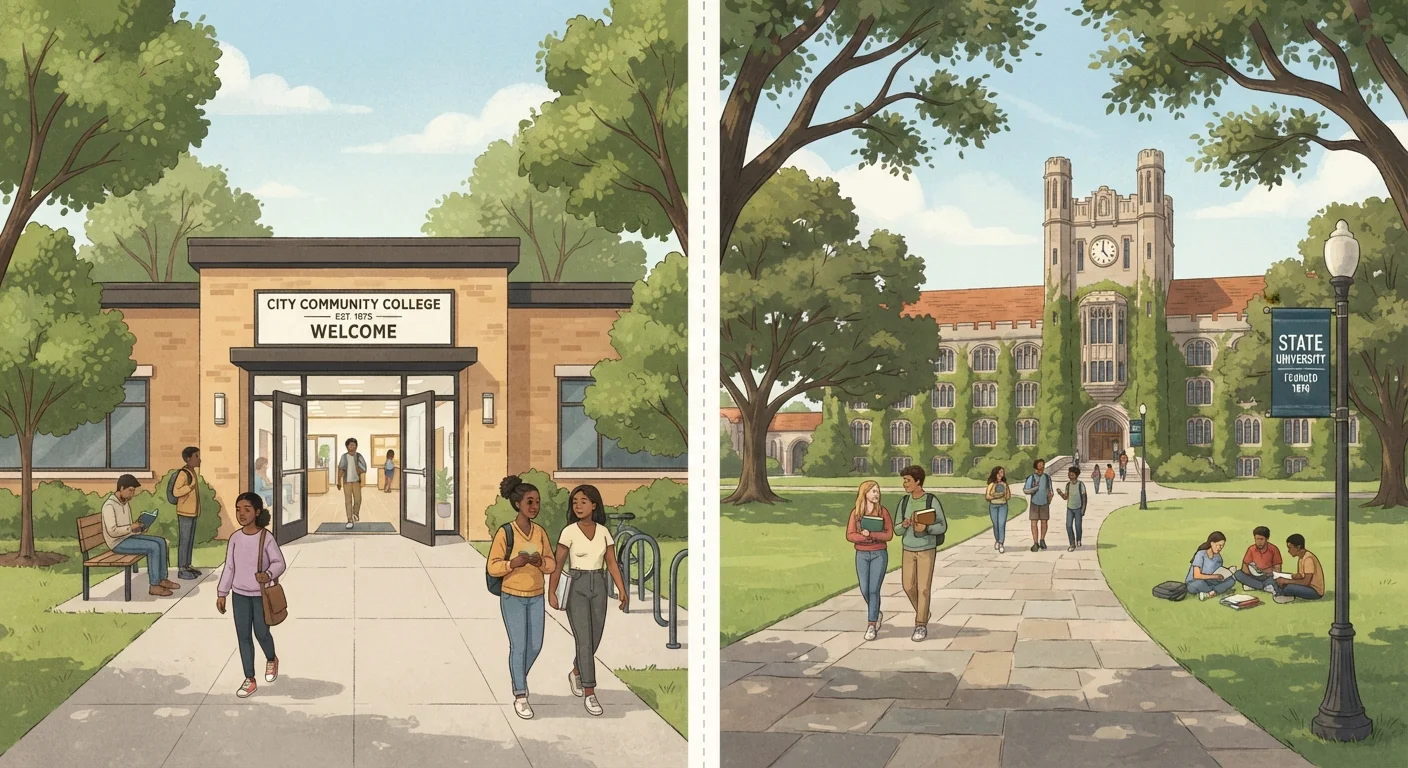
This is also a good moment to consider whether a four-year university is the right starting point at all. Our comparison of community college vs. four-year university walks through cost, flexibility, and transfer options that may open different doors. If you are drawn to hands-on technical work, trade and vocational programs are worth understanding as a genuine alternative.
Talk to People Already in the Field
Data is useful, but conversations are irreplaceable. Reach out to your school's alumni network, ask a career center adviser to connect you with working professionals, or use LinkedIn to message people with job titles that interest you. Most people are willing to spend 15 minutes answering honest questions from a student.
Ask specifically: What does a typical week look like? What did you wish you had known before choosing your major? What skills do you use most? These answers will ground your decision in reality rather than assumption.
Make a Provisional Choice - and Give Yourself Permission to Revise
With your self-inventory, program research, and real-world input in hand, choose the major that best fits your interests, tolerates your weak spots, and leads to work you could see yourself doing. Write down your reasons - not just the choice itself.
Then revisit those reasons after your first semester. Most colleges allow major changes, often without penalty, through the end of sophomore year. A provisional decision made thoughtfully is far better than paralysis. And if you are still sorting out myths from facts about how college works, common college myths first-generation students hear is worth reading before you finalize anything.
Use the Bureau of Labor Statistics Occupational Outlook Handbook
The U.S. Bureau of Labor Statistics publishes free, regularly updated information on hundreds of occupations - including typical education required, median wages, and projected job growth. It is one of the most reliable, non-commercial sources available for understanding where different degree paths can lead.