
What These Programs Actually Cover
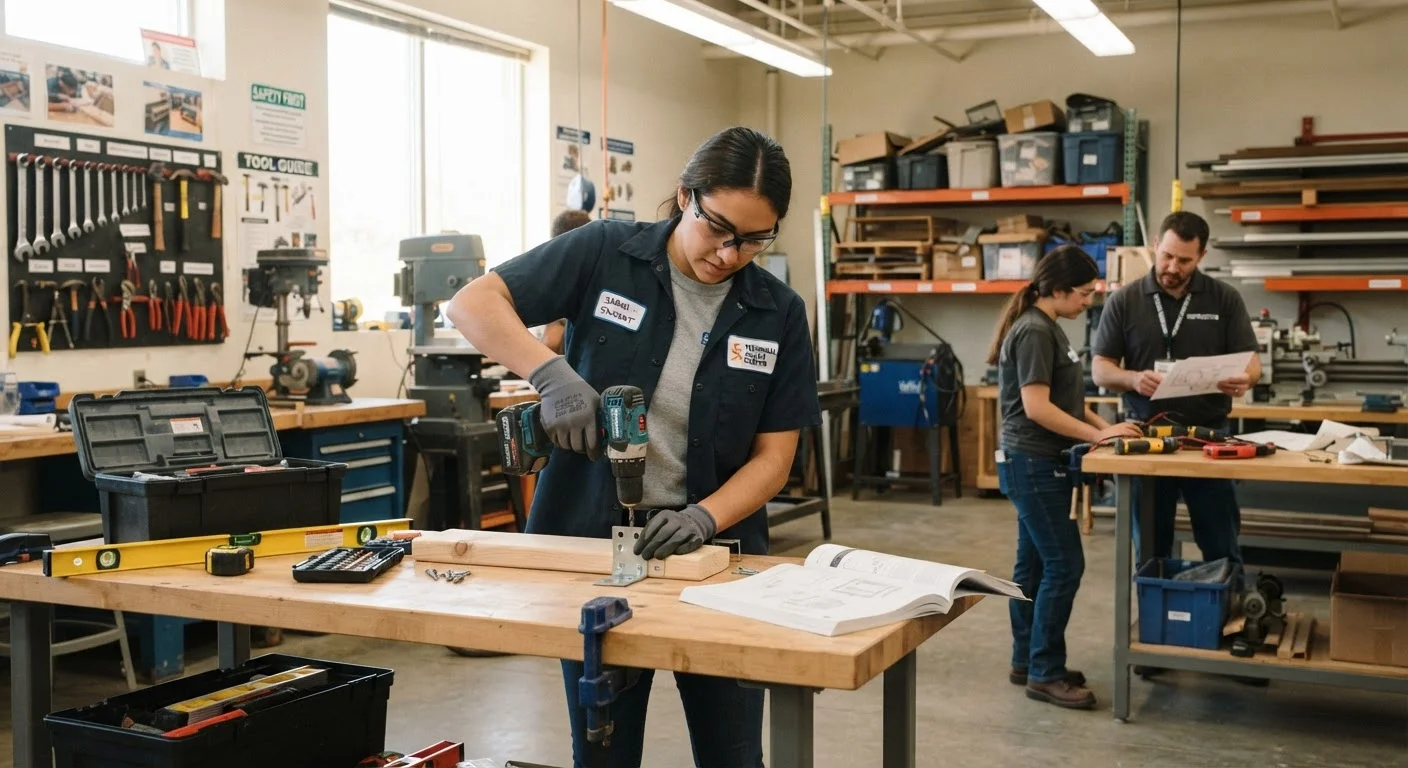
Trade and vocational programs are organized around a single outcome: preparing you to perform a specific job competently and safely. Rather than spending years on general education requirements, you spend most of your time on occupational coursework, labs, and supervised practice.
The fields covered are broad. Common program categories include:
- Construction and skilled trades: Electrical wiring, plumbing, HVAC (heating, ventilation, and air conditioning), welding, and carpentry.
- Healthcare support: Medical assisting, dental hygiene, practical nursing (LPN), pharmacy technician, and diagnostic imaging.
- Automotive and transportation: Auto body repair, diesel mechanics, and aviation maintenance.
- Technology: Cybersecurity fundamentals, network administration, and computer-aided design (CAD).
- Personal services: Cosmetology, esthetics, and barbering.
- Culinary arts and hospitality: Professional cooking, baking, and hotel operations.
Within each program, you will typically cover safety standards, industry-specific regulations, hands-on technique, and often a practicum or externship - a supervised period of real-world practice before you graduate. See our overview of trade schools and vocational colleges for more on how these institutions are structured.
~2 years
Maximum length of most vocational programs
Many certificate programs are completed in under one year, according to the U.S. Department of Education's program classification guidelines.
16M+
Students enrolled in career and technical education
The National Center for Education Statistics reports over 16 million postsecondary students enrolled in career and technical education programs in the U.S.
$56,000+
Median annual wage for skilled trade occupations
The U.S. Bureau of Labor Statistics reports median wages for installation, maintenance, and repair occupations above this level as of its most recent Occupational Outlook data.
How Long Programs Take and What Credentials You Earn
Program length depends on the field and the credential level you are pursuing. As a general guide:
- Short-term certificates (under one year): Phlebotomy, forklift operation, IT help desk, basic welding. These are designed for fast entry-level placement.
- Full certificates or diplomas (one year): Medical assisting, electrical fundamentals, cosmetology. Enough time to cover core skills and licensing preparation.
- Associate of Applied Science (AAS) degrees (two years): Registered nursing, automotive technology, construction management. Often required for licensed or supervisory roles.
The credential you earn matters beyond the paper itself. In licensed trades - electricians, plumbers, HVAC technicians - completing an approved program is often a prerequisite for sitting a state licensing exam. In healthcare, certain credentials (like the CNA or LPN) are tied directly to passing a recognized competency test. Always ask whether the program you are considering prepares graduates for any required licensure exams. For guidance on verifying this before you commit, see our article on checking a program's accreditation and credential recognition.
Ask About Licensure Exam Pass Rates
Before enrolling in any program tied to a licensed trade or healthcare credential, ask the school for its graduates' licensure exam pass rates. Accredited programs in fields like nursing or electrical work should be able to provide this data. A low pass rate can signal curriculum or support gaps that will affect your ability to work in the field after graduating.
Who These Programs Suit - and Who Might Want a Different Path
Vocational programs work best for students who have a reasonably clear occupational goal and who learn well by doing. If you can picture the job you want - and that job has a defined training pathway - a vocational program gives you a direct, efficient route to it.
They are also a practical option if you are managing financial constraints. Shorter programs typically mean lower total tuition and a faster return to income. That said, the trade-off is narrower credential flexibility: a certificate in HVAC technology does not transfer easily to a different career sector the way a general associate degree might. Our article on the gains and trade-offs of the vocational route walks through this balance in detail.
Vocational programs may be a less obvious fit if you are genuinely unsure what you want to do, since the training is narrow by design. In that case, exploring a community college general studies track or online learning options first can help you narrow your direction before committing to a specific trade path. You might also want to compare apprenticeships versus vocational school to see which model fits your learning style and financial situation.
If you are ready to explore next steps, our guide on what the vocational program application process actually looks like walks you through the process from search to enrollment.