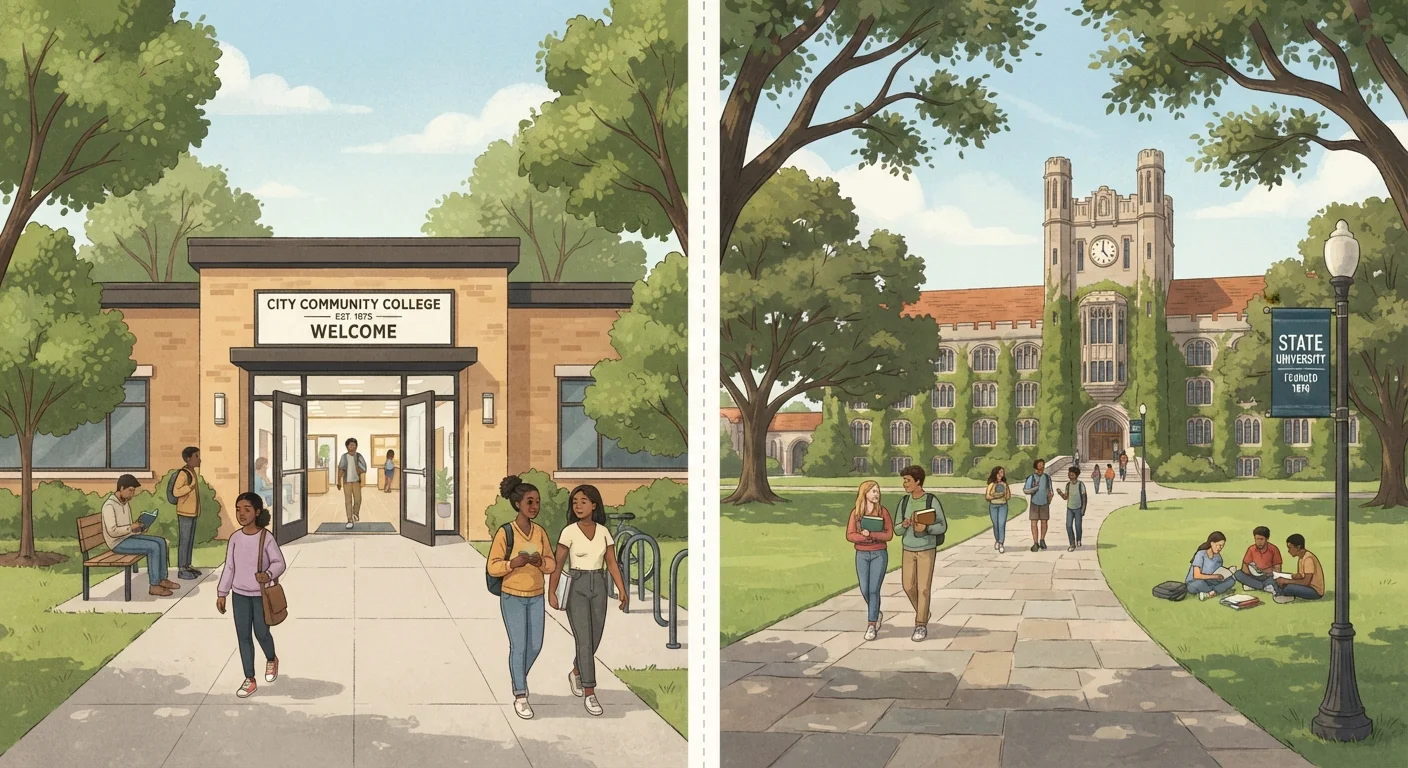


Why Financial Aid Rules Differ for Trade Students
Most financial aid information is written with four-year university students in mind. That creates a gap for the millions of people pursuing certificates, associate degrees through vocational schools, or accelerated trade programs. The rules aren't completely different - but there are enough distinctions that going in uninformed can mean leaving real money on the table.
The single most important factor is accreditation. For a vocational school to participate in federal student aid programs, it must be accredited by an agency recognized by the U.S. Department of Education. This applies to programs under Title IV of the Higher Education Act - which includes Pell Grants and federal student loans. If a school isn't accredited in this way, federal aid is off the table.
To learn more about what different vocational programs actually look like before diving into funding, see our overview of trade school and vocational programs.
Accreditation Varies by School and Program
Not all accreditation is equal for financial aid purposes. A school may hold regional or national accreditation, but only institutions accredited by a Department of Education-recognized agency qualify for Title IV federal aid. Always verify a school's accreditation status at the Department of Education's accreditation database before enrolling - especially for shorter certificate programs at standalone trade schools.
Federal Aid Options: What Trade Students Can Access
Once you've confirmed your school is accredited, the federal aid landscape opens up. Here's what's available:
- Pell Grant: This need-based grant does not need to be repaid. Eligibility is determined by the FAFSA and factors like family income and enrollment status. Because many vocational programs cost considerably less than four-year degrees, a Pell Grant can cover a much larger share of total tuition.
- Federal Direct Subsidized and Unsubsidized Loans: If you need to borrow, federal loans generally offer lower interest rates and more flexible repayment options than private loans. Subsidized loans don't accrue interest while you're enrolled at least half-time. Borrow only what your budget requires - loans must be repaid with interest.
- Federal Work-Study: Some accredited vocational schools participate in this program, allowing students to work part-time jobs - often on campus or with community partners - to offset education costs.
To access any of these, complete the FAFSA at studentaid.gov. It's free, and submitting it early gives you the widest window of eligibility.
$7,395
Maximum Pell Grant award (2024-25 academic year)
According to the U.S. Department of Education, eligible students with significant financial need can receive up to this amount annually - a substantial share of many vocational program costs.
~600,000
Active registered apprentices in the U.S.
The U.S. Department of Labor reports hundreds of thousands of active apprentices at any given time, many in trades like construction, healthcare, and manufacturing - earning wages while they train.
Under $15,000
Typical total cost of many vocational certificate programs
National Center for Education Statistics data shows median tuition for certificate programs is substantially lower than four-year degrees, giving grants and scholarships more purchasing power.
State, Employer, and Workforce Development Funding
Federal aid is just one layer. Many states have developed their own funding streams specifically targeting workforce training in high-demand fields - and these are frequently underused because students don't know to look for them.
State workforce grants often focus on specific trades where labor shortages exist: skilled construction trades, welding, HVAC, medical assisting, and commercial driving, among others. Your state's workforce development agency or community college system is usually the place to start. Eligibility requirements vary by state, but financial need and enrollment in an approved program are common criteria.
Employer tuition assistance is another often-overlooked source. Companies in construction, healthcare, and manufacturing routinely offer to pay for relevant certifications or vocational credentials - either upfront or through reimbursement. Some registered apprenticeship programs go further, paying participants a wage while they train. The U.S. Department of Labor's apprenticeship finder (apprenticeship.gov) is a useful starting point.
Trade-specific scholarships are offered by many industry associations, unions, and community foundations. These tend to be less competitive than university scholarships simply because fewer applicants pursue them. Organizations like the SkillsUSA Foundation, Plumbing-Heating-Cooling Contractors Association, and various state electrical associations all fund student awards annually.
Search Your State's Workforce Agency Early
State workforce development grants often have limited annual funding and are awarded on a first-come, first-served basis. Contact your state's workforce or labor department as early as possible - ideally before you've selected a program - to find out which fields and schools qualify. Many states have dedicated portals listing available workforce training grants by occupation.
Making the Most of Lower Total Costs
One structural advantage vocational students have is that the total price tag for a trade credential is typically far lower than a bachelor's degree. Programs often run six months to two years, with tuition in the range of a few thousand to around twenty thousand dollars - compared to six-figure costs at many four-year institutions. That means modest grants and scholarships go proportionally further.
If you can combine a Pell Grant, a state workforce grant, and even a small trade scholarship, you may be able to cover all or most of tuition without borrowing. That's a very different financial outcome than most university students face.
Still, trade programs come with trade-offs worth understanding alongside the benefits. Our article on what you gain and give up on the vocational route gives a balanced picture. And when you're ready to take the next step, the vocational program application process article walks through enrollment practically.
Funding your training is solvable for most students who take the time to research accredited programs and apply early. The combination of federal, state, and private options is more robust than most people realize.
This article is for general informational purposes only and does not constitute financial or legal advice. Aid eligibility rules change periodically - verify current requirements at studentaid.gov and your state's education or workforce agency before making enrollment decisions.