
What Are Closing Costs, and How Much Should You Expect?
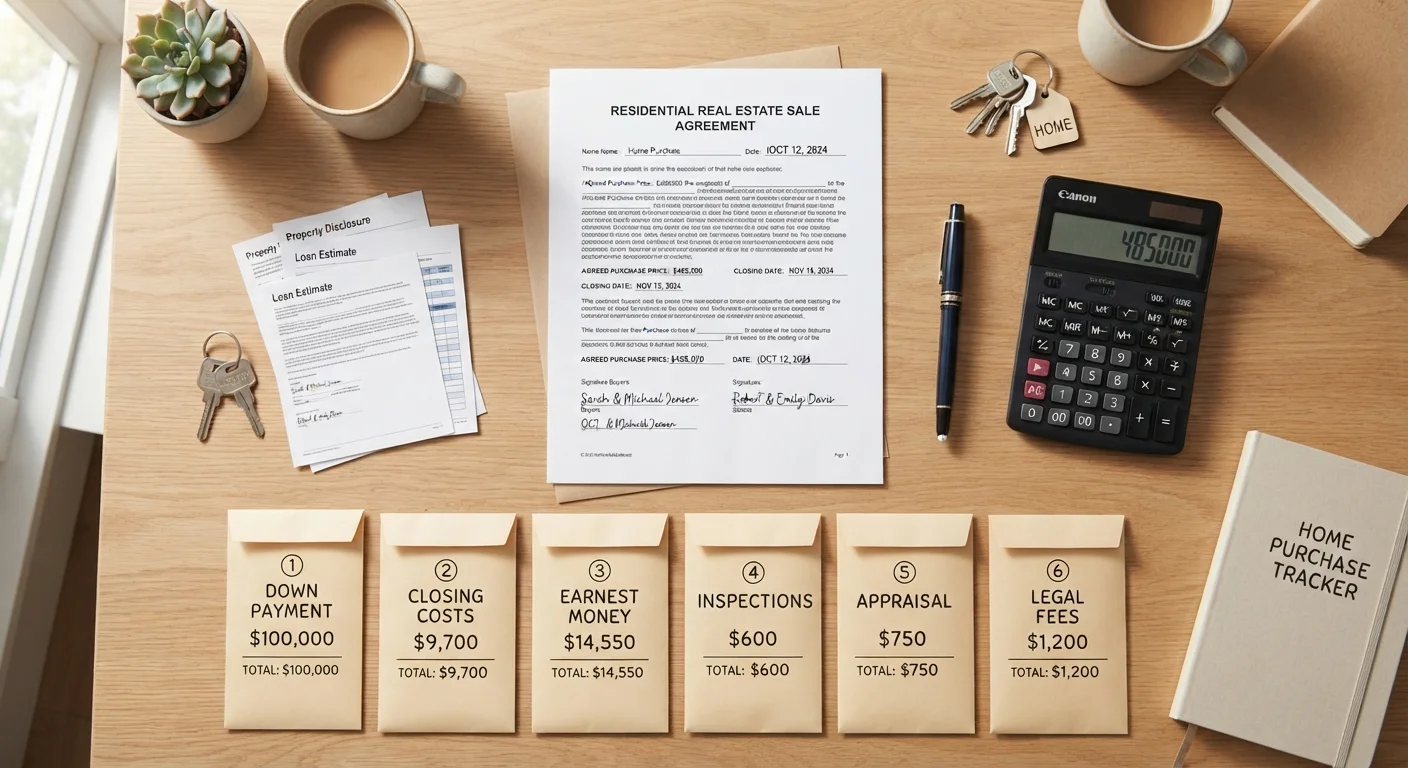
Closing costs are the fees and prepaid expenses you pay on the final day of your home purchase — the moment ownership officially transfers from the seller to you. They are separate from your down payment and are paid at the closing table (or increasingly, via wire transfer beforehand).
In the U.S., buyers typically pay between 2% and 5% of the loan amount in closing costs. On a $300,000 mortgage, that means anywhere from $6,000 to $15,000 due at closing. Understanding each line item prevents sticker shock and helps you negotiate where possible.
Your lender is legally required to give you a Loan Estimate within three business days of your mortgage application, and a Closing Disclosure at least three business days before closing day. These documents list every cost you'll pay, so compare them carefully. See the full home-buying journey walkthrough for context on where closing fits into the overall process.
| Typical closing cost range | 2%–5% of the loan amount (Consumer Financial Protection Bureau (CFPB)) |
| When Closing Disclosure is due | At least 3 business days before closing (TRID rule, CFPB) |
| Appraisal fee (typical) | $300–$700 (National range; varies by property and location) |
| Title insurance (typical) | $1,000–$2,500 (Varies by purchase price and state) |
| Recording fees (typical) | $50–$250 (Varies by county and state) |
| Escrow cushion collected | 2–3 months of taxes and insurance (Standard lender requirement) |
Lender Fees: What Your Mortgage Company Charges
The largest cluster of closing costs comes from your lender. These cover the work of evaluating your application and funding the loan.
- Origination fee: Charged by the lender to process your loan application. Usually 0.5–1% of the loan amount. Sometimes broken into an "underwriting fee" and a "processing fee" on your Closing Disclosure.
- Discount points: Optional prepaid interest you pay upfront to reduce your mortgage rate. Each point equals 1% of the loan amount. Buying points only makes sense if you plan to stay long enough to recoup the upfront cost through lower monthly payments.
- Credit report fee: A small charge (typically $25–$50) covering the cost of pulling your credit history during underwriting.
- Rate lock fee: Some lenders charge to lock in your interest rate for a set period. Many include this at no cost — check your Loan Estimate.
Closing Disclosure
A standardized five-page document your lender must provide at least three business days before closing. It itemizes every cost you will pay and the final terms of your loan.
Loan Estimate
A three-page document provided within three business days of your mortgage application, giving a good-faith estimate of your loan terms and closing costs so you can compare lenders.
Escrow account
An account held by your loan servicer that collects monthly portions of your property tax and homeowners insurance bills, then pays those bills on your behalf when due.
Title insurance
A one-time premium insurance policy that protects against financial loss from defects in a property's title — such as undisclosed liens or ownership disputes — discovered after closing.
Origination fee
A fee charged by the lender to cover the administrative cost of processing, underwriting, and funding your mortgage loan. It is typically expressed as a percentage of the loan amount.
Discount points
Prepaid interest paid at closing in exchange for a lower mortgage interest rate. One point equals 1% of the loan amount and reduces the rate by a lender-specified amount.
Third-Party Fees: Services Required to Close
These are fees paid to outside professionals whose work is legally or practically required to complete the purchase. You often have the right to shop for some of these providers independently.
- Appraisal fee ($300–$700): A licensed appraiser confirms the home's market value so your lender knows the collateral supports the loan. The buyer almost always pays this upfront or at closing.
- Title search and title insurance: A title company researches the property's ownership history to verify there are no liens, unpaid taxes, or legal disputes attached to it. Lender's title insurance (required) protects the lender; owner's title insurance (optional but strongly recommended) protects you. Together, these often run $1,000–$2,500 depending on purchase price and state.
- Attorney fee: Several states — including Georgia, New York, and South Carolina — require a licensed real estate attorney to oversee closing. Fees vary widely by state and firm.
- Home inspection fee ($300–$500): Technically paid before closing, but included here because buyers often overlook it in their budget. See common missteps between offer and closing for why skipping this is risky.
- Survey fee ($300–$700): Confirms the property's legal boundaries. Not always required, but lenders or local regulations may mandate it.
You Can Shop for Some Third-Party Services
Federal law gives you the right to shop for certain closing services — including title insurance and settlement agents — rather than automatically using whoever your lender recommends. Your Loan Estimate will include a list labeled "services you can shop for." Getting quotes from multiple providers for these line items can occasionally save hundreds of dollars, though availability varies by state and lender.
Prepaid Items and Escrow Deposits: Not Fees, But Still Due at Closing
A significant portion of your closing funds covers prepaid costs — money collected in advance for expenses your lender wants to ensure are paid. These are not profit for anyone; they're real costs you'd pay anyway.
- Homeowners insurance premium: Lenders require you to have coverage in place before closing. You'll typically prepay the first year's premium at or before closing day.
- Prepaid mortgage interest: Interest accrues from your closing date through the end of that month. Closing near the end of the month minimizes this charge; closing near the start maximizes it.
- Escrow account deposit (impounds): If your loan requires an escrow account, your lender collects an initial cushion — usually two to three months of property taxes and homeowners insurance — to seed the account.
These prepaid items can add $2,000–$5,000 to your closing funds even before lender and third-party fees. For a full definition of escrow and other terms you'll encounter, the first-time buyer glossary is worth bookmarking now.
2%–5%
Typical closing costs as share of loan amount
According to the Consumer Financial Protection Bureau, most buyers should budget 2–5% of their loan amount for closing costs.
$6,000–$15,000
Estimated closing costs on a $300,000 mortgage
Based on the standard 2–5% range; actual amounts depend on lender, location, and loan type.
3 days
Minimum notice before closing (Closing Disclosure)
Federal law under the TRID rule requires lenders to deliver the Closing Disclosure at least three business days before closing.
Government Taxes and Recording Fees
State and local governments collect fees to record the new deed and, in many states, to tax the transfer of property.
- Recording fees: Charged by the county or municipality to officially register the new deed and mortgage in public records. Typically $50–$250.
- Transfer taxes: Many states impose a tax when real estate changes hands. The rate and who pays (buyer, seller, or split) varies significantly by state. In some states this is minimal; in others it can be several thousand dollars.
- Property tax prorations: If the seller has already paid taxes covering a period after your closing date, you'll reimburse them for that portion at closing.
This article provides general educational information about closing costs and is not personalized financial, legal, or tax advice. Costs, rules, and requirements vary by state, lender, and individual transaction. Consult a licensed real estate professional, attorney, or financial adviser for guidance specific to your situation.