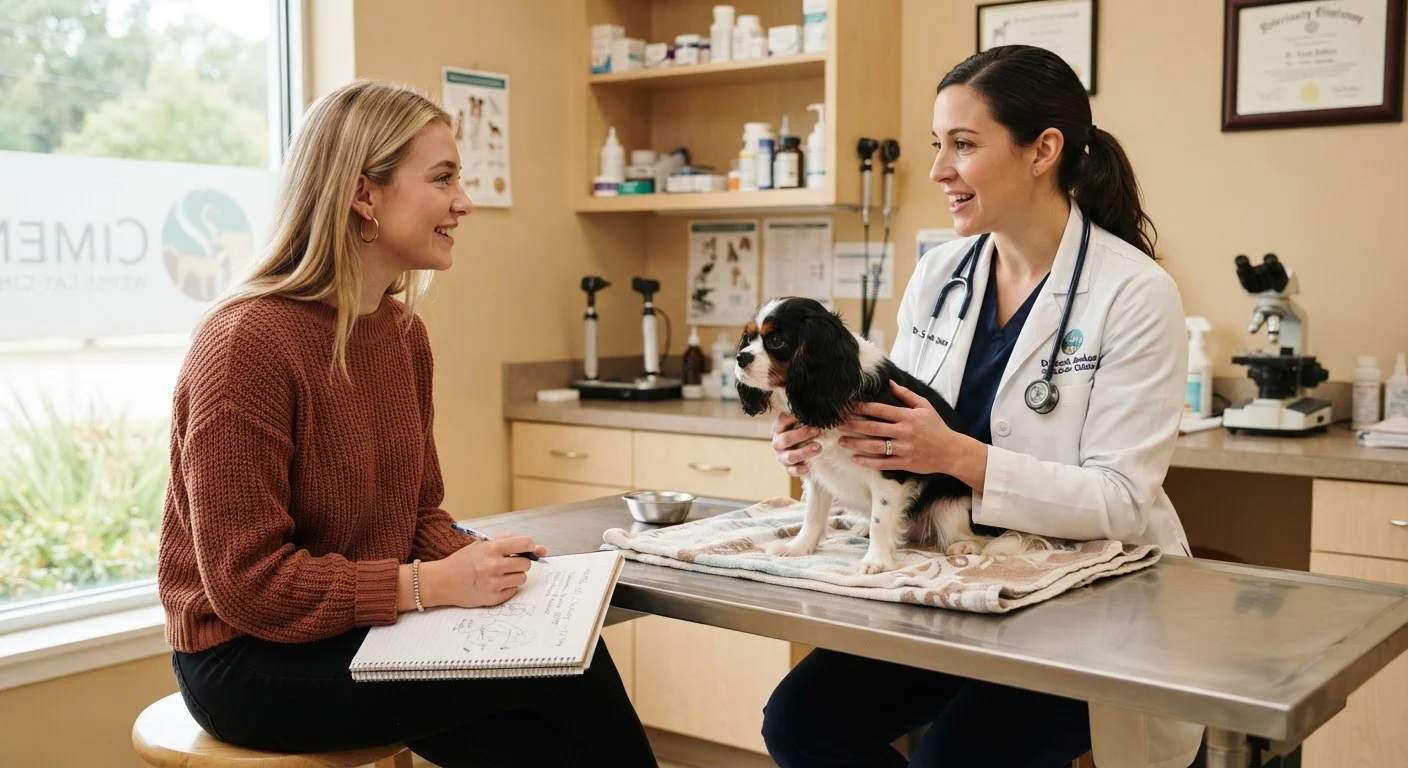
Make the most of your time in the consultation room. These practical questions help you leave every vet visit with a clear picture of your pet's health.
Key Takeaways
Preparing questions before your appointment helps you leave with a clear picture of your pet's health.
Vets expect and welcome questions — there are no silly ones when your pet's wellbeing is at stake.
Asking about weight, behaviour changes, and preventive care catches problems earlier.
Understanding what to watch for at home is just as important as what happens in the clinic.
Your vet is a long-term partner in your pet's care — regular, open communication builds that relationship.
Why Asking the Right Questions Matters
A standard vet appointment moves quickly. Between the physical exam, any treatments, and paperwork, you might have ten minutes of actual face-to-face time with the vet. If you walk in without a plan, it's easy to leave with vague reassurances but no real answers.
The good news is that vets genuinely want you to ask questions. You're the expert on your pet's day-to-day behaviour — they're the expert on interpreting what that behaviour means clinically. The best appointments are a two-way exchange.
Whether you're going in for a routine check-up or a specific concern, the checklist below gives you a structured starting point. For a broader look at what actually happens during a routine visit, see our guide to the veterinary visit. If this is your very first appointment with a new pet, what to expect at your pet's first vet visit walks you through the basics first.
Your Pet's Current Health Status
Ask whether your pet's weight is within a healthy range for their age, breed, and size — and what the ideal target is.Must
Ask the vet to explain what they found during the physical exam, including anything they're keeping an eye on.Must
Ask whether the vet noticed any early signs of dental disease, skin issues, or joint changes you may not have spotted.Should
If bloodwork or a urinalysis was done, ask the vet to explain what the results mean in plain language.Must
Behaviour and Lifestyle Questions
Describe any behaviour changes you've noticed — including changes in energy, appetite, or bathroom habits — and ask whether they warrant investigation.Must
Ask whether your pet's current diet and portion sizes are appropriate for their life stage and activity level.Should
Ask how much daily exercise or enrichment is recommended for your specific pet.Should
If you have a senior pet, ask about signs of cognitive or mobility decline to watch for at home.Nice to have
Preventive and Ongoing Care
Ask which vaccinations are due now or coming up, and confirm the schedule going forward.Must
Ask whether your current parasite prevention approach — for fleas, ticks, heartworm, and intestinal worms — is appropriate for your region and pet's lifestyle.Must
Ask whether desexing or microchipping has been done, and if not, discuss the vet's recommendation for your pet.Should
Ask how often your pet should be seen — some animals need more frequent visits than once a year based on age or health status.Should
Follow-Up and Red Flags
Ask what specific symptoms should prompt you to call the clinic before the next scheduled appointment.Must
If any medication was prescribed, ask how it should be given, what side effects to watch for, and when to expect improvement.Must
Ask whether a follow-up appointment is needed and, if so, what the vet will be checking at that visit.Should
Ask for the best way to reach the clinic with non-urgent questions between appointments — some practices offer messaging or email.Nice to have
Ask whether there are any breed-specific health concerns you should be aware of as your pet ages.Nice to have
Ask if there's anything you should be doing differently at home to support your pet's health right now.Should
What to Do With the Answers
Asking questions is only half the job — you need to do something with what you learn. Bring a small notebook or use your phone to jot down the vet's responses, especially anything involving timelines ("recheck in four weeks"), thresholds ("come back if the vomiting continues for more than 24 hours"), or follow-up steps.
Don't Wait Until the Next Appointment
If your pet shows sudden changes — refusing food for more than 24 hours, laboured breathing, repeated vomiting, or significant lethargy — don't save these concerns for a scheduled visit. Call your vet the same day, or seek emergency care if the clinic is closed. Routine appointment checklists are for wellness and preparation, not for triaging urgent symptoms.
If the vet mentions a change in your pet's preventive care routine — such as switching parasite prevention protocols — ask specifically what you'll need to do differently at home. Our article on parasite prevention for pets explains how these programs generally work so you can follow up with better-informed questions.
For owners of older animals, the questions in the checklist around mobility, weight, and cognitive changes become especially important over time. Senior pets and changing health needs is worth reading before your next visit if your animal is moving into their later years.
This article is for general informational purposes only and is not a substitute for professional veterinary advice. Always consult a licensed veterinarian for guidance specific to your pet's health.
Pets & Animals Editorial Team is the collective byline for our editorial team and contributor network. Articles published under this byline or an editorial pen name are researched, written, and reviewed according to our editorial standards for clarity, consistency, and independence before publication.
The content provided on our blog site traverses numerous categories, offering readers valuable and practical information. Readers can use the editorial team’s research and data to gain more insights into their topics of interest. However, they are requested not to treat the articles as conclusive. The website team cannot be held responsible for differences in data or inaccuracies found across other platforms. Please also note that the site might also miss out on various schemes and offers available that the readers may find more beneficial than the ones we cover.