
Before You Go: Getting Ready for the Appointment
The days before a first vet visit can feel overwhelming, but a little preparation goes a long way. Start by gathering everything that came with your pet: adoption paperwork, any vaccination records, deworming history, and breeder or shelter health certificates. If you adopted from a shelter, they often provide a summary of care already given — bring it all, even if it seems redundant.
Collect a fresh stool (feces) sample in a clean, sealed container or a zip-lock bag within 24 hours of the appointment. Your vet will use this to check for intestinal parasites — worms and other organisms that are common in young or newly rehomed animals and often invisible to the naked eye.
What you will need
Write your questions down ahead of time. It is surprisingly easy to forget them once you are in the exam room. Our guide to questions worth asking your vet can help you build a solid list. Also think through your pet's daily routine: what they eat, how much, their energy level, bathroom habits, and any behavior you have found unusual.
For the journey itself, use a secure carrier for cats, rabbits, and small animals. Dogs should be on a leash or in a crate. A familiar-smelling blanket inside the carrier can help reduce anxiety during transit.
What Happens During the Exam
Most first appointments follow a predictable pattern, so knowing what to expect helps you stay calm — which in turn helps your pet stay calm.
Check in and wait room
When you arrive, staff will weigh your pet and collect basic information. Keep your pet in their carrier or on a leash at all times in the waiting area. If your pet seems very anxious, ask whether there is a quieter area or a separate entrance — many clinics accommodate this.
Physical examination
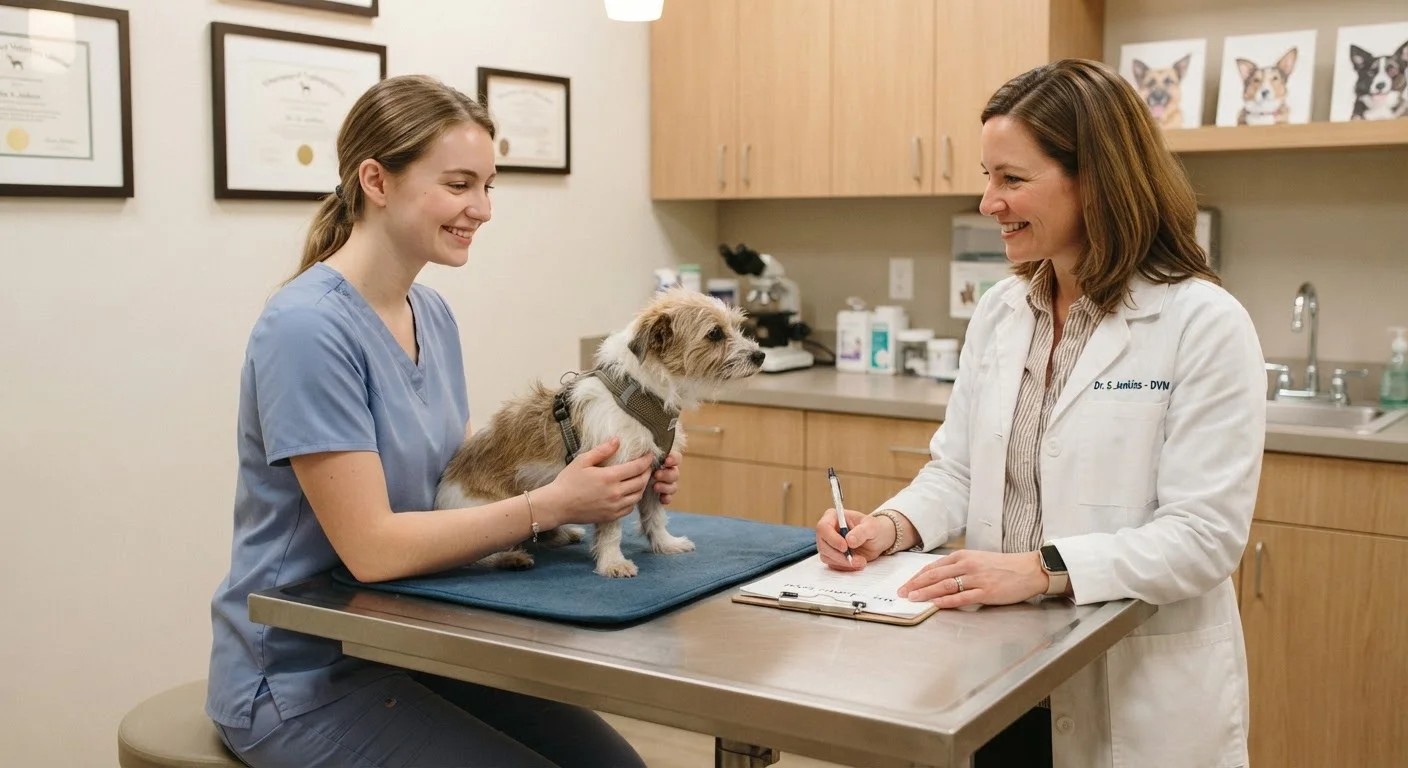
The veterinarian will perform a head-to-tail physical exam. They will check:
- Weight and body condition — assessing whether your pet is at a healthy size for their age and breed
- Eyes, ears, and nose — looking for discharge, redness, or signs of infection
- Teeth and gums — evaluating dental development and oral health
- Heart and lungs — listening with a stethoscope for murmurs or abnormal breathing sounds
- Abdomen — gently feeling for organ size and any discomfort
- Skin and coat — checking for parasites, lesions, or poor condition
- Lymph nodes and musculoskeletal system — looking for swelling or movement problems
Stool sample and parasite screening
The staff will test your stool sample for common intestinal parasites such as roundworms, hookworms, giardia, and coccidia. Results may be available during your visit or within a day or two. If parasites are found, your vet will recommend an appropriate deworming protocol.
Vaccinations
Based on your pet's age, species, and any prior vaccine records, the vet will administer or schedule core vaccines. For dogs, core vaccines typically include distemper, parvovirus, adenovirus, and rabies. For cats, they generally include feline herpesvirus, calicivirus, panleukopenia, and rabies. Your vet will explain which are legally required in your area versus recommended.
Discussion and care plan
This is your chance to ask every question on your list. Topics your vet will likely cover include spay or neuter recommendations, nutrition guidance, parasite prevention products appropriate for your region, and when to schedule the next visit. Take notes or ask if the practice can email a summary.
After the physical exam, your vet will discuss any findings and recommend a preventive care plan. This usually covers vaccines appropriate for your pet's age, species, and lifestyle; parasite prevention (flea, tick, and heartworm, depending on your region); and a spay or neuter timeline if not already done. They will also advise on nutrition basics and dental care.
Make Your Questions Count
Vet appointments move quickly and it is easy to walk out having forgotten something important. Keep a running list on your phone between now and the visit — note any unusual behaviors, eating changes, or physical things you have noticed. A prepared owner helps the vet do a more thorough job and gives you more confidence leaving the clinic.
If something unexpected is found — a heart murmur, a skin condition, or a parasitic infection — try not to panic. Many early findings are very manageable when caught at this stage. Ask your vet to explain what it means, what the options are, and what signs to watch for at home. For a broader look at keeping your pet well between visits, see the New Pet Owner's Guide to Keeping Your Animal Healthy.
Know When to Go to Emergency Care
A first vet visit covers routine wellness — it is not the right setting for a pet in acute distress. If your pet is struggling to breathe, has collapsed, is bleeding heavily, or has ingested something toxic, skip the scheduled appointment and go directly to an emergency animal hospital. Having that address saved before you need it can save precious time.
After the Visit: Your Next Steps
Before you leave the clinic, confirm a few practical things: the recommended schedule for follow-up vaccines or check-ups, how to reach the practice after hours, and whether they have an online portal for records. Ask for a written summary or receipt that lists every treatment or vaccine administered — this becomes your pet's permanent health record.
At home, give your pet a quiet, low-stimulation environment for the rest of the day. Some mild tiredness or soreness at an injection site is normal and typically resolves within 24–48 hours. If you notice significant swelling, vomiting, difficulty breathing, or extreme lethargy after any vaccine, contact your vet promptly, as these can be signs of an allergic reaction.
Your first week home is also a great time to build positive associations with handling — gently touching paws, ears, and mouth mimics what vets do during exams, making future visits less stressful. Read more about settling in with a new animal in our guide to your first week with a new pet.
Finally, save your vet's contact information and know the location of the nearest emergency animal hospital before you need it. Understanding the difference between routine and urgent care is important — our explainer on emergency vs. regular vet care walks through when each is appropriate.
This article is for general informational and educational purposes only. It is not a substitute for professional veterinary advice, diagnosis, or treatment. Always consult a licensed veterinarian for guidance specific to your pet's health needs.