
How Each Type of Veterinary Practice Works
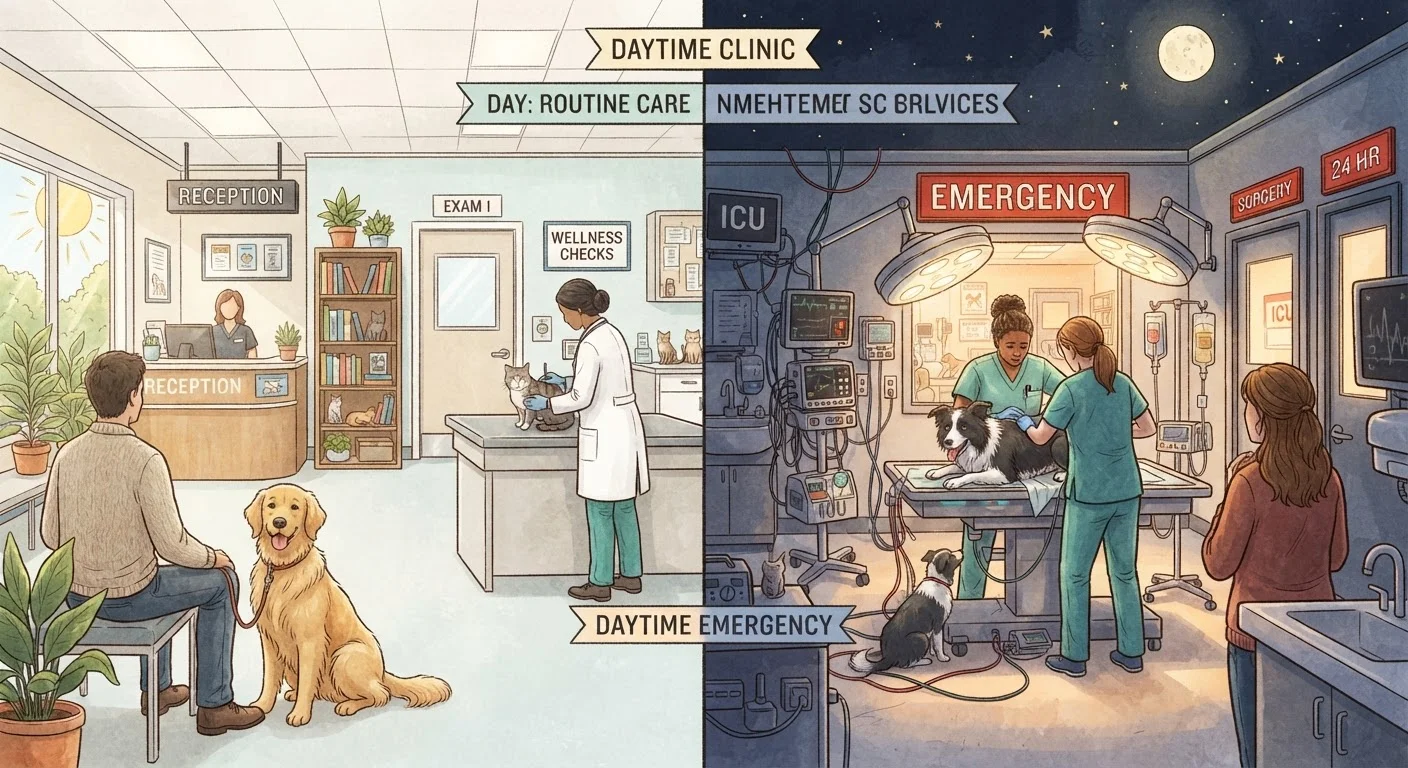
General practice vets — the clinics you schedule appointments with — focus on preventive and ongoing healthcare. They administer vaccines, perform annual wellness exams, manage chronic conditions like allergies or diabetes, and build a long-term relationship with both you and your pet. Think of them as your pet's primary care provider. If you're preparing for a first vet visit, a general practice is exactly where you start.
Emergency animal hospitals operate on a completely different model. They are staffed around the clock — evenings, weekends, and holidays — specifically to handle acute, time-sensitive cases. Many employ veterinary specialists such as criticalists (vets trained in intensive care) and surgeons, along with diagnostic equipment like on-site X-ray, ultrasound, and laboratory testing that can produce results within minutes rather than days.
Importantly, emergency hospitals are not replacements for your regular vet. After stabilizing a pet, they typically discharge the animal back to your primary vet for follow-up care. The two types of practices are designed to work together.
| Criterion | Regular Vet | Emergency Vet |
|---|---|---|
| Hours | Scheduled daytime/weekday hours | 24/7, including nights and holidays |
| Primary focus | Preventive and ongoing care | Acute, critical, and urgent care |
| Appointment style | Pre-scheduled appointments | Walk-in; triage-based priority |
| Typical cost | Lower; routine pricing | Higher; reflects specialist staffing |
| Medical history access | Maintains your pet's full record | Works from owner-provided summary |
| On-site diagnostics | Standard lab and imaging | Rapid diagnostics, advanced imaging |
| Specialist availability | Refers out to specialists | Often has specialists on staff |
Symptoms That Require Emergency Care — No Exceptions
Some signs should send you straight to an emergency hospital, no matter the hour. These include:
- Difficulty breathing — labored, rapid, or open-mouth breathing in cats or dogs
- Uncontrolled bleeding or a wound that won't stop with gentle pressure
- Suspected poisoning — ingestion of toxic plants, human medications, or household chemicals
- Seizures lasting more than two to three minutes, or multiple seizures in one day
- Loss of consciousness or extreme unresponsiveness
- Inability to urinate, especially in male cats — this can become fatal within hours
- Bloated, distended abdomen with restlessness and unproductive retching (a potential sign of GDV in dogs)
- Pale, blue, or white gums — a sign of poor circulation or oxygen deficiency
- Collapse or sudden inability to stand or walk normally
For a broader guide to symptoms that are serious versus those that can wait, see our article on when pet symptoms need same-day attention.
~40%
Pet owners without an emergency vet located
Surveys by veterinary welfare organizations suggest a significant portion of pet owners have not identified an emergency animal hospital before a crisis occurs.
2–4×
Higher cost of emergency vs. routine visits
Emergency veterinary care commonly costs two to four times more than scheduled appointments, reflecting around-the-clock staffing and specialist availability.
Top cause
Poisoning: leading emergency reason in dogs
The ASPCA Animal Poison Control Center fields hundreds of thousands of calls annually, with household toxins and human foods among the most common culprits.
Cost, Wait Times, and What to Expect
One of the biggest surprises for new pet owners is the cost difference. Emergency visits typically cost two to four times more than a routine appointment, reflecting the 24-hour staffing, specialist availability, and advanced equipment required. An after-hours emergency exam alone — before any treatment — can run several hundred dollars, and serious cases can reach into the thousands.
This is not a reason to avoid emergency care when it's needed, but it is a reason to plan ahead. Many veterinarians recommend looking into pet insurance or setting aside a dedicated emergency fund before a crisis occurs. That said, no financial guidance here should substitute for a conversation with your own financial planner or vet about what makes sense for your situation.
Wait times at emergency hospitals can also be longer than expected. Unlike a scheduled appointment, emergency hospitals triage patients by severity — meaning a pet with a broken nail may wait while one in cardiac distress is seen immediately. Bringing a calm demeanor and a brief written summary of your pet's symptoms and medical history will help staff assess your animal quickly. You can find a helpful list of questions to ask at any vet visit to help you stay organized.
When You're Unsure: Call First
If you're not certain whether a symptom warrants an emergency visit, call your regular vet's after-hours line or the emergency hospital directly before you go. Most emergency clinics are happy to help you triage over the phone. The ASPCA Animal Poison Control Center also maintains a dedicated hotline for potential poisoning cases — a number worth saving in your contacts now.
Building a Plan Before You Ever Need Emergency Care
The best time to locate your nearest emergency animal hospital is before your pet is sick. Search now, save the address and phone number in your contacts, and note their hours. Many general practices also have an after-hours recorded message that directs you to their preferred emergency referral — ask your regular vet about this at your next appointment.
Keep a basic pet first-aid kit at home and know what's in it. While first aid is not a substitute for veterinary care, it can help stabilize a pet during transport. The American Red Cross publishes general pet first-aid guidelines that are worth reviewing.
Understanding the difference between a scheduled wellness visit and an emergency visit also shapes how you read your pet's behavior day to day. For more guidance on spotting early warning signs, our overview of subtle signs your pet may be unwell is a useful starting point. And for a clear picture of what a routine check-up involves, see what to expect at a standard vet visit.
This article is for general informational purposes only and is not a substitute for professional veterinary advice. Always consult a licensed veterinarian for guidance specific to your pet's health.