
Why Routine Vet Visits Matter More Than Most People Realize
Many new pet owners assume a vet visit is only necessary when something is visibly wrong. In reality, routine check-ups serve a different and equally important purpose: they establish your pet's healthy baseline, catch early changes that aren't yet obvious, and give you a professional relationship to rely on when urgent questions arise.
Pets age faster than humans and can't describe how they're feeling. A vet who sees your animal regularly is far better positioned to notice subtle shifts — in weight, coat quality, heart sounds, or energy level — than one meeting your pet for the first time in an emergency. For context on what those annual exams are actually evaluating, see understanding your pet's annual wellness exam.
Thinking ahead about veterinary costs is also smart. Unexpected bills do happen, and it's worth understanding your options early. The general overview in pet insurance vs. a dedicated savings fund can help you weigh approaches — though any financial decisions should factor in your personal situation.
This Is General Information, Not Medical Advice
This article provides general educational guidance about veterinary visits. It is not a substitute for professional veterinary advice tailored to your specific pet. Always consult a licensed veterinarian for health decisions, diagnoses, or treatment questions about your animal.
What to Bring and How to Prepare
Walking into a vet appointment prepared makes a real difference. Use the prerequisites and tool cards below as your packing checklist.
What you will need
Pet carrier or leash
Keeps your pet secure and contained during transport and in the waiting room.
Vaccination and medical records
Gives the vet a full picture of your pet's health history and prior treatments.
Fecal sample
Allows the vet to screen for intestinal parasites such as roundworms or giardia.
Written question list
Ensures you cover every concern during the limited consultation window.
Pet's current food packaging or photo
Helps the vet assess whether your pet's diet is appropriate for their age and size.
Any current medications or supplements
Lets the vet check for interactions and confirm correct dosing guidance from them.
Write Your Questions Down Before You Go
It's easy to forget what you wanted to ask once you're in the exam room. Jot down any behavioral changes, feeding questions, or concerns at home and bring the list with you. Our article on questions worth asking at every vet appointment can help you build that list.
Step-by-Step: What Happens During the Visit
A routine veterinary appointment follows a fairly consistent structure. Understanding each phase in advance reduces anxiety — for you and your pet. Follow the steps below to navigate the visit with confidence.
Gather your documents and supplies the day before
Collect your pet's vaccination records, any prior vet notes, and their current medications. Place everything in a folder or bag you won't forget. If this is your pet's very first visit, bring whatever documentation came from the breeder, shelter, or rescue. Our broader new pet owner's health guide explains what records matter most.
Prepare your pet for travel
For cats and small animals, place a familiar blanket or worn T-shirt inside the carrier a few days before the visit so they associate it with safety, not stress. For dogs, a short car ride practice trip can help if they aren't used to vehicles. Keep arrivals calm — avoid high-energy greetings in the parking lot.
Check in at the clinic and complete intake paperwork
Arrive five to ten minutes early. You'll typically fill out or confirm basic intake forms covering your pet's name, age, weight history, and the reason for the visit. Staff may ask about diet, lifestyle, and any recent changes in behavior or appetite. Answer as specifically as you can — even small details help.
Understand the physical examination
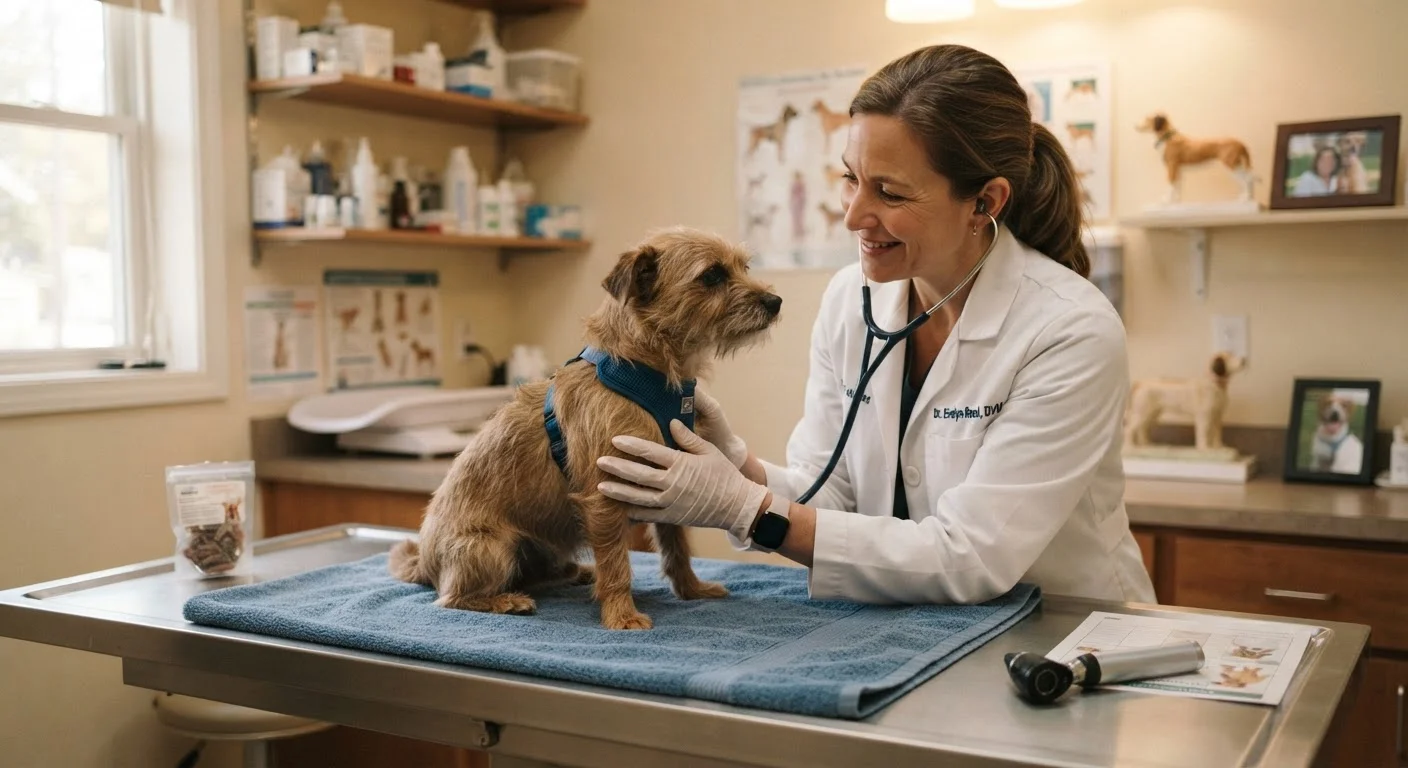
The vet will conduct a head-to-tail physical exam. This typically includes checking the eyes, ears, teeth, and gums; listening to the heart and lungs with a stethoscope; feeling the abdomen for organ size and shape; assessing skin and coat condition; and evaluating mobility and weight. They're building a baseline picture of your pet's overall health. For a deeper look at what each check reveals, see what vets assess during a wellness exam.
Discuss vaccinations, parasite prevention, and other preventive care
After the exam, the vet will review your pet's vaccination status and recommend any due boosters. They'll also discuss parasite prevention — including flea, tick, and intestinal worm control. Ask specifically what products or approaches they recommend and why. Our article on parasite prevention basics explains the main options. If your pet hasn't yet been desexed or microchipped, this is a natural time to raise those topics too.
Ask your prepared questions and clarify next steps
Pull out your written question list and work through it. Don't feel rushed — this consultation window is yours to use. Common topics new owners ask about include diet suitability, dental care, behavioral concerns, and how frequently follow-up visits are needed. Before you leave, confirm: Are there any test results pending? When is the next appointment? What signs should prompt an earlier visit?
Don't Wait If Something Seems Urgent
If your pet shows signs of distress — difficulty breathing, collapse, uncontrolled bleeding, seizures, or suspected poisoning — skip routine preparation and go directly to an emergency animal hospital. See our guide on when to use emergency vs. regular vet care to help you decide.
After the Visit: Building a Long-Term Care Routine
The first vet visit is the start of an ongoing relationship, not a one-time event. Before leaving the clinic, schedule your next appointment if one was recommended. File your paperwork and any vaccine certificates somewhere accessible — you'll need them for boarding, groomers, or future vet changes.
Review what was discussed while it's fresh. If the vet flagged anything to monitor — a slight weight gain, mild dental tartar, a skin spot to watch — note it with a date so you can report back accurately next time. The new pet owner's health guide covers how to build consistent care habits beyond the clinic, including nutrition, preventive care, and recognizing common illness signs early.
This article is for general informational and educational purposes only. It is not a substitute for professional veterinary advice, diagnosis, or treatment. Always consult a licensed veterinarian with questions about your pet's specific health needs.