
What the Vet Is Actually Doing During the Exam
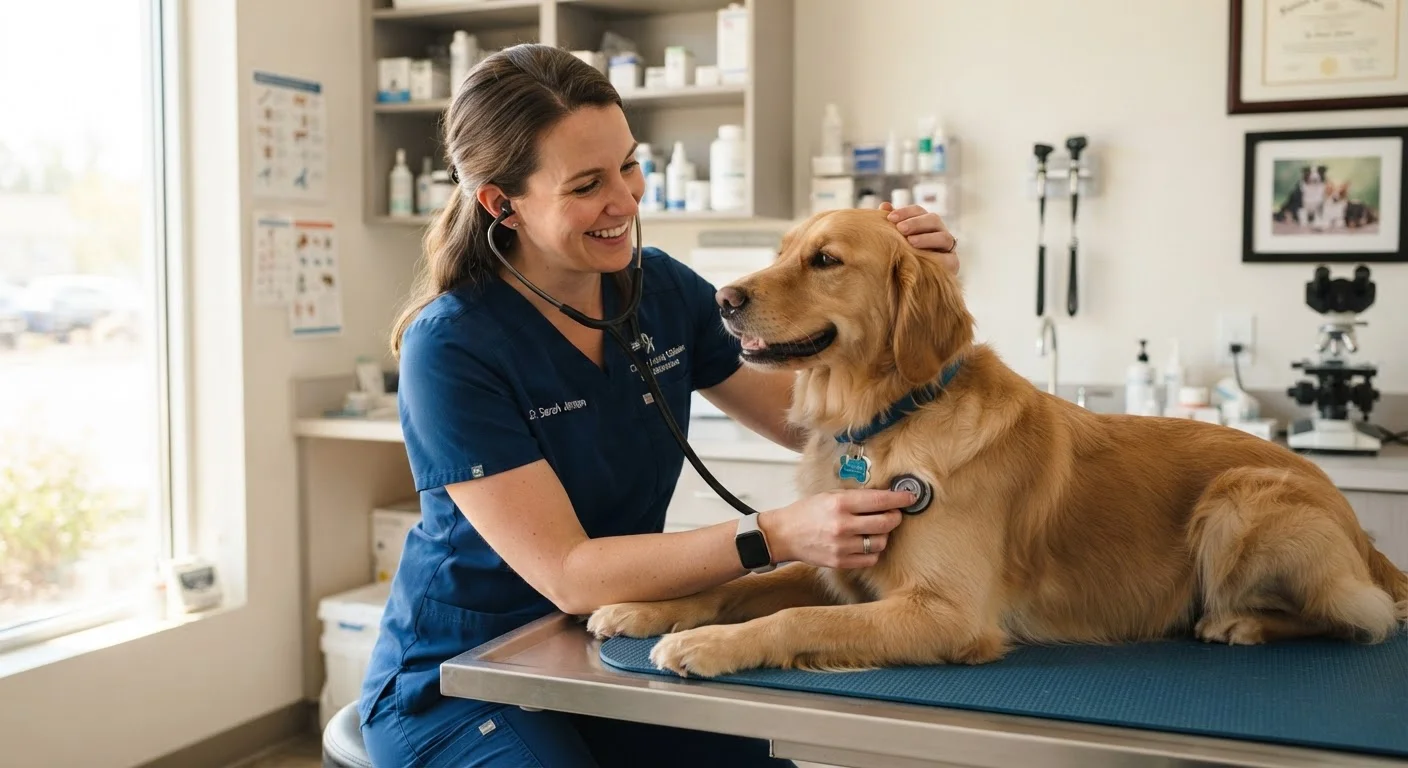
When a vet works through a physical examination, they're systematically checking over a dozen body systems in a single appointment. For first-time owners, it can look like the vet is just petting your animal — but each touch has a purpose.
A standard physical exam typically covers:
- Eyes and ears: Looking for discharge, inflammation, cloudiness, or signs of infection or mites.
- Mouth and teeth: Assessing tartar buildup, gum color, tooth integrity, and early signs of periodontal disease — one of the most common and underappreciated health issues in pets.
- Lymph nodes: Palpating (feeling) nodes in the neck, armpits, and groin for abnormal swelling.
- Heart and lungs: Listening with a stethoscope for murmurs, irregular rhythms, or abnormal breathing sounds.
- Abdomen: Gently pressing the belly to feel organ size and detect discomfort or abnormal masses.
- Skin and coat: Checking for parasites, lumps, hair loss, or skin conditions.
- Musculoskeletal system: Watching your pet move and palpating limbs for joint pain or muscle loss.
- Weight and body condition: Comparing current weight to previous visits and assessing whether muscle and fat distribution are healthy.
Each finding is logged in your pet's record, creating a longitudinal picture of their health that a single isolated visit simply can't provide.
Ask About Body Condition Scoring
At each exam, ask your vet to walk you through your pet's body condition score — a standardized 1–9 scale used to assess whether your pet's weight is healthy. Understanding this scale helps you monitor your pet at home between visits and catch gradual weight changes early.
Beyond the Physical: Diagnostics and Preventive Treatments
Depending on your pet's age and health history, the vet may recommend diagnostics alongside the physical exam. Common additions include:
- Fecal testing: Checks for intestinal parasites like roundworms, hookworms, and giardia — many of which cause no visible symptoms.
- Heartworm testing: A simple blood test typically recommended annually for dogs in heartworm-endemic regions.
- Bloodwork: A complete blood count and chemistry panel can flag issues with the kidneys, liver, thyroid, and blood cells. Often recommended starting in middle age.
- Urinalysis: Checks kidney function and screens for urinary tract infections or diabetes-related changes.
The visit also typically includes a review of parasite prevention (flea, tick, and heartworm medication) and a vaccine assessment. Not every vaccine is due every year — your vet will check your pet's history and recommend only what's appropriate. For a plain-language breakdown of how vaccines work and why schedules matter, see Pet Vaccines Explained.
~80%
Dogs over 3 with dental disease
According to the American Veterinary Medical Association, approximately 80% of dogs show signs of dental disease by age three — most of which is detectable during a routine oral exam.
2x
Vet visit frequency for senior pets
Many veterinary guidelines recommend twice-yearly wellness exams for pets in their senior years, compared to the standard once-annual schedule for healthy adult animals.
1 in 3
Pets with a detectable health issue at wellness exam
Veterinary industry data suggests a significant proportion of pets presenting for routine wellness exams are found to have at least one health issue their owner was unaware of.
How Frequency Changes With Age
A single annual visit isn't the right frequency for every life stage. Here's how exam schedules generally shift:
- Puppies and kittens (under 1 year)
- Multiple visits in the first year to complete vaccination series, monitor growth, and address early health milestones like spaying or neutering. See Vaccinations, Desexing, and Microchipping for an overview of these early steps.
- Adult pets (roughly 1–7 years)
- One comprehensive wellness exam per year is the general standard for healthy adults with no ongoing conditions.
- Senior pets (7+ years, or earlier for large dog breeds)
- Semi-annual visits are commonly recommended because age-related changes — kidney function decline, arthritis, dental disease — can progress between annual checks. Learn more in Senior Pets and Changing Health Needs.
If your pet has a known chronic condition, your vet may recommend an entirely different schedule regardless of age.
How to Make the Most of Every Visit
Wellness exams are a two-way conversation. The more information you bring, the more useful the appointment becomes. Before you go, think through:
- Any changes in appetite, water intake, or bathroom habits
- Behavioral shifts — more sleeping, less playful, new anxieties
- Any lumps, limping, or coughing you've noticed at home
- What your pet currently eats and any supplements they take
Pets often mask discomfort instinctively, so the details you notice at home are genuinely valuable clinical information. The vet can only observe your pet for 20–30 minutes; you observe them every day.
Don't leave without clarity on what was found, what's being monitored, and what action — if any — is needed. For a practical list of questions to bring to the consultation room, see Questions Worth Asking Your Vet.
Wellness Exams vs. Sick Visits
A wellness exam is a scheduled, proactive appointment — it's not the same as bringing your pet in because something seems wrong. If your pet is showing symptoms like vomiting, lethargy, limping, or loss of appetite between annual visits, contact your vet promptly rather than waiting for the next scheduled check-up.
If this is your first time visiting a vet with a new pet, Your Pet's First Vet Visit walks through what to expect and how to prepare before you go.
This article is for general informational purposes only and is not a substitute for professional veterinary advice. Always consult a licensed veterinarian for guidance specific to your pet's health needs.