
Where the Money Comes From - and Why It Matters
The single biggest structural difference between public and private universities is funding. Public universities receive a portion of their budget from state governments, which is why in-state tuition is dramatically lower than out-of-state rates. Private universities receive no direct state funding, relying instead on tuition, endowments, and donations.
This distinction shapes everything from tuition prices to the programs a school can afford to run. For a fuller picture of how different institution types fit together, see The U.S. Higher Education System, Mapped Out.
~$11,260
Average in-state public university tuition
According to College Board's Trends in College Pricing data, average in-state tuition and fees at public four-year institutions has remained significantly below private school rates.
~$41,540
Average private university tuition
College Board data shows average tuition and fees at private nonprofit four-year institutions, before any financial aid is applied.
One common misconception is that private automatically means unaffordable. Many private colleges - particularly those with large endowments - offer need-based grants that bring the net cost (what you actually pay after aid) well below their advertised tuition. Always request a financial aid award letter from each school and compare those numbers directly before drawing conclusions.
Size, Class Sizes, and Campus Culture
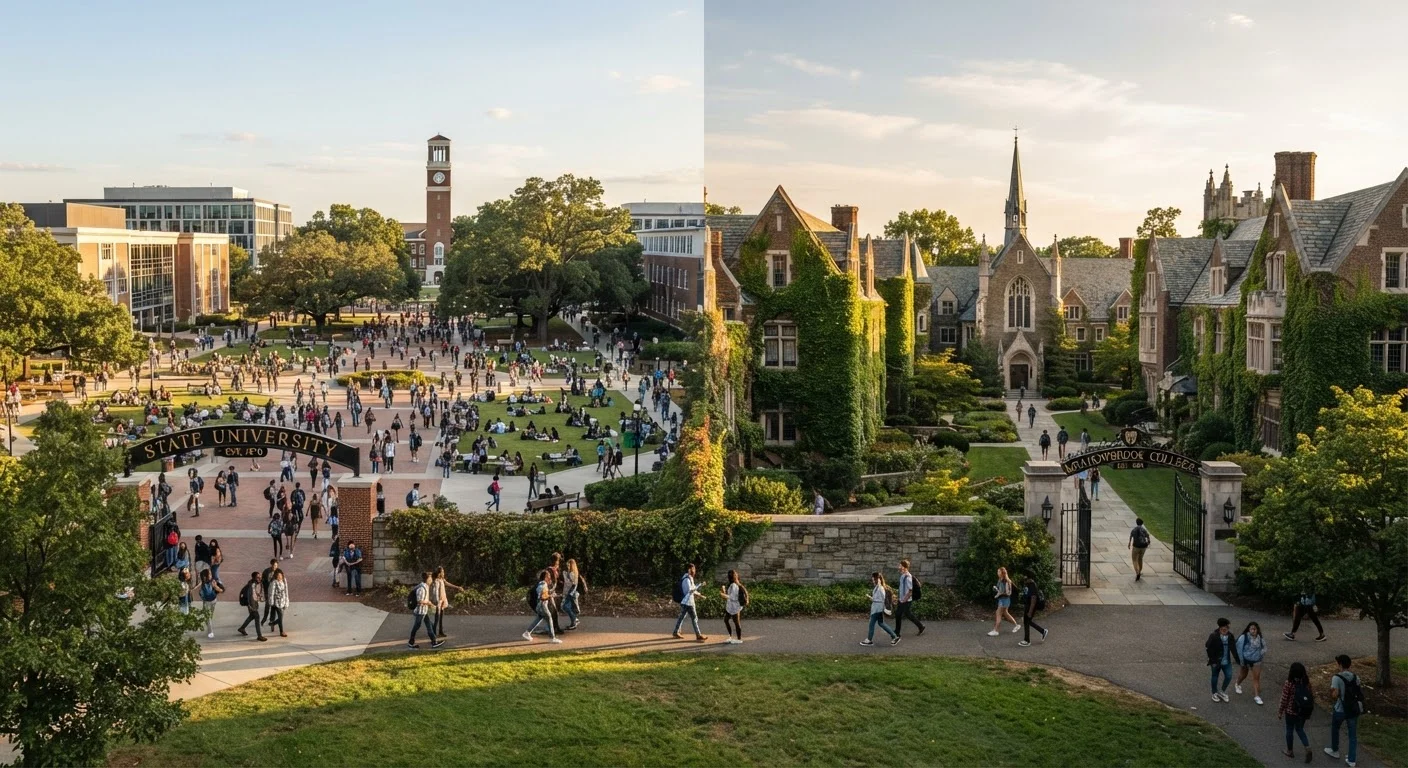
Public universities tend to enroll tens of thousands of students, which means larger introductory lecture courses, more extracurricular variety, and a wider range of majors. Private universities - particularly liberal arts colleges - often enroll fewer than 5,000 students total, which typically translates to smaller classes and more direct access to professors.
Neither environment is objectively better. Some students thrive in the energy of a large campus with Division I sports, dozens of clubs, and a sprawling research infrastructure. Others do better when their professor knows their name and they can access faculty office hours without competing with 300 classmates. Be honest with yourself about how you learn best.
Use Campus Visits Strategically
If an in-person visit isn't possible, most universities offer virtual tours and online information sessions. More usefully, reach out to the admissions office and ask to be connected with a current student in your intended major. Hearing a real student's day-to-day experience tells you more than any brochure. Many schools also publish their Common Data Set - a standardized disclosure document that includes class size distributions, acceptance rates, and financial aid statistics - which you can find by searching the school's name alongside "Common Data Set."
Campus culture also varies. Large public universities often have more prominent Greek life and sports culture by sheer scale. Private universities may have stronger alumni networks within specific industries or geographic regions. These are generalizations - visit or take virtual tours, and talk to current students wherever possible.
How the Numbers Actually Stack Up
Published tuition figures are a starting point, not the full story. In-state tuition at public universities averages roughly $10,000-$12,000 per year, while private university tuition commonly runs $35,000-$55,000 annually before aid - figures that shift frequently, so verify current rates directly with institutions you're considering.
| Public University (In-State) | Private University | |
|---|---|---|
| Average annual tuition (before aid) | ~$10,000-$12,000 | ~$35,000-$55,000 |
| Typical enrollment size | 15,000-60,000+ students | 1,000-10,000 students |
| Average introductory class size | Often 100-300 students | Often 15-40 students |
| Institutional financial aid | Moderate grants; lower base cost | Larger grants possible; varies by endowment |
| Range of majors and programs | Very broad; often includes professional schools | Narrower; may focus on liberal arts or specific fields |
| Research opportunities | Extensive; large research budgets | Available; more faculty-student collaboration |
For students weighing cost against community college as a starting point, Community College vs. Four-Year University breaks down how transfer pathways can reduce total degree costs significantly regardless of whether your destination is public or private.
Financial Aid: Where Private Schools Can Surprise You
Private universities with large endowments sometimes meet 100% of demonstrated financial need - meaning if your family earns below a certain threshold, you could pay less to attend a well-funded private school than a public one. This isn't universal, and it depends entirely on the specific institution's aid policy and your family's financial profile.
Public universities offer need-based and merit aid too, but their average grant amounts tend to be smaller because they're already priced lower for in-state students. The takeaway: apply broadly, complete the FAFSA as early as possible, and wait for real aid offers before ruling any school out on sticker price alone.
Separating financial fact from myth is especially important for first-generation students. College Myths That First-Generation Students Hear Most addresses the "private schools are always too expensive" assumption directly.
Making the Decision That Actually Fits You
Rather than asking which type of university is better in the abstract, focus on the specific programs, graduation rates, career services, and financial aid packages at each school you're genuinely considering. Institutional type is a useful starting framework, but it's the individual school - not the category - that will shape your four years.
Before committing anywhere, Questions to Ask Before Committing to a College or Program gives you a structured way to evaluate any institution on the factors that actually predict student success and satisfaction.
The bottom line: apply to a thoughtful mix of public and private options, compare your net cost offers, and choose the environment where you're most likely to graduate on time in a field you care about. That decision will serve you far better than chasing a category label.