

What 'First-Generation' Actually Means
A first-generation college student is typically defined as someone whose parents or guardians did not complete a four-year college degree. Some institutions broaden that definition to include students whose parents attended college but did not graduate. If that describes you, you're far from alone - roughly a third of all college students in the U.S. identify this way.
Being first-gen doesn't predict your outcomes, but it does shape your experience. You may be navigating application processes, financial aid systems, and campus culture without a family roadmap. That information gap is real, and recognizing it is the first step to closing it. Before diving into specifics, bookmark our Higher Education Jargon, Decoded glossary - it translates terms like credit hours, accreditation, and FAFSA into plain language you can use immediately.
Mapping the Higher Education Landscape
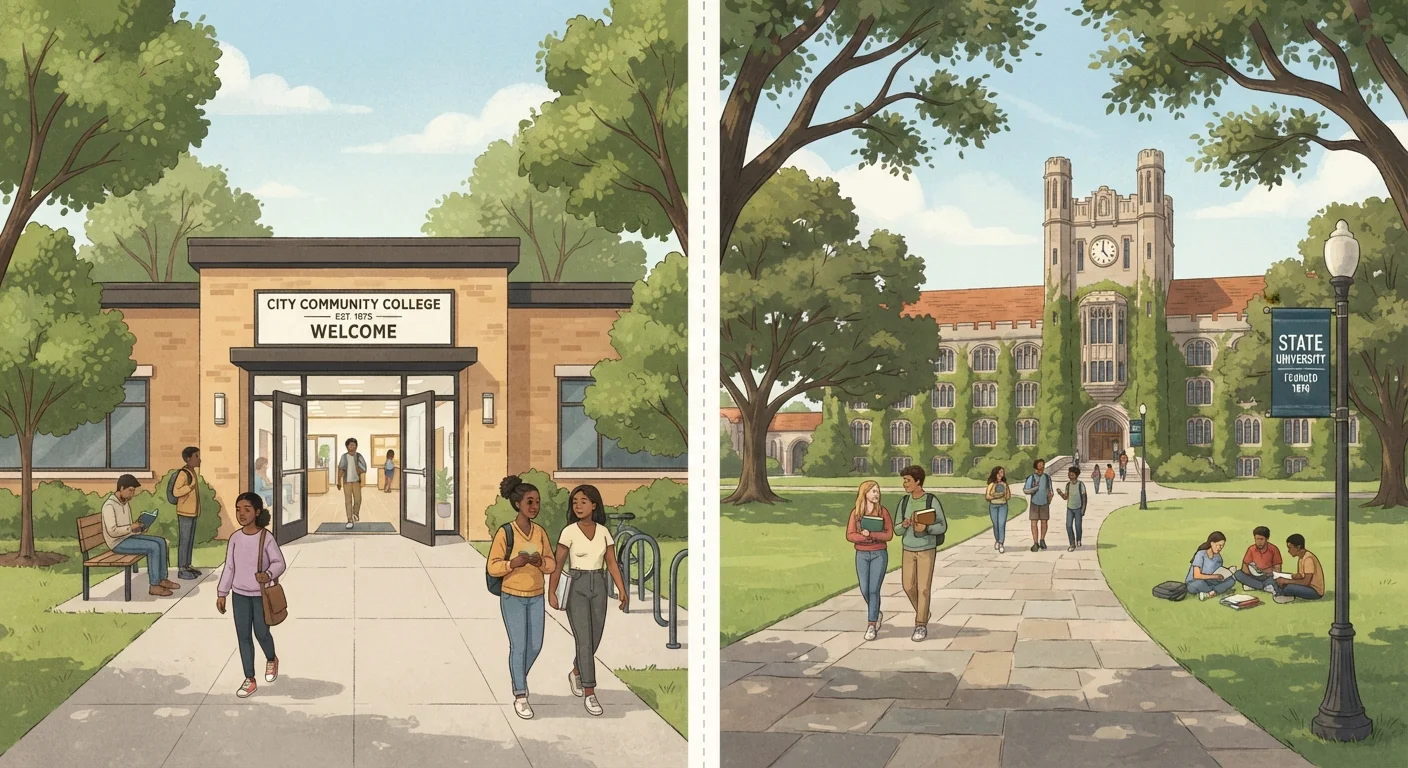
U.S. higher education isn't one system - it's several, each with different costs, timelines, and credentials. Understanding the main types helps you match your goals to the right path.
- Community colleges (two-year): Offer associate degrees and certificates at significantly lower tuition than four-year schools. Many students use them as an affordable launchpad, then transfer. See our guide on transferring from community college to a four-year school for how that process works.
- Public universities: State-funded four-year schools that typically charge lower in-state tuition. They range from smaller regional campuses to large research institutions.
- Private colleges and universities: Independently funded; tuition is often higher, but many offer substantial institutional aid that can bring the net cost down considerably.
- Vocational and trade schools: Focused, shorter programs leading to industry credentials. An excellent option if you have a specific career in mind that doesn't require a four-year degree.
When comparing schools, ask each financial aid office for your 'net price' - tuition minus all grants and scholarships - not just the sticker price. A higher-cost school may end up cheaper after aid.
Sticker price comparisons are misleading; net price is the number that actually affects what you pay and how much you may need to borrow.
Register for an academic advising appointment before or during orientation week - not after your first exam. Early advising prevents costly mistakes like taking the wrong prerequisite sequence.
Misaligned course sequences are one of the most common reasons students extend their time to graduation, which directly increases total cost.
Each institution type carries different accreditation statuses, which affects whether credits transfer and whether your degree is recognized by employers. Always verify that a school is regionally accredited before enrolling.
Understanding Financial Aid Basics
Cost is the concern most first-gen students name first - and financial aid exists specifically to address it. The starting point for nearly every form of federal aid is the FAFSA (Free Application for Federal Student Aid), a form submitted annually through the U.S. Department of Education. It determines eligibility for:
- Grants - money you don't repay (e.g., the Pell Grant for students with demonstrated financial need)
- Subsidized loans - federal loans where interest doesn't accrue while you're enrolled at least half-time
- Work-study - part-time campus jobs funded through your aid package
Don't Miss Your FAFSA Deadline
State and institutional financial aid deadlines frequently fall months before the federal FAFSA deadline. Missing a priority deadline can cost you thousands in grant funding that cannot be retroactively applied. Check each school's specific deadline - not just the federal one - and submit as early in October as possible.
Many students leave money on the table by missing FAFSA deadlines. States and institutions often have earlier priority deadlines than the federal cutoff. Submit as soon as the form opens - typically October 1 for the following academic year.
~56%
First-gen students who receive Pell Grants
According to the National Center for Education Statistics, first-generation students are significantly more likely to receive need-based federal grant aid than their continuing-generation peers.
33%
Share of U.S. undergraduates who are first-generation
The Education Trust and NCES data consistently show roughly one in three undergraduate students is the first in their family to pursue a four-year degree.
50%+
First-gen students who start at community college
Research from the Community College Research Center shows first-generation students are disproportionately represented at two-year institutions, partly due to cost and proximity.
Beyond federal aid, look for institutional scholarships, state grants, and private scholarships through your school's financial aid office. Managing your money well once you arrive matters just as much - our Saving & Banking hub covers how to open accounts and build an emergency cushion on a student budget.
This article provides general financial information and is not personalized financial advice. Consult a financial aid counselor at your institution for guidance specific to your situation.
Campus Resources Built for You
Most colleges and universities now have resources designed specifically for first-generation students. Many students never use them simply because they don't know they exist. Here's what to look for on arrival:
- First-Gen or TRIO Programs
- Federally funded Student Support Services programs provide tutoring, counseling, and financial aid assistance specifically to first-gen and low-income students. Ask your admissions office if your campus has one.
- Academic Advising
- An academic advisor helps you choose courses, stay on track for graduation, and understand degree requirements. Schedule a meeting in your first week - not your first month.
- Writing and Tutoring Centers
- Free peer and professional tutoring is available at virtually every college. These centers aren't just for struggling students; they're used by students of all levels.
- Counseling Services
- The transition to college carries real emotional weight. Campus counseling is typically free or low-cost. If you're feeling overwhelmed, our introduction to mental wellness in your twenties is a useful starting point.
Building Your Support Network from Scratch
First-gen students often describe feeling like an imposter - as though everyone else received a manual they didn't. That feeling is common and well-documented. The antidote is connection.
- Find your people early. Most campuses have a first-generation student organization or affinity group. Joining in week one beats joining in month three.
- Identify one faculty member to know by name. Office hours are underused. A professor who knows you is a future reference letter and a source of real guidance.
- Talk to upperclassmen. Students two years ahead of you have already navigated the obstacles you're about to face. Peer mentors are often the most practical information source on campus.
- Keep family in the loop - on your terms. Your family may not understand the specifics of college, but their support matters. Help them understand what you're working toward without expecting them to navigate it with you.
Use Office Hours Before You Need Them
Visit a professor's office hours when you don't have a crisis - just to introduce yourself and ask a question about course material. Instructors remember students who engage proactively, and that relationship becomes invaluable when you need a reference, an extension, or career advice later on.
Your Next Concrete Steps
A map is only useful if you take the first step. Here's a focused action sequence to get moving:
- Read through the Higher Education Jargon, Decoded glossary so unfamiliar terms don't slow you down.
- Compare at least two institution types (e.g., community college vs. public four-year) based on your career goals and financial situation.
- Submit or prepare your FAFSA as early as possible and follow up with each school's financial aid office about additional aid.
- Review our questions to ask before committing to a program so you evaluate options critically before enrolling.
- If you're considering online learning, read what to expect in your first two weeks of an online course.
Higher education is a system that rewards those who ask questions and seek support. You don't need a family member who went before you - you need the right information and a willingness to use it. Both are now within reach.