
What Actually Happens When a Breaker Trips
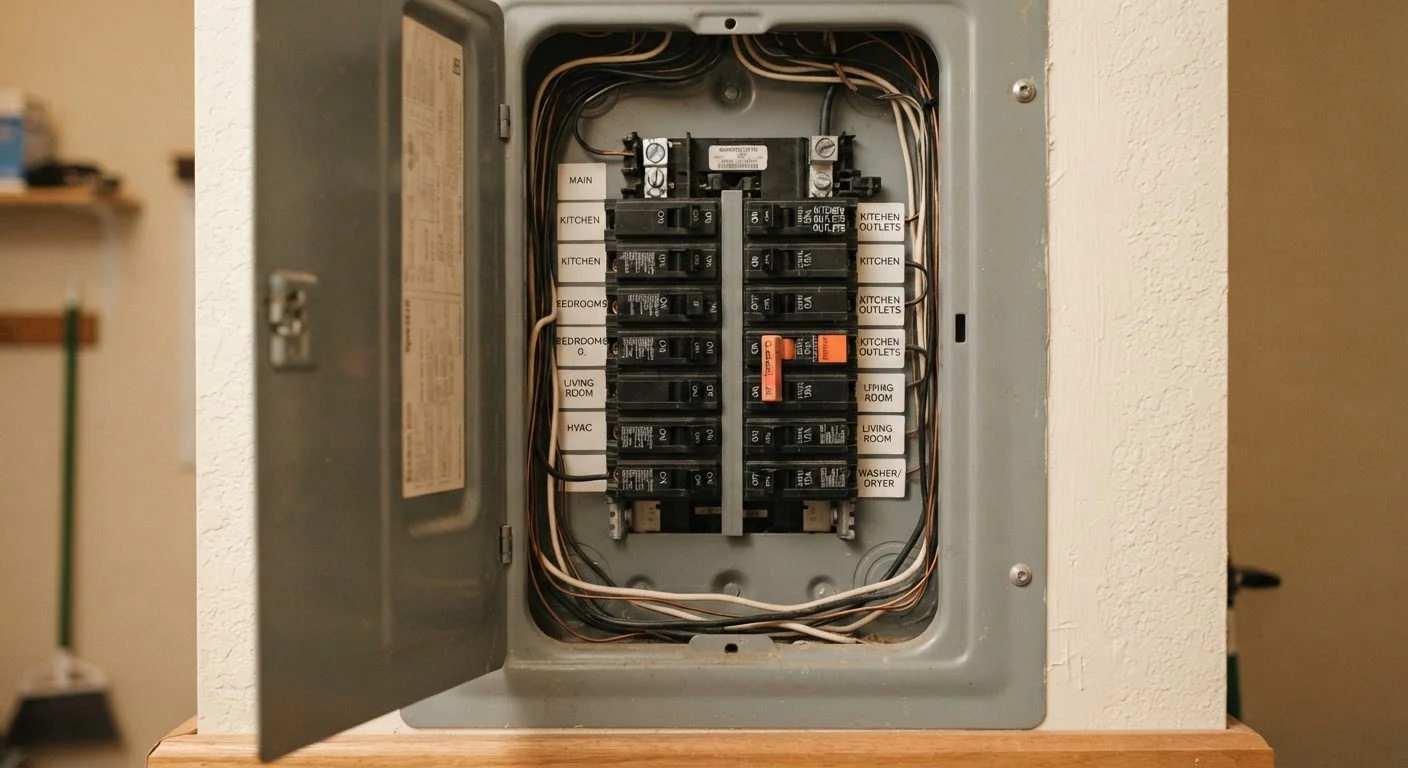
Your electrical panel — sometimes called a breaker box or load center — divides your home's electricity into individual circuits. Each circuit serves a specific area or set of outlets and is protected by its own breaker. When electricity demand on that circuit exceeds the breaker's rated capacity, the breaker detects the excess current and physically flips to a tripped position, somewhere between ON and OFF.
The result: power cuts out to that section of the home. This is the system working correctly. Think of it like a pressure relief valve — controlled shutdown now prevents far worse damage later. The breaker itself is not broken just because it tripped.
GFCI Outlets vs. Circuit Breakers
Not all power cutoffs happen at the main panel. GFCI outlets — common in bathrooms, kitchens, and garages — have their own built-in trip mechanism with a TEST and RESET button on the outlet face. If power goes out in one of these areas and no breaker is tripped, try pressing the RESET button directly on the outlet before heading to the panel.
The Three Most Common Causes
Understanding why a breaker trips helps you respond appropriately instead of just resetting and hoping for the best.
1. Overloaded Circuit
This is the most frequent cause. It happens when the combined power draw of everything plugged into a circuit exceeds what the wiring can safely carry. A classic example: running a space heater, a hair dryer, and a vacuum on the same circuit simultaneously. Each device alone is fine — together, they demand more amps than the breaker allows.
2. Short Circuit
A short circuit occurs when a hot wire (carrying current) accidentally contacts a neutral wire. This creates a sudden, dramatic spike in current with almost no resistance. You may notice a popping sound, a burning smell, or scorch marks near an outlet. Short circuits are more serious than overloads and usually point to damaged wiring, a faulty appliance cord, or a problem inside an outlet or switch.
3. Ground Fault
A ground fault is similar to a short circuit, but the hot wire is contacting a grounded surface — like a metal box or a wet floor — instead of a neutral wire. Bathrooms, kitchens, and garages are particularly susceptible. Outlets in these areas are typically protected by GFCI outlets, which trip faster than standard breakers and can be reset locally at the outlet itself.
Label Your Breaker Panel Now
If your electrical panel isn't fully labeled, take 30 minutes to map each breaker before you need to troubleshoot a trip under pressure. Use the panel door, a sticky label, or a photo on your phone. Knowing exactly which breaker controls which room makes every future issue faster and safer to handle.
How to Respond to a Tripped Breaker
Follow these steps in order — don't skip straight to resetting.
- Identify the tripped breaker. Open your panel and look for the breaker that's in the middle position or pointing toward OFF. Some panels have a red or orange indicator window on tripped breakers.
- Reduce the load on that circuit. Before resetting, unplug or turn off several devices connected to that circuit. If you reset without doing this, the breaker will likely trip again immediately.
- Reset the breaker. Push it firmly all the way to OFF, then back to ON. You should hear or feel a click.
- Restore devices one at a time. Plug things back in gradually. If the breaker trips again right away, stop — you have a problem that resetting won't fix.
51,000+
Home electrical fires per year in the U.S.
According to the U.S. Fire Administration, electrical failures or malfunctions are a leading cause of residential structure fires annually.
15–20 amps
Typical household circuit breaker rating
Most general-use circuits in U.S. homes are rated at 15 amps; kitchen and bathroom circuits are commonly 20 amps to handle higher-draw appliances.
When to Call a Licensed Electrician
Some tripping situations are beyond safe DIY territory. Contact a licensed electrician if:
- The breaker trips immediately after being reset with nothing plugged in.
- You notice a burning smell, scorch marks, or hear crackling sounds near your panel or outlets.
- The same breaker trips repeatedly over days or weeks under normal use.
- Your panel feels warm to the touch or you see signs of rust or moisture inside it.
- You live in an older home with outdated panel brands that are known for reliability issues — an electrician can assess whether your panel is safe.
Electrical work that involves the panel, wiring inside walls, or replacing a breaker itself is regulated in most U.S. jurisdictions and typically requires a permit and inspection. Attempting this work without the proper license and permits is both a safety risk and a potential code violation that can affect your homeowner's insurance.
This article is for general informational purposes only and does not constitute electrical, legal, or professional advice. Always consult a licensed electrician for issues involving your home's wiring or electrical panel.