
Why Animals Conceal Pain in the First Place
In the wild, showing weakness invites danger. Prey animals that appeared injured attracted predators, while even predators risked losing their social standing if they looked vulnerable. This survival wiring didn't disappear when animals became our companions — it's deeply embedded in how dogs, cats, rabbits, birds, and many other pets respond to pain and illness.
The result: your pet can be experiencing significant discomfort while appearing outwardly normal. They're not being stoic for your benefit. Their nervous system is doing exactly what millions of years of evolution trained it to do. Understanding this instinct is the first step toward becoming a more observant owner.
For a broader look at how animal instincts influence everyday behaviour, see our guide to what pet behaviour is communicating.
Waiting for obvious signs of pain before taking action.
Why it happens: Owners naturally expect pain to look like pain — whimpering, limping, or crying out. Because pets rarely display these signals until discomfort is severe, owners assume nothing is wrong.
Assuming a quiet, still pet is a healthy pet.
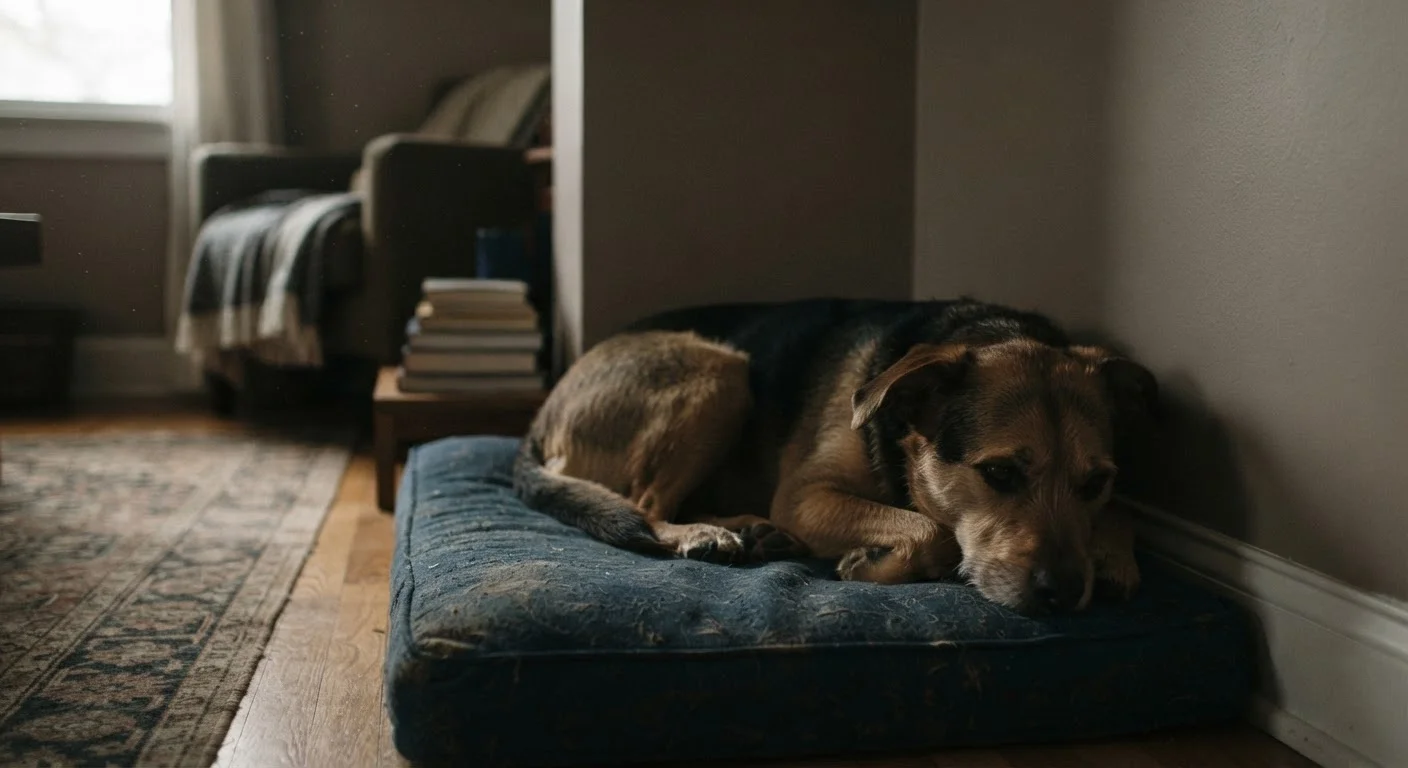
Why it happens: Stillness and withdrawal are common pain responses in animals, but they look like rest or calm to an untrained eye. A cat that stops jumping up or a dog that skips its usual greeting may simply be managing discomfort.
Skipping routine wellness exams when the pet seems fine.
Why it happens: New owners often treat vet visits as a response to visible illness, not as preventive care. If the pet appears healthy, the appointment feels unnecessary.
Misreading behavioural changes as personality or training issues.
Why it happens: Aggression, hiding, house-soiling, or sudden clinginess are often labelled as 'attitude problems' when they may actually be pain responses. This is especially common with cats.
Relying on popular health myths to judge whether something is serious.
Why it happens: Beliefs like 'a warm nose means fever' or 'if they're still eating, they're fine' are widely repeated but unreliable. They give owners false reassurance. See our rundown of common pet health myths for more.
How to Build Better Observation Habits
The most effective tool you have isn't a symptom checklist — it's knowing your individual pet's normal. Appetite, energy level, sleep patterns, litterbox or bathroom habits, social interest, posture, and coat or skin condition all have a baseline specific to your animal. Deviations from that baseline matter far more than generic averages.
~60%
Cats showing no obvious pain signs despite chronic disease
Veterinary research has consistently found that a large proportion of cats with confirmed osteoarthritis show no obvious limping or vocalisation, making owner detection especially difficult.
2x
More likely to catch problems early with regular vet exams
Veterinary associations generally recommend wellness exams at least annually — and more frequently for senior pets — as the most reliable way to detect conditions before they become serious.
A simple habit: do a brief, consistent once-over each week. Watch how your pet moves, eats, drinks, and interacts. Note anything that feels different, even if you can't name why. That instinct is often picking up on real, subtle change.
Our guide to reading your pet's body language covers the physical and behavioural cues most commonly missed by new owners. And if you're unsure whether what you're seeing warrants a call to the clinic, this article on deciding when to see a vet can help you think it through.
Sudden Behaviour Changes Deserve Prompt Attention
If your pet suddenly hides more, stops eating, growls when touched in a specific area, or becomes uncharacteristically aggressive, treat it as a potential health signal — not a behaviour problem. These changes can indicate pain or an underlying condition that needs veterinary evaluation. Don't wait to see if it resolves on its own for more than a day or two. See signs your pet may be unwell for a fuller list of what to watch for.
Older animals are especially skilled at masking decline. If you have a senior pet, the guide to senior pet health changes explains what to watch for as your companion ages.
This article is for general informational purposes only and is not a substitute for professional veterinary advice. Always consult a licensed veterinarian if you are concerned about your pet's health.