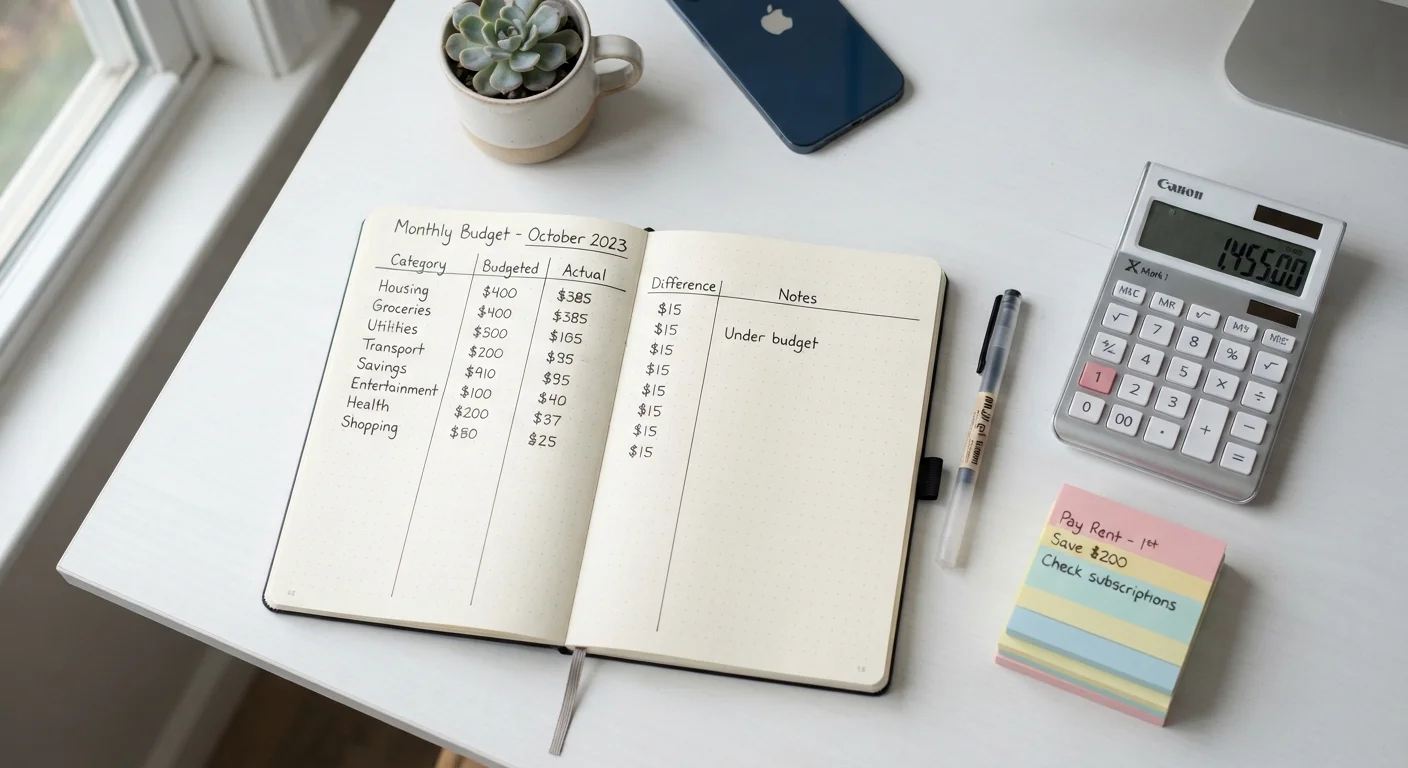

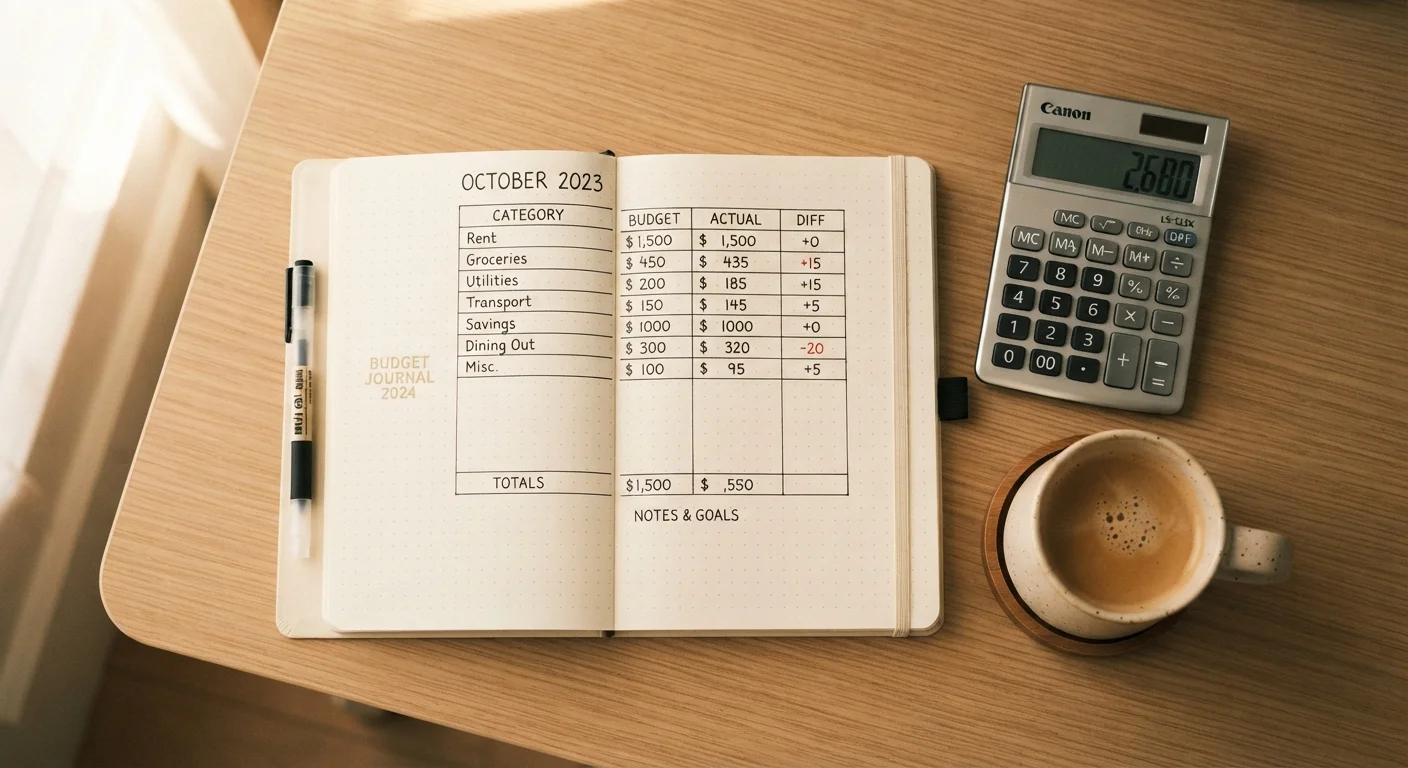
Why a First Budget Needs a Checklist
Starting a budget for the first time can feel overwhelming - there are decisions to make, numbers to track, and categories to define, all at once. A checklist breaks that process into manageable steps so nothing important gets missed.
This guide walks you through every stage of setting up a monthly budget from scratch, whether you're moving into your first apartment, starting your first job, or simply deciding it's time to take charge of your spending. If you want a deeper narrative walkthrough alongside this checklist, see our step-by-step guide for beginners.
Work through the checklist below in order. Each group builds on the one before it.
Bank or credit card statements (2-3 months)
Used to calculate realistic averages for your variable spending categories.
Spreadsheet or budgeting app
Provides a place to record, total, and update your monthly budget figures.
Pay stubs or income records
Confirm your accurate take-home pay figure before building your spending plan.
List of all subscriptions and recurring charges
Ensures no fixed monthly costs are overlooked when tallying expenses.
The Setup Checklist
Complete each group before moving to the next. Items marked must are non-negotiable foundations; should items make your budget significantly more accurate; nice to have items add clarity and longevity.
Gather Your Income Information
List Your Fixed Expenses
Estimate Your Variable Expenses
Plan for Savings and Irregular Bills
Balance and Finalise Your Budget
Always Budget From Take-Home Pay
One of the most common first-budget mistakes is building a spending plan based on your gross (pre-tax) salary. Taxes, insurance deductions, and retirement contributions are taken out before you see the money - so your real starting number is always your net pay. Using the wrong figure will make your budget appear larger than it actually is, leading to a shortfall later in the month.
Once you've assigned spending categories, it helps to separate needs from wants honestly. Our article on distinguishing needs from wants walks through a practical way to do that without judgment.
If your income varies month to month - for example, you freelance or work part-time shifts - you may need a slightly different approach. See our guide on budgeting on an irregular income for strategies designed for unpredictable paychecks.
What Comes After the First Setup
Building the budget is just step one. A budget that isn't checked and updated each month tends to drift out of sync with real life - subscriptions get added, expenses shift, and income changes. Plan to revisit your budget at month's end for a quick 15-minute review.
If you're budgeting because you're preparing for a big milestone - such as renting your first place or buying a home - your monthly budget directly affects what you can afford. Our renting basics hub and first home buying guide both connect housing costs back to your monthly spending plan.
For readers who want a more tactile method of controlling spending categories, the envelope budgeting method - which can be adapted digitally - is worth exploring once your first budget is set up.
When you're ready to make your budget stick beyond month one, our follow-up article on habits that keep a budget working covers the practical routines that help.
This article is for general informational and educational purposes only and does not constitute personalised financial advice. For guidance specific to your situation, consider speaking with a qualified financial professional.