

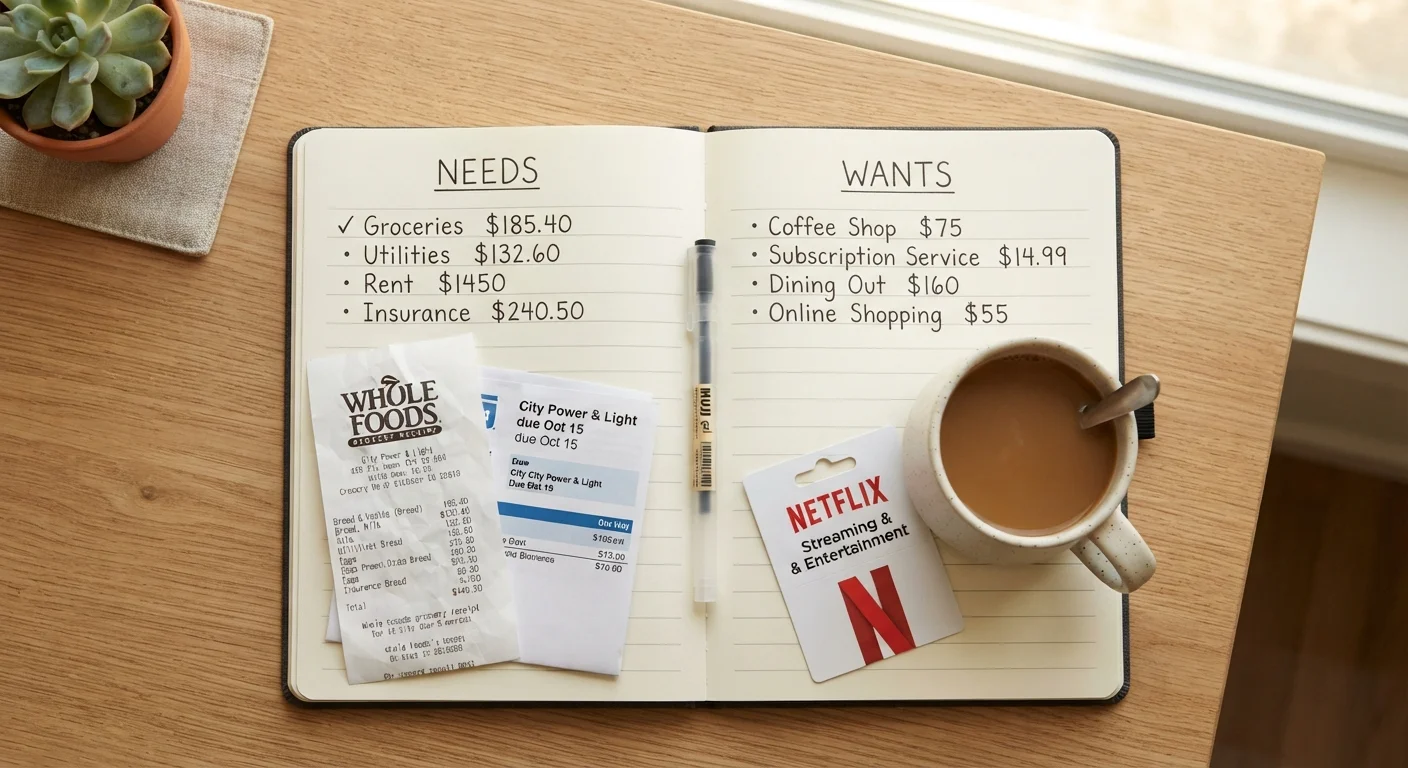
Why the Distinction Matters
When money feels tight, the instinct is often to cut everything at once - only to give up within weeks because the budget feels impossible. The reason this happens is that most people haven't sorted their spending into honest categories before making cuts. Lumping all expenses together makes it almost impossible to know where real flexibility exists.
Separating needs from wants gives you a clear picture of your financial floor - the minimum you must spend each month - and reveals what's left over for everything else. Without that baseline, you're guessing. With it, you're planning.
This distinction also underlies some of the most practical budgeting frameworks available. If you're ready to build a full spending plan after this, our step-by-step budget walkthrough is a solid next step.
Defining Needs: Your Financial Floor
A need is any expense you cannot reasonably eliminate without serious, direct consequences - loss of housing, inability to work, or risk to your health. Common needs include:
- Housing: Rent or mortgage payments, renter's insurance
- Food: Groceries (not restaurant meals, which are wants)
- Utilities: Electricity, water, heat, and basic phone service
- Transportation: Whatever gets you reliably to work - bus pass, car payment, fuel, basic maintenance
- Healthcare: Insurance premiums and necessary prescriptions
- Minimum debt payments: These protect your credit and avoid penalties
Notice that "needs" doesn't mean the cheapest possible version of everything - it means functional. A car payment on a reliable used vehicle can be a need. A lease on a luxury SUV when a bus pass would work is partly a want.
Your Needs List Is Personal
There's no universal needs list that applies to everyone. A category that's essential for one person may be optional for another, depending on location, health, employment, and family situation. Use common definitions as a starting point, but be honest about what your own circumstances actually require.
Understanding which of your costs are fixed (same every month) versus variable (fluctuating) also helps you plan more precisely. See our article on fixed vs. variable expenses for a closer look.
Defining Wants: Everything Above the Floor
A want is any spending that makes life more comfortable, enjoyable, or convenient - but that you could cut without putting your basic stability at risk. Wants can feel essential, which is exactly what makes this category tricky. Common wants include:
- Streaming subscriptions and entertainment
- Dining out and takeout
- Clothing beyond basic necessity
- Gym memberships (if exercise alternatives exist)
- Hobbies, travel, and non-essential subscriptions
- Upgraded versions of things you already have that work fine
The challenge is that wants are not bad. They contribute meaningfully to wellbeing and motivation. A budget that eliminates all wants tends to collapse. The goal is to fund them intentionally, after needs and savings are covered - not to feel shame about them.
Try a One-Month Tracking Exercise
Before you build a budget, spend one month recording every purchase without changing your behaviour. Label each transaction as a need or want afterward. Seeing the real numbers - rather than estimating - makes the categorisation process far more accurate and the budget you build far more realistic.
The Grey Zone: When Context Changes Everything
Many expenses resist a clean label, and that's normal. Here are a few common grey-zone examples:
The honest question to ask for any grey-zone expense is: "In my specific situation, what would I lose if I cut this?" The answer tells you more than any general rule. Your context - your job, your location, your health - shapes what counts as a need for you.
Putting It Into Practice
Start by listing every expense from last month - bank statements and card statements are the most reliable source. Then assign each line item a category: Need, Want, or Uncertain. Don't overthink the uncertain ones yet; just flag them.
Once everything is listed, total up each category. Most people find their "wants" spending is larger than expected - not because they're irresponsible, but because small recurring charges add up invisibly. Knowing the real number is the first step to adjusting it.
~30%
Recommended "wants" share of take-home pay
The 50/30/20 guideline, popularised in personal finance literature, suggests capping discretionary spending at 30% of after-tax income.
1 month
Time needed to see honest spending patterns
Financial educators generally recommend tracking at least one full month of actual spending before drawing conclusions about your categories.
From here, you can begin building a budget that reflects your actual priorities. The 50/30/20 rule and zero-based budgeting are two frameworks that use the needs/wants split as their foundation - worth exploring once you've completed your categorisation.
Tracking tools can also help you stay honest month to month. Spreadsheets and budgeting apps each have their strengths depending on how you prefer to work.
This article is for general informational and educational purposes only. It does not constitute personalised financial advice. For guidance specific to your financial situation, consider consulting a qualified financial professional.