
How Each Method Actually Works
Before comparing these two approaches, it helps to understand exactly what each one asks you to do.
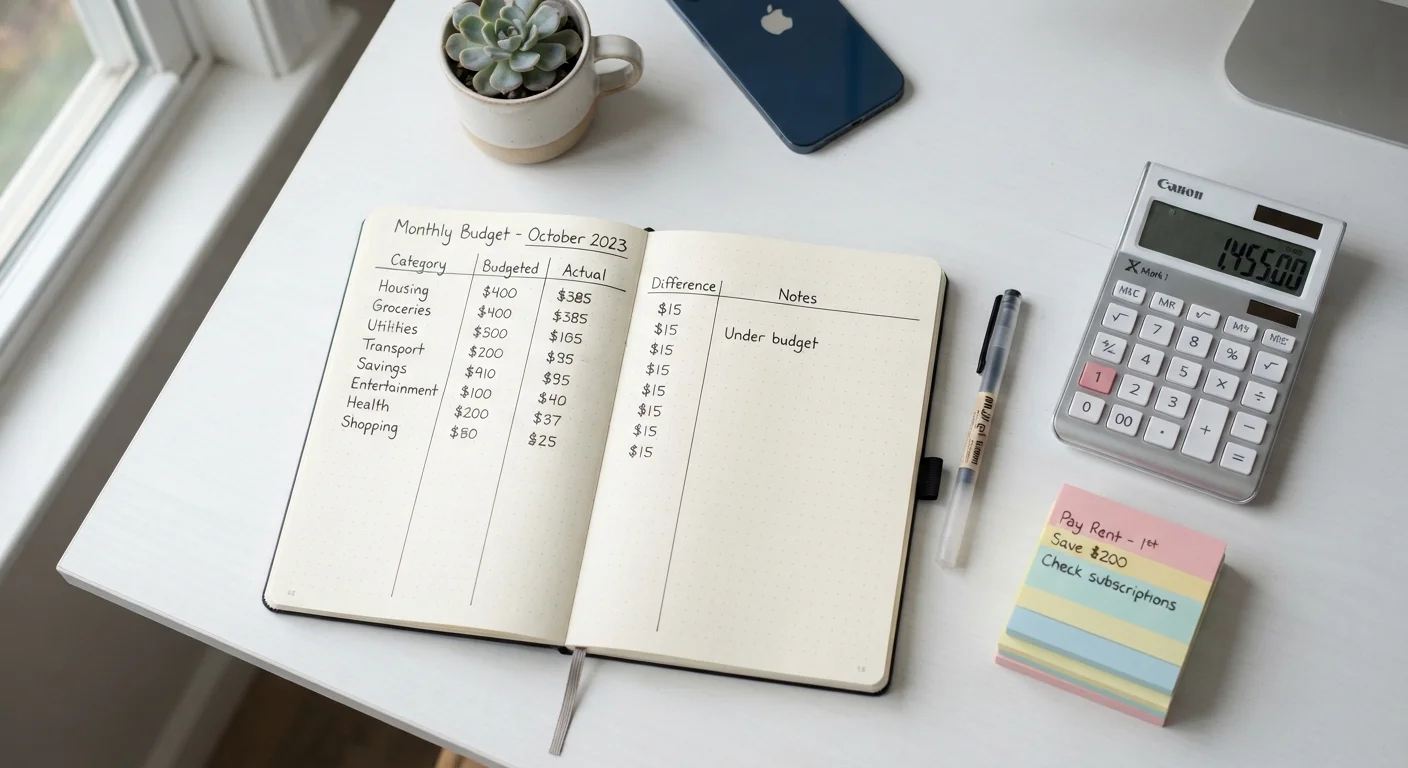
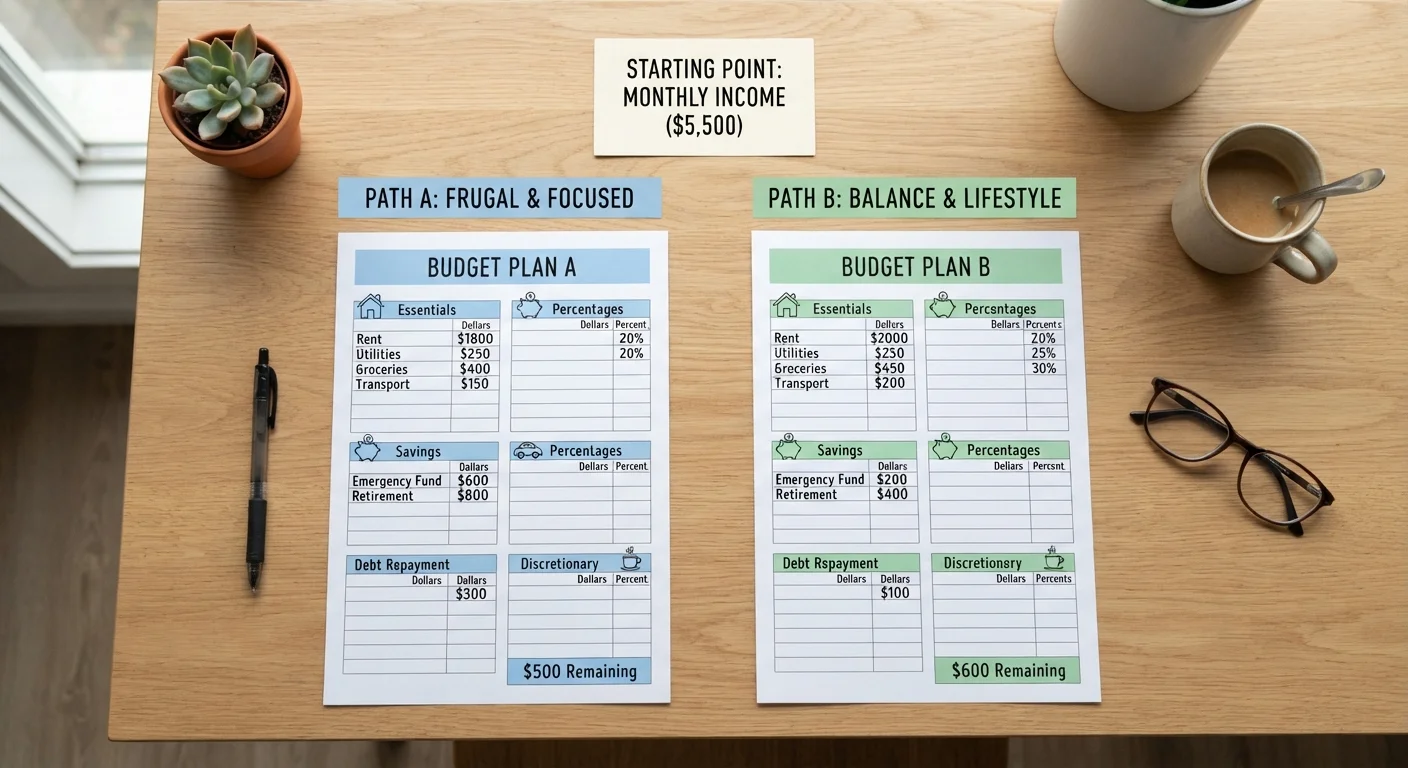
Zero-based budgeting (ZBB) starts with your total monthly income and requires you to assign every dollar to a category — rent, groceries, utilities, entertainment, savings, debt payments — until you reach zero. That doesn't mean spending everything; it means every dollar has a purpose, including dollars earmarked for savings or an emergency fund. At the end of the month, you start fresh and rebuild the plan.
The 50/30/20 rule divides your after-tax income into three broad percentages: 50% toward needs (housing, food, transportation, utilities), 30% toward wants (dining out, subscriptions, hobbies), and 20% toward savings and debt repayment. The rule, popularized in personal finance literature, is intentionally flexible — it gives you guardrails without requiring category-by-category tracking. For a deeper look at how this framework works, see our full breakdown of the 50/30/20 rule.
| Criterion | Zero-Based Budgeting | 50/30/20 Rule |
|---|---|---|
| Core concept | Every dollar assigned a job; income minus expenses = 0 | Income split into three percentage buckets |
| Setup time | 30–60 minutes per month | Under 10 minutes to start |
| Level of detail | Category-by-category tracking | Broad needs/wants/savings split |
| Best for irregular income | Yes — rebuilt fresh each month | Less flexible with income swings |
| Beginner-friendly | Moderate — requires discipline | High — simple to understand quickly |
| Debt payoff focus | Strong — dollars redirected precisely | Moderate — debt sits in 20% bucket |
| Flexibility month to month | High — plan resets each month | High — percentages adapt to income |
Where Each Method Shines — and Struggles
Zero-based budgeting's strength is precision. Because you plan before spending, you tend to make more deliberate choices. It's particularly useful when money is tight, income is irregular, or you're working toward a specific goal like building an emergency fund or paying off debt. The trade-off is time — expect to spend 30 to 60 minutes at the start of each month setting it up, plus regular check-ins throughout. You can read more about what strict budgeting actually demands in our article on the honest trade-offs of strict budgeting.
The 50/30/20 rule's strength is accessibility. It removes decision fatigue by keeping things high-level. If your take-home pay is $3,000 a month, you know roughly $1,500 goes to needs, $900 to wants, and $600 to savings — no spreadsheet required. The weakness is that it can mask problem areas. If your needs consistently exceed 50% (common in high cost-of-living areas), the rule doesn't tell you which category to trim.
You Don't Have to Pick Just One Forever
Some people start with the 50/30/20 rule to build the budgeting habit, then switch to zero-based budgeting once they want more control. Others use a hybrid — applying percentage targets as rough guides while still tracking individual categories. Personal finance is personal: your method should fit your life, not the other way around.
Neither method requires a perfect first attempt. Most people adjust their approach as they learn more about their own spending habits.
Choosing the Right Fit for Your Situation
The right budgeting method depends less on which is objectively better and more on which you'll realistically use. Ask yourself two questions: How much time am I willing to spend on this each month? and How specific do I need my plan to be?
If you're a complete beginner, the 50/30/20 rule offers a gentler entry point. You can get started in under ten minutes. Once you're comfortable tracking your spending at a high level, you may find yourself naturally curious about the details — and that's often when people transition toward a more granular method. Our first budget walkthrough for beginners is a good place to start if you've never built a budget before.
If you've tried looser budgets and found that money still disappears without explanation, zero-based budgeting's structure may be exactly what you need. It's also worth exploring other frameworks — our comparison of popular budgeting approaches covers the pay-yourself-first method and others side by side.
~33%
Americans with a detailed household budget
Surveys by financial research organizations consistently find that fewer than half of U.S. adults maintain a written or tracked monthly budget.
50%
Income ceiling for 'needs' in the 50/30/20 rule
Financial educators note that in high cost-of-living cities, housing alone can push needs well beyond this threshold, requiring rule adjustments.
Whichever method you choose, pair it with a consistent tracking habit. Whether you prefer a spreadsheet or a dedicated app, the tool matters less than the consistency. See our guide on spreadsheet vs. app tracking to find your best fit.
This article is for general informational and educational purposes only and does not constitute personalized financial advice. Consider consulting a qualified financial professional for guidance specific to your circumstances.