
What 'Strict Budgeting' Actually Means
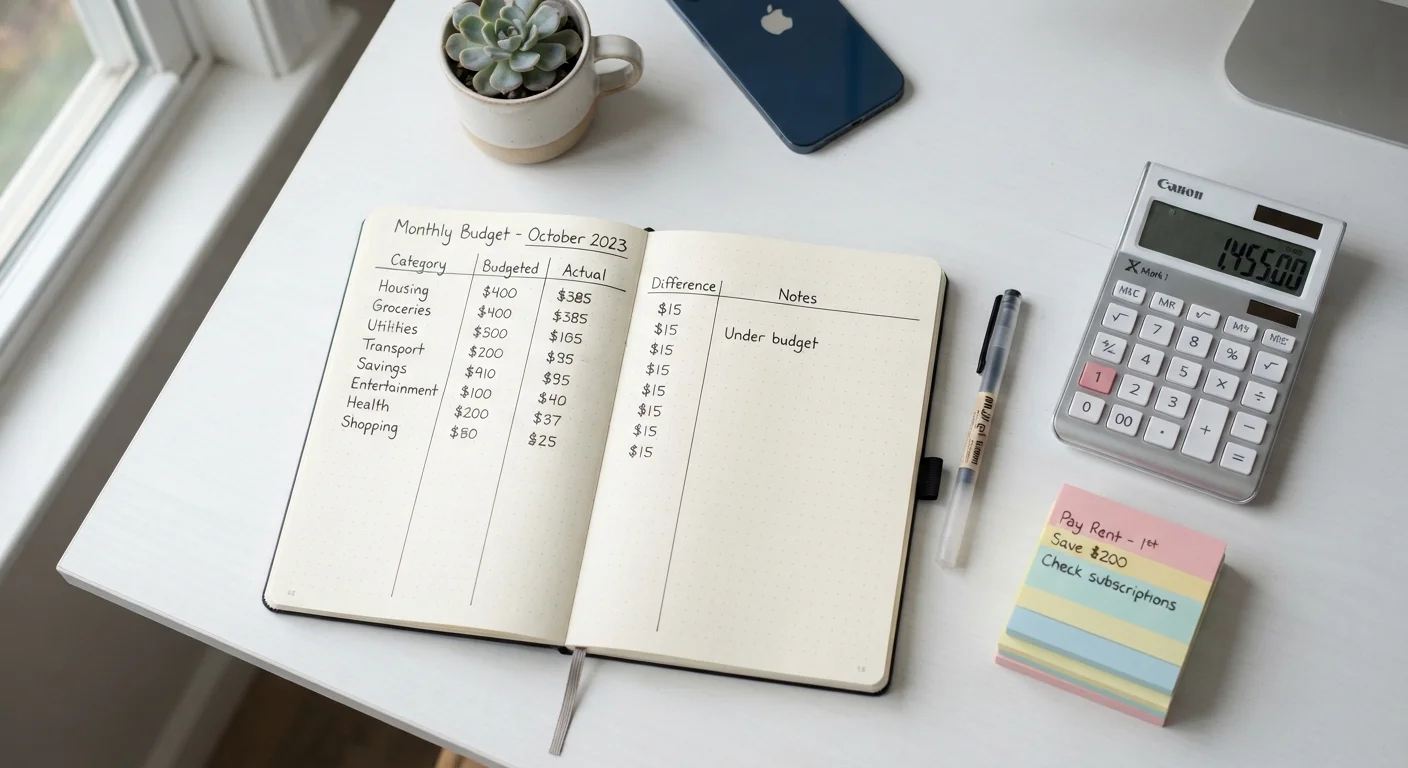
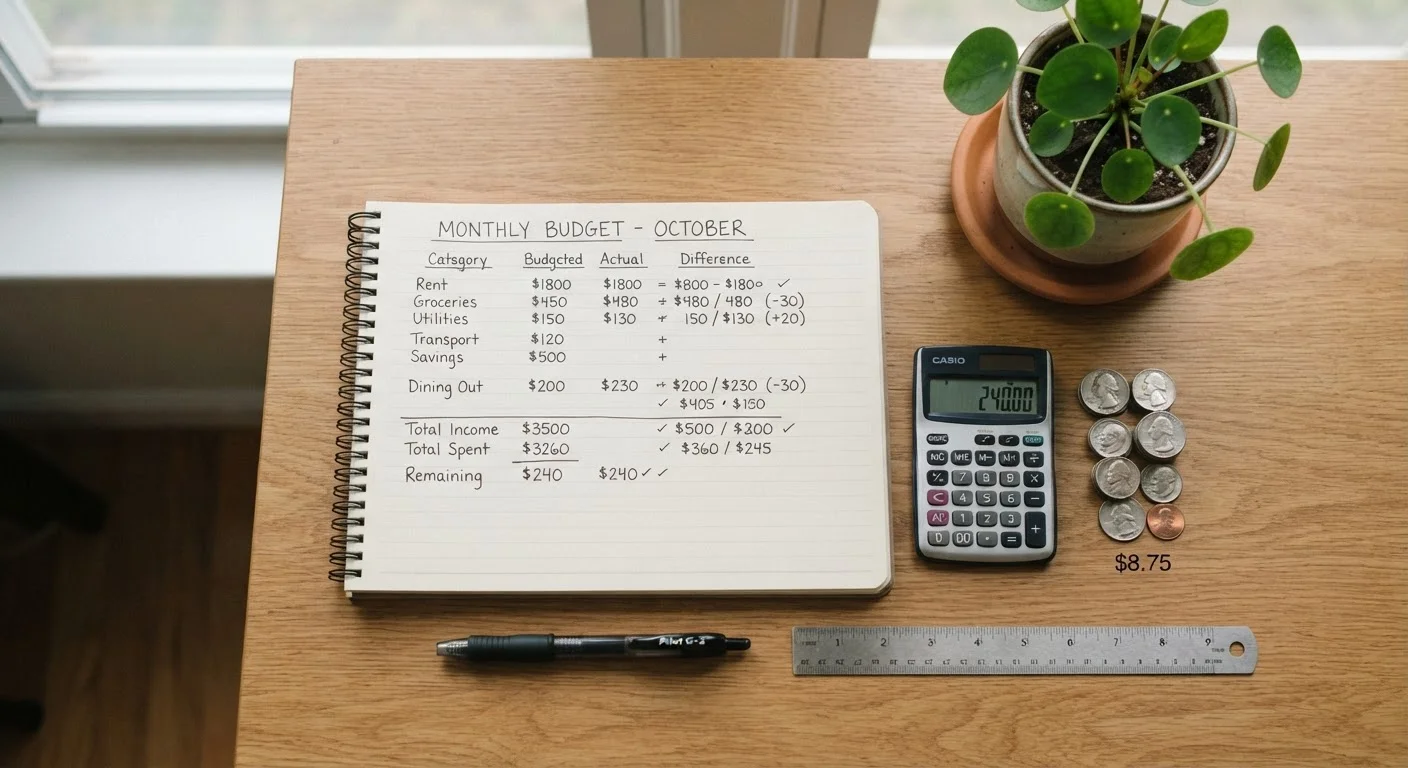
A strict budget assigns a specific dollar amount to every spending category - housing, groceries, transportation, entertainment - and expects you to stay within those limits each month. Unlike a loose approach where you track spending after the fact, a strict budget sets rules before money is spent.
This is sometimes called zero-based budgeting, where every dollar of income is assigned a job until there is nothing left unaccounted for. It can also mean enforcing hard caps on discretionary spending - say, $150 per month on dining out, no exceptions. If you want to compare structured methods side by side, see budgeting approaches compared to find one that suits your habits.
Strict budgeting is not the same as being broke or depriving yourself - it is a deliberate choice about how to direct your money. But that distinction matters less when a birthday dinner blows your restaurant budget on the 8th of the month.
The Real Advantages
Done consistently, tight budgeting delivers concrete benefits that looser money management rarely produces at the same speed.
Accelerates debt payoff and savings goals
When every dollar is assigned a purpose, money is less likely to drift into untracked spending. This focus can meaningfully speed up timelines for paying off credit cards or reaching a savings target.
Builds a clear picture of your spending patterns
Tracking against a strict budget forces you to notice where your money actually goes, not where you think it goes. This awareness is a prerequisite for making intentional financial changes.
Reduces end-of-month financial stress
Knowing your limits in advance eliminates many of the guessing games that create anxiety. A defined budget acts as a financial guardrail, so small purchases don't quietly derail your month.
Creates a habit of intentional spending
Following a budget consistently, even imperfectly, trains you to pause before spending - a habit that pays dividends well beyond any single budget category.
~33%
Americans with a detailed household budget
Gallup polling has consistently found that only about one-third of Americans maintain a detailed monthly household budget, despite widespread acknowledgment that budgeting helps.
3-6 months
Recommended emergency fund coverage
Most mainstream financial guidance, including from the Consumer Financial Protection Bureau (CFPB), suggests aiming for three to six months of essential expenses in an accessible savings account.
Beyond the numbers, many people find that a detailed budget reduces financial anxiety. When you know exactly what you have and where it is going, there are fewer unpleasant surprises at the end of the month. That predictability can feel genuinely freeing rather than restrictive. Pairing a solid budget with a savings plan - such as building an emergency fund - compounds the benefit; the Saving & Banking hub covers how to put that structure in place.
The Honest Disadvantages
Strict budgeting has real costs that are easy to underestimate when you are enthusiastic about getting your finances in order.
Takes significant time to set up and maintain
Building a realistic budget requires reviewing past spending, categorising transactions, and revisiting numbers regularly. Many beginners underestimate this ongoing time commitment.
Can create social friction and missed experiences
Strict category limits may mean turning down group dinners, last-minute trips, or gifts you'd genuinely like to give. Over time, this can strain relationships or create a sense of isolation.
High rigidity increases the risk of abandonment
If one bad week blows a category, it is easy to feel like the entire budget has failed and give up entirely. This 'all-or-nothing' thinking is one of the most common reasons budgets get abandoned.
Irregular expenses are hard to predict accurately
Medical bills, car maintenance, and other sporadic costs rarely fit neatly into monthly categories. Failing to plan for them leads to repeated budget overruns that feel demoralising.
May not account for lifestyle inflation or life changes
A budget built in January can feel completely wrong by September if your income, living situation, or priorities have shifted - and strict systems are slower to adapt.
One of the most common failure points is building a budget that does not account for irregular expenses - car repairs, medical co-pays, or a friend's destination wedding. These are not surprises; they are certainties you cannot schedule. Understanding fixed vs. variable expenses helps you plan realistically rather than optimistically.
Finding the Right Level of Structure
The tightest budget is not always the best budget - the best budget is the one you can follow consistently over months and years. Research in behavioral economics consistently shows that all-or-nothing rules are harder to maintain than systems that allow for small, managed exceptions.
Strict Doesn't Have to Mean Inflexible
Building a small 'miscellaneous' or 'buffer' category into your budget - even just $30-$50 per month - can absorb minor overruns without blowing the entire plan. Think of it as a pressure valve. This is not a loophole; it is a realistic acknowledgment that life does not follow a spreadsheet perfectly. If you want to understand the philosophy behind this, what a budget actually is is a useful starting point.
If strict budgeting feels unsustainable, consider a hybrid approach. The zero-based vs. 50/30/20 comparison walks through two popular frameworks with very different levels of rigidity - one may fit your temperament better than the other.
It also helps to remember that a budget is not a permanent sentence. You can start with stricter controls while paying down debt, then loosen categories once you hit a savings milestone. Revisiting and adjusting your budget every few months is not a sign of failure - it is good financial practice.
This article is for general informational and educational purposes only. It does not constitute personalised financial advice. Consider speaking with a qualified financial professional about your specific circumstances.