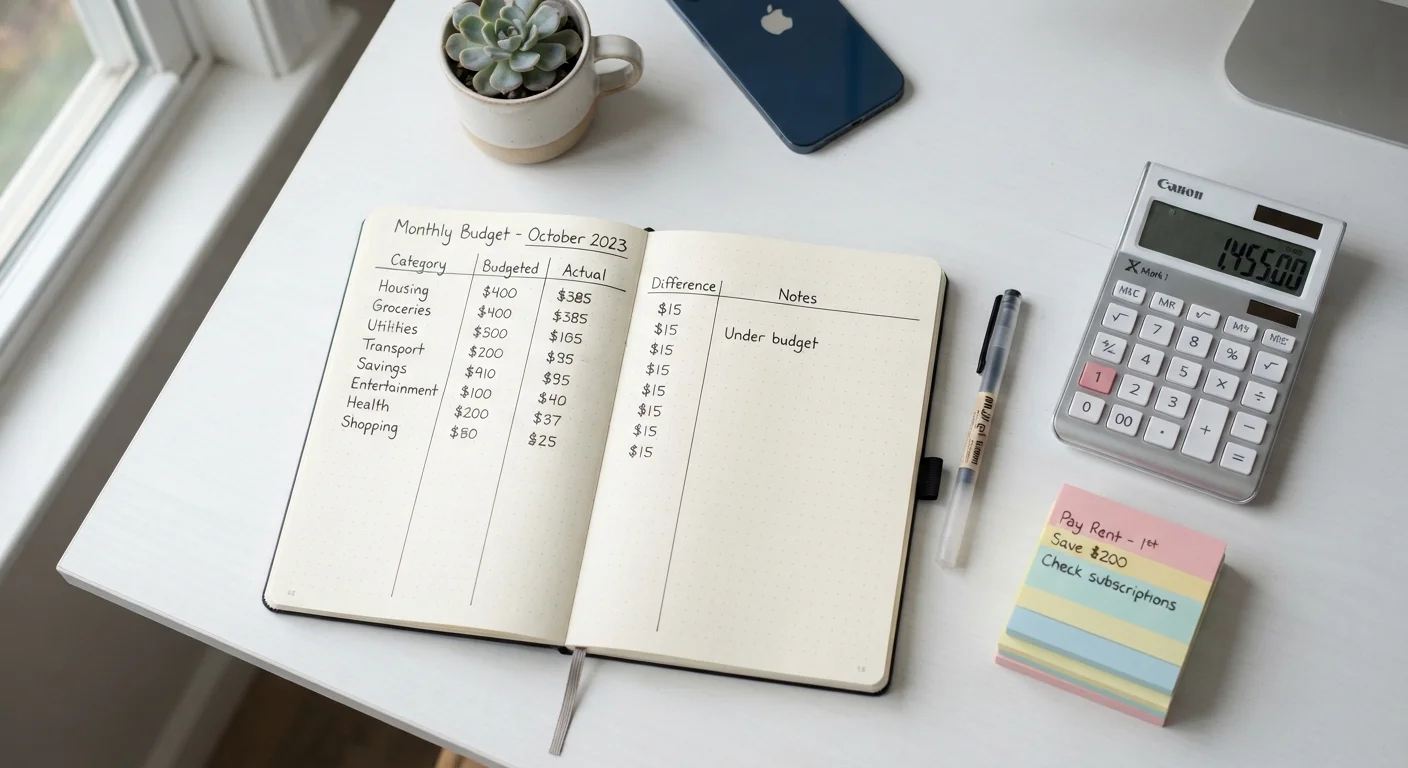


Why Budgets Stall After the First Month
Most people feel motivated when they first set up a budget. The numbers are clear, the categories make sense, and the goal feels within reach. But by month two, that momentum often fades - and the budget gets quietly abandoned.
This happens for a predictable reason: a budget is a plan, not a habit. Setting one up takes an afternoon; maintaining it takes a steady routine. Discover why month two is the danger zone and what you can do about it before it happens to you.
The good news is that the habits described below are simple, low-effort, and effective. You don't need perfect discipline - you need a few reliable systems.
A Budget Is Allowed to Change
Many beginners think that revising a budget means the original plan failed. It doesn't. A budget is a living document - changing it when your circumstances shift is exactly how it's supposed to work. The goal is an accurate picture of your finances, not a perfect prediction made in the past.
Core Habits That Make a Budget Last
The following practices address the most common reasons budgets break down. Build them one at a time rather than all at once - adding too many new behaviors simultaneously is a common way to burn out quickly.
Schedule a weekly 10-minute budget check-in
Monthly reviews catch problems too late. A short weekly check-in lets you spot overspending in one category before it damages the whole plan. It also keeps the budget mentally present, reducing the 'out of sight, out of mind' effect that derails many beginners.
Automate your savings contribution on payday
When savings are transferred automatically before you can spend the money, you eliminate the daily decision of whether to save. This removes reliance on willpower, which is a finite resource. Even a small automated amount builds the habit and the account balance simultaneously.
Treat irregular expenses as predictable costs
Annual costs like car registration, holiday gifts, or back-to-school supplies feel like surprises because we don't plan for them monthly. When these hit, they blow a hole in the budget - and many people give up. By estimating them annually and dividing by 12, you can set aside a small amount each month.
Review and adjust your budget categories every month
A budget built in January may not reflect your life in July. Income, expenses, and priorities shift - and a budget that doesn't flex with reality becomes irrelevant. Revisiting your categories monthly keeps the budget honest and usable.
Track spending by category, not just total spending
Knowing you spent $1,800 last month tells you little. Knowing you spent $400 on food, $150 on subscriptions, and $200 on impulse purchases tells you where your money actually goes. Category tracking surfaces specific behavior you can act on.
Build in a small 'flexibility fund' for spending guilt
Budgets that leave zero room for spontaneous spending create a cycle of guilt and abandonment. A small discretionary fund - even $20-$50 per month - lets you say yes to a coffee with a friend or a last-minute movie without feeling like you've failed. This is a design feature, not a weakness.
Quick Actions You Can Take This Week
You don't need to overhaul your entire routine to start protecting your budget. A few targeted actions taken today can create immediate stability and reduce the friction that causes most people to quit.
“A budget is telling your money where to go instead of wondering where it went.”
— John C. Maxwell, Author and leadership educator
Putting It All Together
A budget that works long-term isn't rigid - it's responsive. Life brings irregular expenses, income changes, and unexpected costs. The habits above don't just help you stick to a budget; they help you adapt it without starting over from scratch.
As your financial picture grows more complex - adding savings goals, building an emergency fund, or planning for a first home - these same habits provide the foundation you'll need. See our guide to saving and banking for the next steps once your budget is stable.
If you're still early in your financial journey and aren't sure budgeting is right for you, read through common budgeting myths - many of the barriers people believe in aren't real.
65%
Americans living paycheck to paycheck
According to a LendingClub report, a majority of U.S. consumers report spending all or most of their income each month, underscoring how rare consistent budgeting habits remain.
1 in 3
Adults who track spending monthly
Research from the National Foundation for Credit Counseling has found that fewer than a third of U.S. adults maintain any kind of monthly household budget.
This article is for general informational and educational purposes only and does not constitute personalised financial advice. Consider speaking with a qualified financial professional about decisions specific to your situation.