

Why Nutrition Labels Exist - and What They're Designed to Do
The Nutrition Facts label on US packaged foods is regulated by the Food and Drug Administration (FDA). Its purpose is to give consumers standardized, comparable information so they can make informed choices - not to tell anyone what to eat. The format was last significantly updated in 2020, with changes that include a more prominent calorie display and a mandatory line for added sugars.
Understanding labels is a foundational skill for anyone starting to think more carefully about food. If you're newer to the topic, our beginner nutrition guide is a good place to build context before or alongside this walkthrough.
What you will need
Labels work best as comparison tools. They help you notice patterns - like a seemingly light snack carrying a large share of your daily sodium - rather than rendering a verdict on any single food. Combined with an understanding of balanced plate principles, label literacy helps you make decisions that align with your broader eating pattern.
Labels Guide, Not Diagnose
Nutrition labels are a general education tool based on a 2,000-calorie reference diet. Your personal calorie and nutrient needs depend on your age, health status, and activity level. For guidance tailored to your situation, speak with a registered dietitian or your healthcare provider.
How to Read the Label Step by Step
Follow these steps the next time you pick up a packaged food. With a little practice, the whole process takes less than a minute.
Start with Serving Size
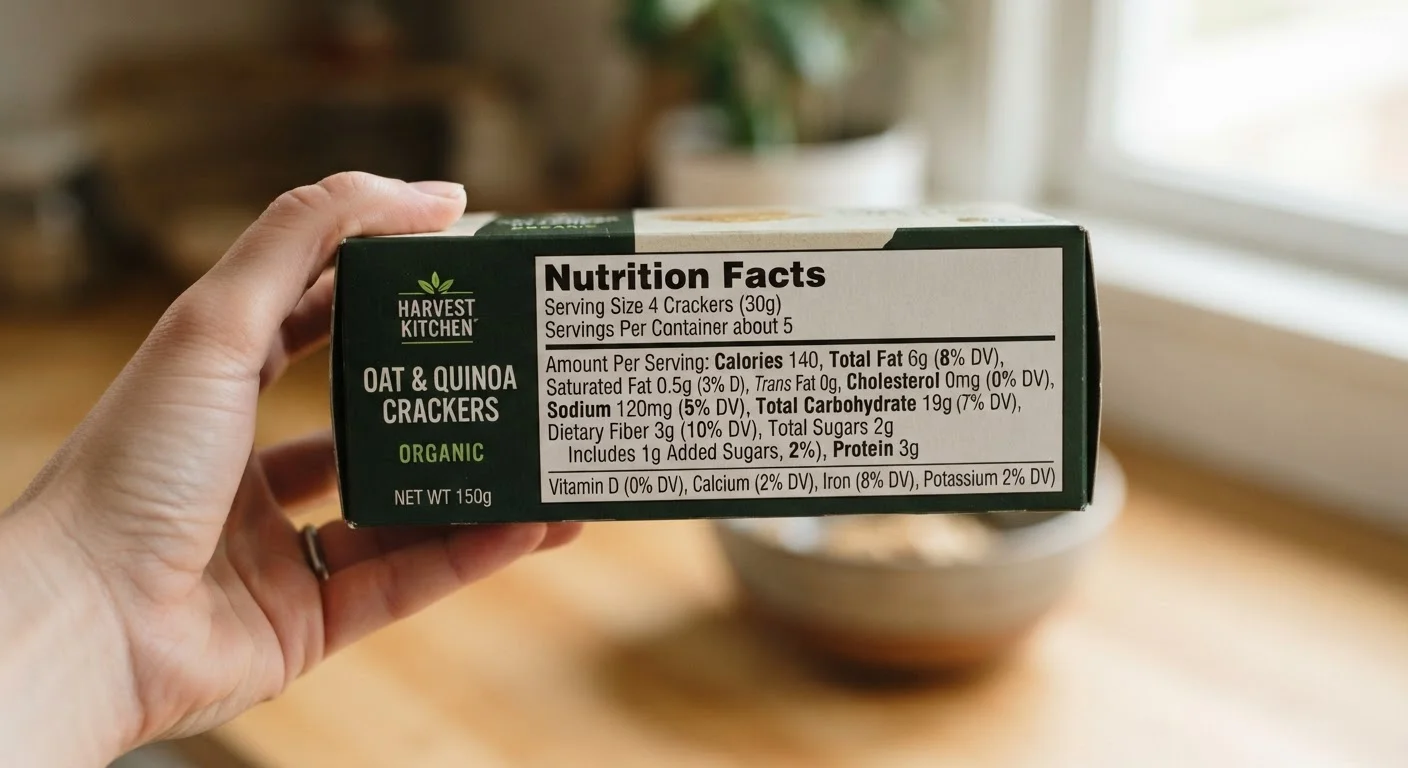
Every number on the label - calories, nutrients, percentages - is based on one serving, not the entire package. The serving size is listed at the very top, usually in a familiar unit like cups or pieces, followed by grams in parentheses.
Check how many servings are in the container. If a bag shows 3 servings and you eat the whole bag, every number on the label triples. This single step prevents the most common misreading of nutrition labels.
Read the Calorie Count in Context
Calories measure energy. The label shows calories per serving. While calorie needs vary widely by person, the label is designed around a general 2,000-calorie daily reference point.
Rather than memorizing a target, use calories as a comparison tool between similar products - for example, two brands of yogurt or two types of bread.
Check Nutrients to Limit
Nutrition labels highlight certain nutrients because most people in the US consume more than recommended. Look for:
- Saturated fat - associated with cardiovascular health when consumed in excess
- Sodium - high intake is linked to blood pressure concerns
- Added sugars - distinct from naturally occurring sugars, and a key item to watch
For these, lower % Daily Values are generally preferable. The hidden sources of sugar, salt, and saturated fat article explores where these often appear unexpectedly.
Identify Nutrients to Prioritize
Some nutrients are under-consumed by most Americans. Labels flag these so you can aim higher:
- Dietary fiber - supports digestion and has broader health benefits (see why fibre is so important)
- Vitamin D, calcium, iron, and potassium - listed because deficiency is common across the population
For these, higher % Daily Values indicate a more substantial contribution toward your daily needs.
Understand % Daily Value (%DV)
The % Daily Value column shows how much one serving contributes to a standard daily intake goal for each nutrient. These reference values are set by the FDA based on a 2,000-calorie diet and represent general public health targets - not personalized recommendations.
Use %DV to compare products and to gauge whether a food is a meaningful source of a nutrient or a significant source of something you'd prefer to limit.
[tip_callout]Scan the Ingredients List
Ingredients are listed in descending order by weight - the first ingredient is present in the greatest amount. A quick scan tells you what a product is primarily made of.
If added sugar appears under several different names (e.g., corn syrup, dextrose, evaporated cane juice) across multiple positions in the list, the combined total may be higher than any single entry suggests. This is one reason the added sugars line on the main panel is useful.
For context on how this compares to reading labels on other types of products, the pet food label guide shows how similar principles apply in a different context.
Don't Judge a Food by One Number
Fixating on a single nutrient - like fat or calories - can mislead you about a food's overall profile. A product can be low in calories but high in added sugar, or high in fat but rich in beneficial nutrients. Read the full label before drawing conclusions.
Once you're comfortable reading individual labels, you can apply the same skills more broadly - including when evaluating whether supplements might fill genuine gaps in your diet, or when exploring differences between whole and processed foods.