

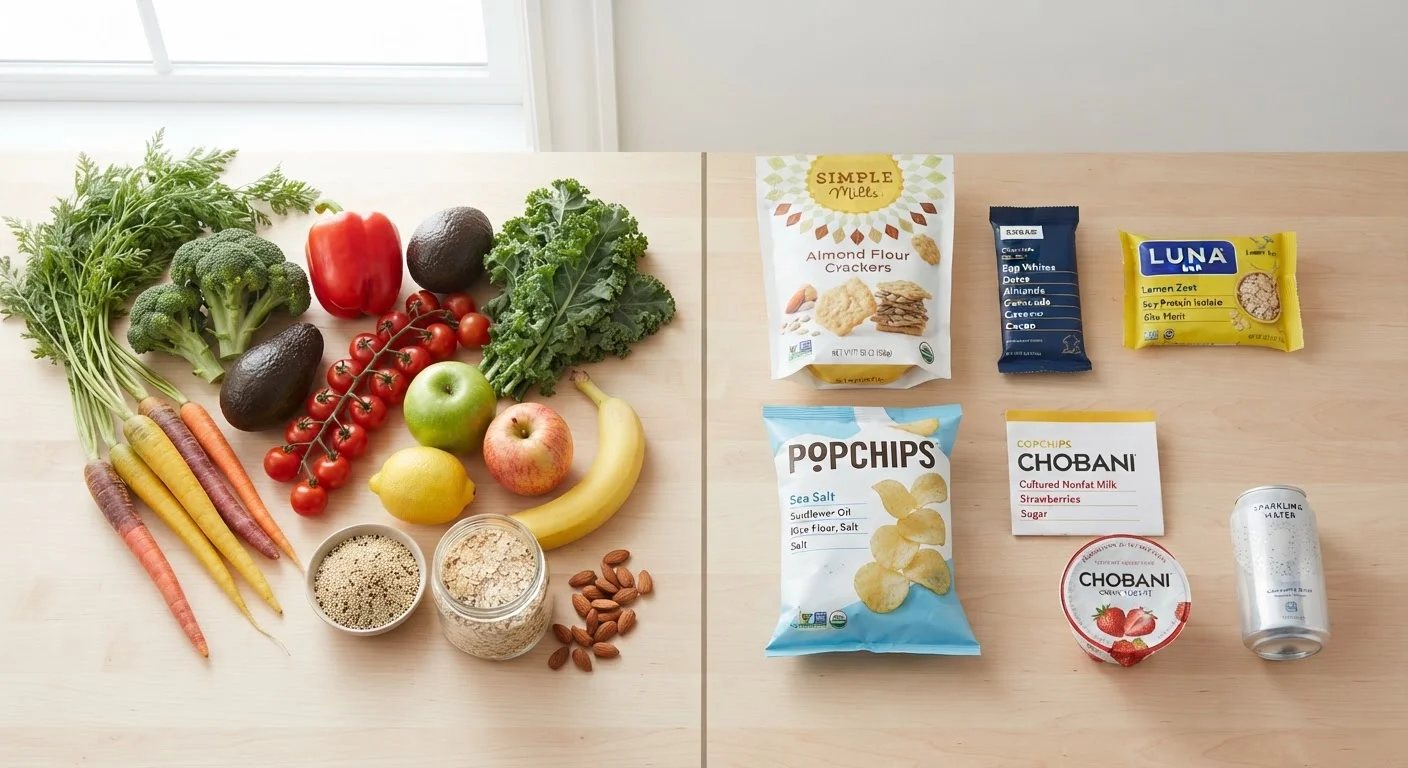
Defining the Terms: What 'Whole' and 'Processed' Actually Mean
A whole food is one that has been minimally altered from its natural state - think raw oats, an apple, a handful of walnuts, or a piece of salmon. It contains the nutrients it originally had, without significant additions or subtractions.
Processed food is any food that has been deliberately changed before you eat it. That sounds alarming until you realize the category includes pasteurized milk, frozen peas, canned tomatoes, and plain yogurt. Processing is a method, not a verdict.
Nutrition researchers commonly use the NOVA classification system, developed by researchers at the University of São Paulo, to sort foods into four groups based on the extent and purpose of processing:
- Unprocessed or minimally processed - fresh fruit, eggs, plain meat, dry legumes
- Processed culinary ingredients - olive oil, flour, salt, sugar used in cooking
- Processed foods - canned fish, cheese, cured meats, canned vegetables
- Ultra-processed foods (UPF) - packaged snacks, sugary drinks, instant noodles, many breakfast cereals with long ingredient lists
The distinction that matters most for your health is between Group 1-3 and Group 4, not between "all processed" and "all natural." For a deeper look at what ingredient lists are telling you, see our guide to reading a nutrition label.
How They Compare: Nutrition, Convenience, and Cost
Whole foods tend to be richer in fiber, vitamins, and minerals because these nutrients haven't been extracted, concentrated, or destroyed in manufacturing. Fiber is especially significant - most Americans fall short of recommended intake, and fiber is tightly linked to digestive health, blood sugar regulation, and satiety.
| Criterion | Whole Foods | Processed Foods (Spectrum) |
|---|---|---|
| Nutrient density | Generally high; fiber and micronutrients intact | Varies - minimally processed can be high; UPF typically lower |
| Added sugar | None (natural sugars only) | Often present in UPF; absent in minimally processed |
| Sodium content | Naturally low | Frequently elevated, especially in packaged snacks |
| Fiber content | High, especially in plants and legumes | Often reduced during refining in UPF |
| Preparation time | Can require more prep and planning | Generally quicker; ready-to-eat options common |
| Cost | Variable; fresh produce can be pricier seasonally | Often lower per serving, especially shelf-stable items |
| Shelf life | Shorter; requires refrigeration or prompt use | Longer; preservatives extend usability |
Ultra-processed foods, by contrast, are often engineered for hyperpalatability - combinations of fat, salt, and sugar calibrated to encourage overeating. Research published in journals including The BMJ and Cell Metabolism has found associations between high ultra-processed food intake and increased risk of obesity, cardiovascular issues, and metabolic conditions. However, it's important to note that many of these studies are observational and cannot prove direct causation.
On the convenience and cost side, processed foods frequently win. A bag of lentils requires soaking and cooking; canned lentils are ready in minutes. Frozen vegetables can be just as nutritious as fresh ones - and sometimes more so, since they're frozen at peak ripeness.
57%
Share of US calories from ultra-processed foods
A study published in BMJ Open estimated that ultra-processed foods account for approximately 57% of energy intake in the average American diet.
~28g
Daily fiber recommended for most adults
The U.S. Dietary Guidelines for Americans recommend around 28 grams of dietary fiber per day, a target most Americans do not consistently meet.
10+
Ingredients typical in ultra-processed products
NOVA Group 4 foods commonly contain ten or more ingredients, often including additives not used in home cooking, according to researchers at the University of São Paulo.
Ultra-Processed Foods: The Category Worth Paying Attention To
If you take one practical lesson from this comparison, let it be this: the concern isn't processing itself - it's ultra-processing. Ultra-processed foods are industrially manufactured products containing ingredients rarely found in a home kitchen: emulsifiers, flavor enhancers, hydrolyzed proteins, modified starches, and artificial colorings.
These ingredients extend shelf life, improve texture, and make food more convenient - but they also displace whole food components, particularly fiber and micronutrients. A product labeled "multigrain" or "fortified" can still be ultra-processed if its ingredient list is long and unfamiliar.
"Processed" Doesn't Always Mean Harmful
Plain Greek yogurt, canned chickpeas, and frozen edamame are all processed - but they retain strong nutritional profiles and are regularly recommended by dietitians. The NOVA framework is a useful starting point, but context matters. A minimally processed food with a short, recognizable ingredient list is generally a solid choice regardless of how it was packaged or preserved.
Spotting ultra-processed foods is easier once you focus on ingredient lists rather than front-of-pack health claims. If a product contains five or more ingredients, including chemical-sounding additives and multiple forms of added sugar, it's likely in NOVA Group 4. Our article on gut health and daily eating habits also explores how food choices influence your digestive ecosystem.
For those exploring plant-based diets, it's worth noting that many plant-based meat substitutes are ultra-processed - a useful reminder that eating patterns and processing levels are separate considerations. See plant-based vs. omnivorous diet trade-offs for more on that distinction.
This article is for general informational purposes only and is not a substitute for personalized nutrition or medical advice. Speak with a registered dietitian or qualified healthcare provider for guidance tailored to your health needs.