

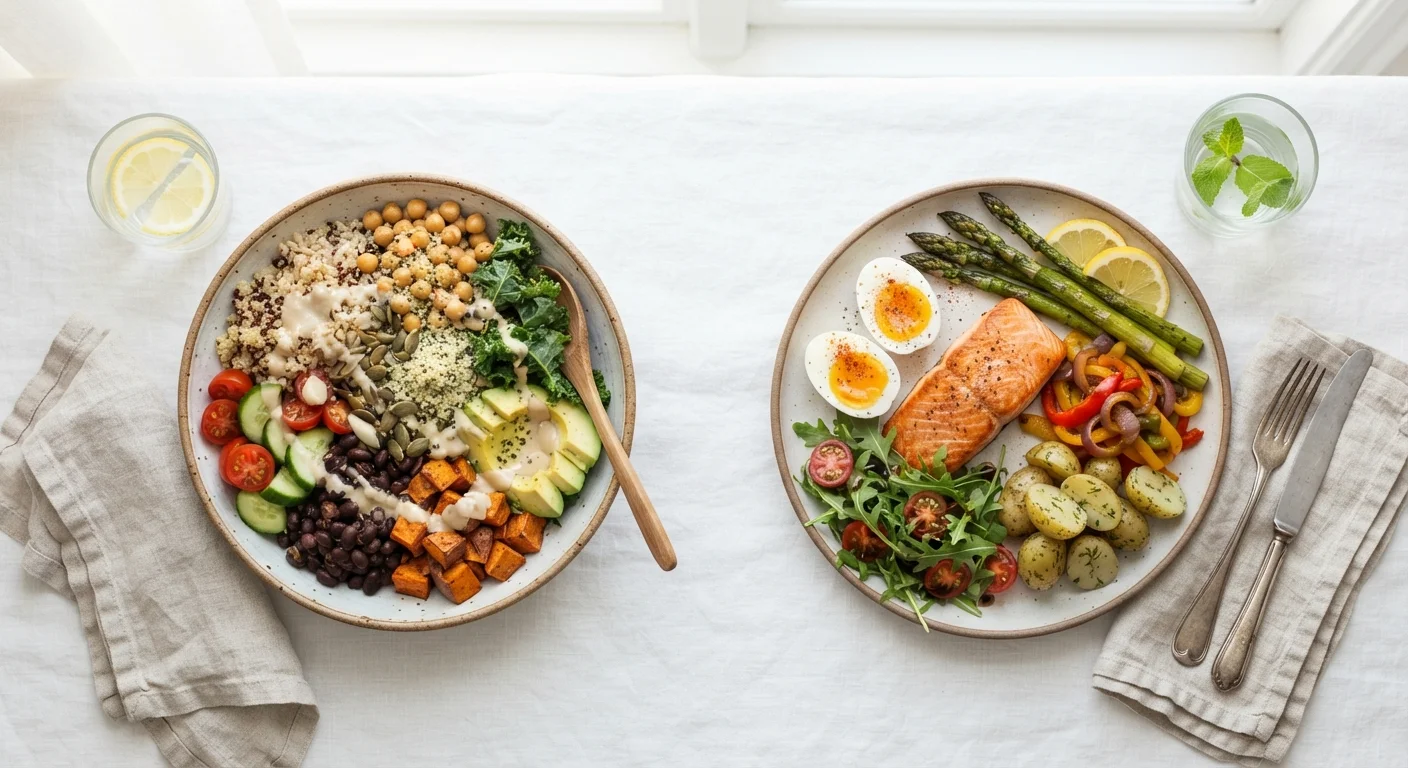
Why This Comparison Actually Matters
If you've recently started paying more attention to what you eat, you've probably encountered strong opinions about plant-based versus omnivorous diets. The debate can feel overwhelming - and for beginners, it often generates more confusion than clarity.
The truth is that both eating patterns have genuine nutritional strengths and real gaps worth understanding. Rather than asking which is "better," a more useful question is: what does each pattern make easier or harder nutritionally, and how do I account for that?
For a broader look at how early nutrition choices can go sideways, see where nutrition advice goes wrong for beginners.
| Nutrient / Factor | Plant-Based Diet | Omnivorous Diet | |
|---|---|---|---|
| Fiber intake | Typically high - naturally rich in fiber | Often lower if plant foods are limited | |
| Vitamin B12 | Supplementation usually required | Well covered by animal products | |
| Iron (bioavailability) | Non-heme iron, lower absorption rate | Heme iron, absorbed more efficiently | |
| Omega-3s (EPA/DHA) | Limited; algae supplements can help | Present in fatty fish and some eggs | |
| Antioxidants & phytonutrients | Abundant from diverse plant foods | Lower if vegetable variety is limited | |
| Saturated fat exposure | Generally lower | Can be higher with processed meat/dairy | |
| Planning required | More intentional planning needed | Fewer gaps with moderate variety |
Nutrient Strengths and Gaps in Plant-Based Eating
A well-planned plant-based diet - one centered on vegetables, fruits, whole grains, legumes, nuts, and seeds - tends to be naturally high in dietary fiber, folate, vitamin C, vitamin E, magnesium, and a range of antioxidants. Research consistently links these diets to lower rates of certain chronic conditions, though diet quality plays a major role in those outcomes.
However, several nutrients require deliberate attention:
- Vitamin B12: Found almost exclusively in animal products, B12 is the most critical supplement consideration for people eating fully plant-based. A deficiency can affect nerve function and red blood cell production.
- Iron: Plants contain non-heme iron, which the body absorbs less efficiently than the heme iron in meat. Pairing iron-rich foods (like lentils or tofu) with vitamin C sources improves absorption.
- Omega-3 fatty acids: ALA (found in flaxseed, chia, walnuts) is plant-derived, but the body converts it to EPA and DHA - forms used by the brain and heart - at low rates. Algae-based omega-3 supplements can bridge this gap.
- Zinc and calcium: Bioavailability (how much the body can actually use) is lower from plant sources; variety and preparation methods matter.
Boost Iron Absorption With Simple Pairings
If you eat a plant-based diet, pairing iron-rich foods with a vitamin C source at the same meal can meaningfully improve absorption. For example, adding lemon juice to lentil soup or bell peppers to a tofu stir-fry are easy, practical combinations. Avoid drinking tea or coffee with iron-rich meals, as tannins can inhibit absorption.
Learning to read a nutrition label helps plant-based eaters quickly spot whether packaged foods are fortified with key nutrients like B12 or vitamin D.
Nutrient Strengths and Gaps in Omnivorous Eating
An omnivorous diet - one that includes animal products alongside plant foods - provides easier access to several nutrients the body uses efficiently. Heme iron from red meat and poultry is absorbed at roughly two to three times the rate of non-heme iron. Vitamin B12, zinc, and vitamin D3 are present in meaningful amounts in meat, dairy, and eggs.
That said, omnivorous diets are not automatically balanced. Common gaps include:
- Fiber: Most Americans consume well below the recommended amount of dietary fiber. An omnivorous diet heavy in animal protein and refined foods can leave little room for the fiber-rich plant foods that support gut health and satiety.
- Phytonutrients: Compounds like polyphenols, flavonoids, and carotenoids - found only in plant foods - are often under-consumed in heavily meat-centered eating patterns.
- Saturated fat balance: Diets high in processed meats and full-fat dairy can elevate saturated fat intake; the health implications depend on overall dietary context, but it's worth monitoring.
Understanding how to build a plate that balances both protein sources and plant variety is practical skill - building a balanced plate breaks down the principles behind food group and portion guidance.
~5%
U.S. adults identifying as vegetarian or vegan
Gallup surveys suggest roughly 5% of U.S. adults follow a vegetarian or vegan diet, though plant-forward eating is growing.
17g/day
Average American fiber intake
The Dietary Guidelines for Americans note the average intake is about 17g per day - well below the 25-38g recommendation - across all diet types.
Quality Over Category: The Bigger Picture
One important point that gets lost in diet debates: a plant-based diet built around ultra-processed vegan snacks is not nutritionally equivalent to one built around whole foods - and the same is true for omnivorous diets. The difference between whole and processed foods cuts across both eating patterns and is often a more meaningful factor in overall nutrition than the plant-based vs. omnivore distinction.
Both patterns can be nutrient-dense and sustainable when they emphasize whole ingredients, variety, and mindful preparation. The practical goal for most beginners is to identify which gaps apply to their current eating habits - then address those gaps through food choices first, and supplementation second (ideally in conversation with a healthcare provider or registered dietitian).
This article is for general informational purposes only and is not a substitute for professional medical or dietary advice. Consult a qualified healthcare provider or registered dietitian before making significant changes to your diet, particularly if you have an existing health condition.