

Why Tyres Wear Out Faster Than You Expect
Tyres are the only part of your car in constant contact with the road, and they degrade from two directions at once: mechanical wear from driving and chemical ageing from heat, UV exposure, and time. New owners often discover their tyres are dangerously worn - or dangerously old - only when a mechanic flags it at an unrelated service visit.
The good news is that the signs are readable once you know what to look for. Tread depth, sidewall condition, and the manufacturing date stamped into the rubber all give you objective information without needing any mechanical expertise. Skipping tyre checks is one of the most common ways routine maintenance costs balloon into expensive emergencies.
Tread depth gauge
Measures remaining tread depth in 32nds of an inch for an accurate reading.
Penny or quarter
Acts as a quick no-tool estimate of whether tread depth has reached a critical threshold.
Tyre pressure gauge
Confirms tyres are inflated correctly, since under- or over-inflation accelerates uneven wear.
How to Check and Maintain Your Tyres
The following steps walk you through a complete tyre check and explain when rotation is due. Budget about 15 minutes the first time; subsequent checks will take five or fewer once you know what you're looking at.
What you will need
Check tread depth with the coin test
Insert a penny into a tread groove with Lincoln's head pointing down. If you can see the top of Lincoln's head, your tread is at or below 2/32 inch - the legal minimum in most states and a sign you need new tyres immediately. For a more conservative safety check, use a quarter: if the top of Washington's head is visible, you're at or below 4/32 inch, which is widely recommended as the practical replacement point for wet-weather safety.
A tread depth gauge gives a more precise reading and costs only a few dollars at an auto parts store. Insert it into several grooves across the tyre - centre and both outer edges - because wear is rarely perfectly uniform.
Find and decode the DOT manufacturing date
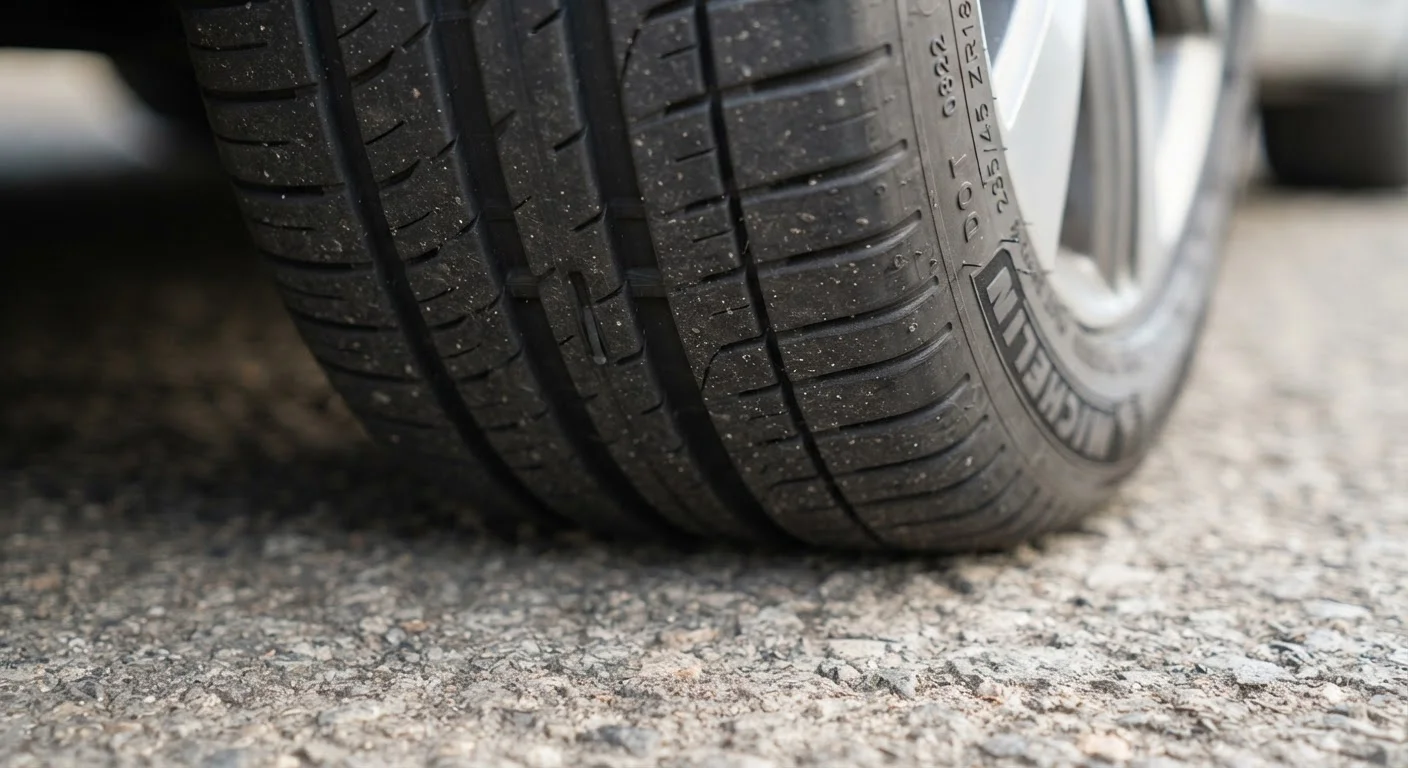
On the sidewall of every tyre, look for a string beginning with DOT. The last four digits tell you when the tyre was made: the first two digits are the week, the last two are the year. For example, 2419 means the 24th week of 2019.
Most tyre manufacturers and safety organizations suggest replacing tyres at six years from manufacture, regardless of apparent condition, and treating any tyre older than ten years as unsafe. If you're buying a used car, check all four DOT codes - tyres can look new but be years old.
Inspect sidewalls for cracking or bulging
Crouch beside each tyre and examine the sidewall - the vertical face between the tread and the wheel rim. Look for:
- Fine surface cracks (called crazing or weather-checking): early ageing; monitor closely
- Deep cracks that reach into the rubber: structural concern; have a technician assess immediately
- Bulges or blisters: indicate internal structural failure - do not drive on this tyre
Sidewall damage often results from hitting kerbs, potholes, or repeated under-inflation. It cannot be repaired - replacement is the only safe option.
Identify uneven wear patterns and their causes
Uneven wear is the tyre's way of telling you something else is wrong. Common patterns and their likely causes:
| Wear Pattern | Likely Cause |
|---|---|
| Worn edges, good centre | Chronic under-inflation |
| Worn centre, good edges | Chronic over-inflation |
| One edge worn more than the other | Wheel misalignment |
| Cupping or scalloping (wavy surface) | Worn shocks or struts |
Addressing the underlying cause - not just replacing the tyre - is essential. A new tyre on a misaligned wheel will wear unevenly again within months.
Rotate your tyres on schedule
Tyre rotation moves each tyre to a different position on the vehicle so wear is distributed more evenly across all four. Front tyres on a front-wheel-drive car bear steering and most braking forces, so they wear faster than rears. Rotation corrects this imbalance.
A general guideline from most tyre manufacturers is to rotate every 5,000-7,500 miles, or at every oil change if that interval is similar. Your owner's manual will specify the recommended pattern (for example, straight front-to-back, or an X-pattern) - some vehicles with different-sized front and rear tyres have different rules.
Rotation is typically inexpensive and takes less than 30 minutes at a tyre shop or dealership.
Combine Checks Into One Habit
Every time you check tyre pressure - aim for once a month - run through a quick visual inspection of tread and sidewalls at the same time. Bundling these tasks takes less than five minutes and catches problems before they compound. See our guide to tyre pressure checks for the full pressure-checking process.
Don't Judge a Tyre by Its Looks Alone
A tyre can look perfectly fine on the outside while its internal structure has degraded due to age, UV exposure, or repeated under-inflation. Cracks in the sidewall and a dry, brittle feel are late-stage signs. If your tyres are more than six years old, have them evaluated by a qualified tyre technician even if they appear undamaged.
Worn Tyres Are a Braking and Handling Risk
Tread depth directly affects how quickly your car stops in wet conditions. A tyre at 2/32 inch can take significantly longer to stop than one at 4/32 inch on a wet road. Do not delay replacement once your tyres reach the 4/32 threshold - this is a safety issue, not just a maintenance preference.
This article provides general vehicle maintenance information for educational purposes only. For advice specific to your vehicle or situation, consult a qualified tyre technician or your vehicle manufacturer's guidelines.