

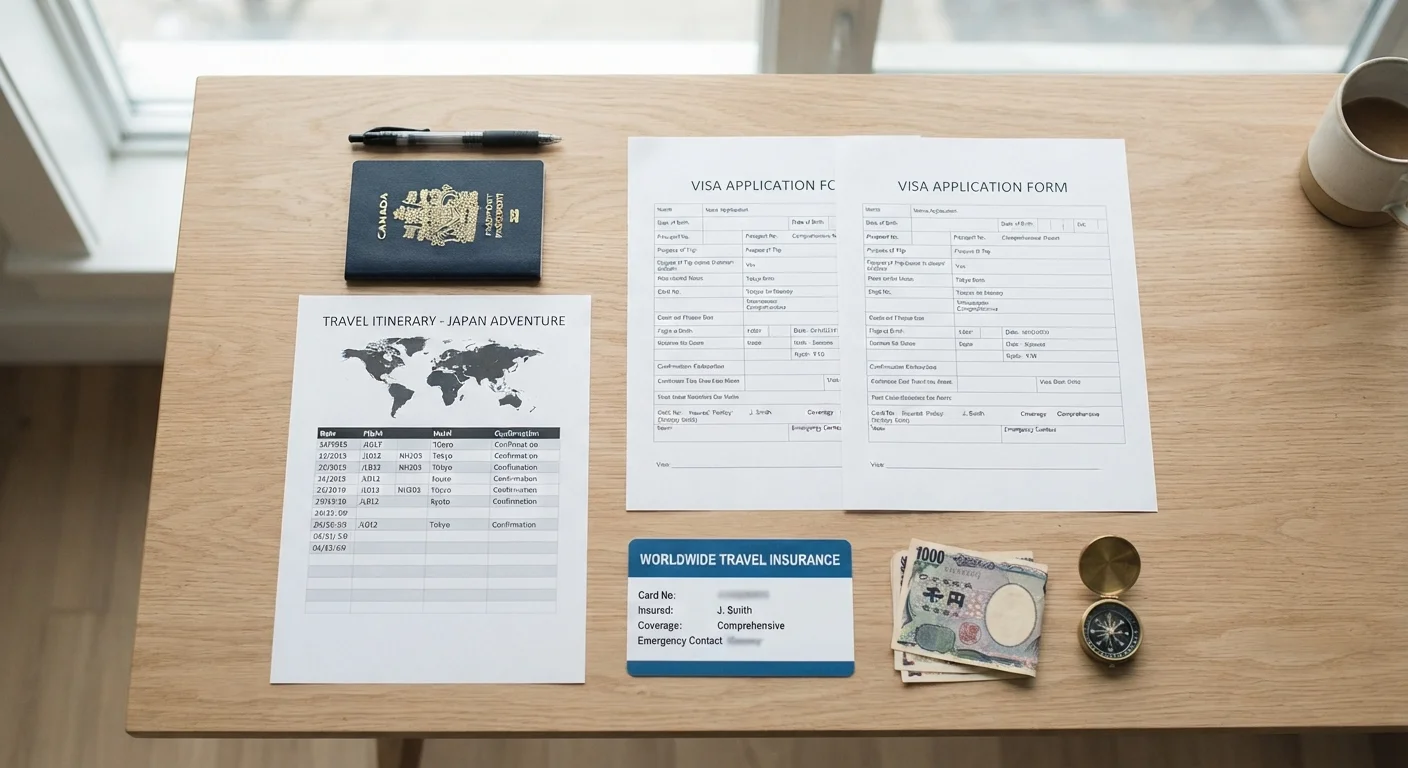
Why Paperwork Still Makes or Breaks a Trip
Even experienced travelers get tripped up by documentation gaps — an expired passport, a missing visa authorization, or a name mismatch between a ticket and an ID. For first-time international travelers, these oversights can mean missing a flight entirely or being turned away at the border. The good news: every one of these problems is avoidable with a structured review done before you leave home.
This checklist covers the documents that matter most, organized into categories you can work through methodically. Pair it with our complete logistics primer for first-time international travelers for a broader picture of pre-trip preparation.
Passport
Visas and Entry Authorization
Flight and Booking Documents
Travel Insurance
Health and Entry Requirements
Backups and Emergency Information
What to Gather Before You Start
Before running the checklist, collect everything in one place: your passport, booking confirmation emails, airline tickets, hotel reservations, travel insurance policy, and any visa documents. Having them in front of you makes the review faster and less likely to miss something.
Official government passport portal
Check your passport's expiry date and initiate renewal if needed through your country's official travel document authority.
Destination country's official immigration website
Verify current visa requirements, electronic travel authorizations, and entry forms specific to your nationality.
Cloud storage (email drafts or a secure folder)
Store digital backups of all key travel documents accessible from any internet-connected device.
Travel insurance policy documents
Confirm coverage dates, emergency contact numbers, and claims procedures before departure.
Airline's mobile app or website
Complete online check-in, access your boarding pass, and confirm baggage allowances in advance.
Pay special attention to how names appear across your documents. A middle name left off a ticket, or a nickname used instead of your legal name, can create check-in complications. See why booking form fields that seem optional really aren't for a closer look at that specific risk.
Name Mismatches Can Ground You
The name on your airline ticket must match your passport exactly — including middle names if your passport lists them. Even a small discrepancy can flag your booking at check-in. Review every booking confirmation carefully, and if you spot an error, contact the airline as soon as possible. Many airlines allow name corrections before check-in, but some charge a fee or require a rebooking.
Entry Requirements Change Without Much Notice
Visa policies, health requirements, and entry forms can change at short notice, particularly during public health events or periods of diplomatic change. Don't rely solely on what you read during booking. Always verify current requirements through the official government or embassy website of your destination within a week of departure.
After the Checklist: Protect What You've Gathered
Once your documents are confirmed and complete, take 10 minutes to create backups. Photograph every key document — passport photo page, visa, insurance card, hotel confirmations — and store copies in a cloud folder and your email drafts. A second printed set tucked in your checked luggage adds another layer of protection.
For a deeper look at document security while you're on the move, keeping your travel documents safe while traveling covers secure storage, what to do if something goes missing, and habits worth building before your first trip.
If you haven't finalized your budget alongside your paperwork prep, run through a pre-trip budget checklist before committing to any remaining bookings. And once you're closer to arrival, review what to do before landing in a country you've never visited — currency, local SIMs, and health requirements all deserve their own pass.
This article provides general travel information for educational purposes. Entry requirements, visa rules, and document regulations change frequently. Always verify current requirements with the official embassy, consulate, or government immigration authority of your destination country before traveling.