

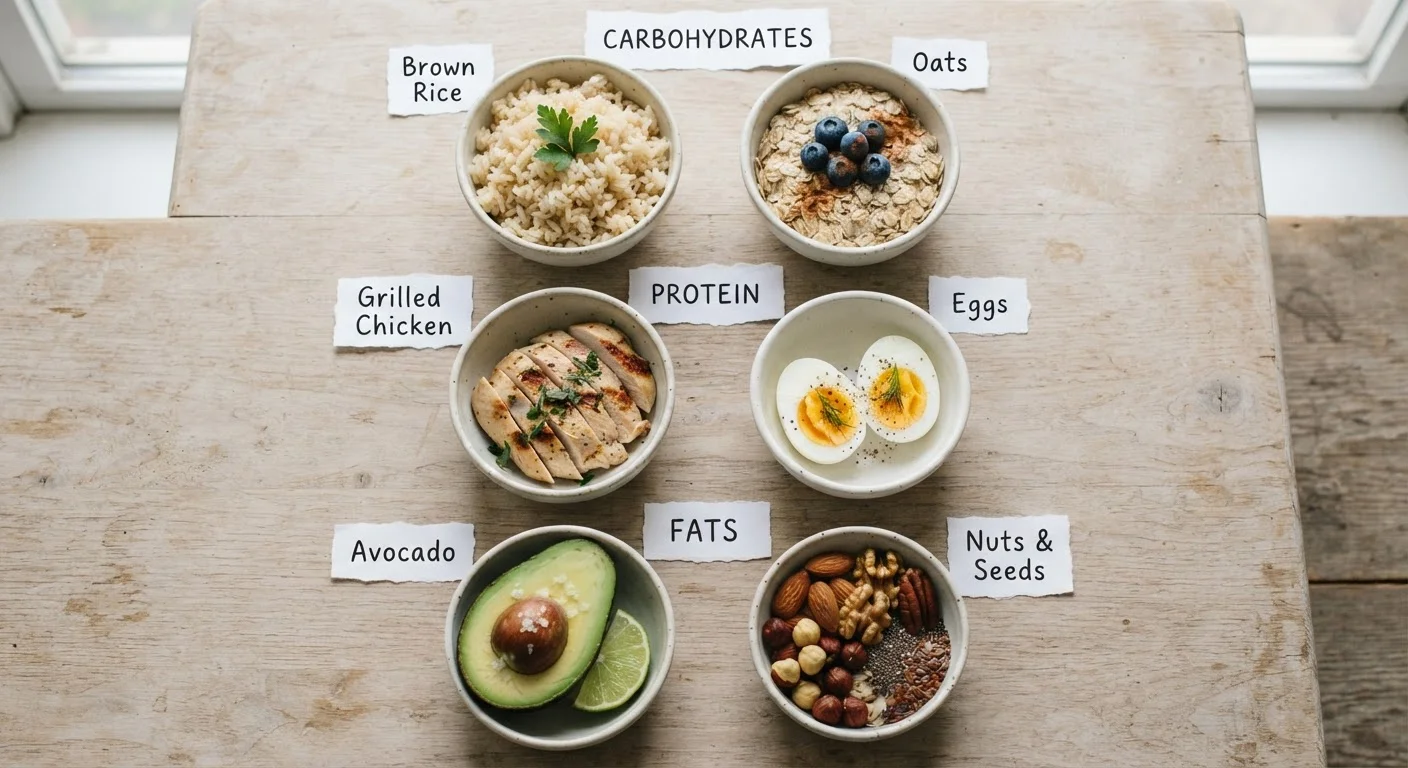
Why Macronutrients Matter
Every time you eat - whether it's a bowl of oatmeal or a slice of pizza - your body is extracting three fundamental types of nutrients: carbohydrates, protein, and fat. These are collectively called macronutrients, and unlike vitamins or minerals, your body needs them in substantial amounts every single day.
Understanding what each macronutrient does helps you see food as more than just calories. It shifts the question from "how much am I eating?" to "what is this food actually doing for me?" That's a much more empowering place to start. For a complementary look at how these nutrients appear on packaging, check out our guide to reading nutrition labels.
4 kcal/g
Energy provided by carbohydrates and protein
This is the standard energy density used by the FDA and nutrition researchers for both carbohydrates and protein per gram.
9 kcal/g
Energy provided by dietary fat
Fat is more than twice as energy-dense as carbs or protein, which is why it plays an important role in energy storage.
~10-35%
Recommended protein intake as % of daily calories
According to the Dietary Guidelines for Americans, protein should make up 10-35% of total daily calorie intake for adults.
Carbohydrates: Your Body's Go-To Fuel
Carbohydrates are your body's first-choice energy source - especially for your brain and muscles. When you eat carbs, your digestive system breaks them down into glucose, a simple sugar that travels through your bloodstream and powers cellular activity.
There are two broad categories worth knowing:
- Simple carbohydrates (sugars): Found naturally in fruit and dairy, or added to processed foods. They digest quickly and provide rapid energy.
- Complex carbohydrates (starches and fiber): Found in whole grains, legumes, and vegetables. These digest more slowly, providing steadier energy and supporting digestive health.
Fiber - technically a type of carbohydrate - deserves special mention. It isn't digested for energy, but it plays a major role in gut health, blood sugar regulation, and satiety. Our explainer on why fiber is so important goes deeper on this topic.
Despite popular diet culture claims, carbohydrates are not the enemy. See what the evidence actually says in our article on nutrition myths debunked.
Protein: The Body's Builder and Repairer
Protein is the structural macronutrient. It provides amino acids - the molecular building blocks your body uses to construct and repair muscle tissue, produce enzymes and hormones, and support immune function.
Of the 20 amino acids your body uses, nine are considered essential, meaning your body can't make them on its own and must get them from food. Complete protein sources - like meat, fish, eggs, and dairy - contain all nine. Many plant foods are incomplete on their own, but eating a varied plant-based diet throughout the day can cover all essential amino acids.
Combine Plant Proteins for Complete Nutrition
If you eat primarily plant-based foods, pairing different protein sources throughout the day - such as rice and beans, or hummus and whole-grain bread - helps ensure you're getting all essential amino acids. You don't need to combine them at every meal; just aim for variety across the day.
Protein also contributes to satiety, meaning it helps you feel full. This makes it a particularly useful macronutrient at meals when you want sustained energy between eating occasions.
Fat: Far More Than a Storage Fuel
Fat has long been misunderstood, but research is clear: dietary fat is essential for good health. It plays roles that no other macronutrient can replicate.
Key functions of dietary fat include:
- Brain health: The brain is roughly 60% fat by dry weight and relies on fatty acids to maintain structure and function.
- Hormone production: Cholesterol and fatty acids are precursors to many hormones, including sex hormones and cortisol.
- Vitamin absorption: Vitamins A, D, E, and K are fat-soluble - meaning your body can only absorb them when fat is present in a meal.
- Cell membrane integrity: Every cell in your body has a membrane made partly of fat.
Types of dietary fat vary in their structure and effects. Unsaturated fats (found in olive oil, avocados, nuts, and fatty fish) are generally associated with positive health outcomes in research. Saturated and trans fats warrant more moderation, though the science on saturated fat continues to evolve. When in doubt, prioritize variety and whole food sources.
Putting It All Together
You don't need to obsess over exact ratios to eat well. Most mainstream dietary guidelines suggest meals that include all three macronutrients - not because every gram must be accounted for, but because each one contributes something the others don't.
A practical rule of thumb: aim for meals that include a source of complex carbs, a source of protein, and some healthy fat. This combination tends to support steady energy, satiety, and overall nutritional balance.
“There are no good or bad foods in isolation - what matters is the overall pattern of eating over time, and whether that pattern provides the nutrients your body needs to function well.”
— Walter Willett, Professor of Epidemiology and Nutrition, Harvard T.H. Chan School of Public Health
If you're curious about what else your body needs beyond macronutrients, explore our overview of vitamins and minerals. And if you're considering supplements to fill gaps, our guide on understanding supplements is a helpful next step.
This article is for general informational and educational purposes only and is not a substitute for professional medical or nutritional advice. Consult a qualified healthcare provider or registered dietitian for guidance specific to your health needs.