

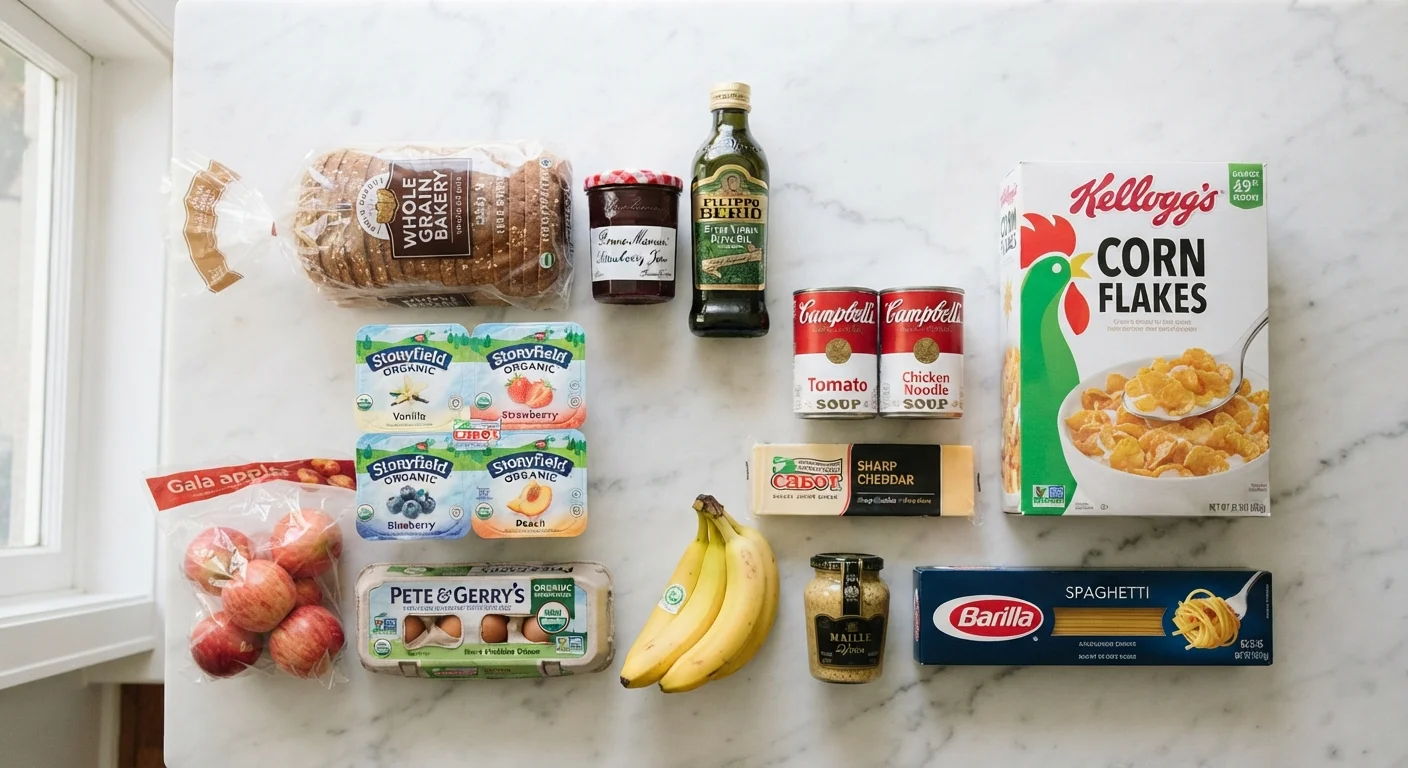
Why 'Healthy-Looking' Foods Can Still Surprise You
It's easy to assume that nutrition concerns are limited to obvious offenders - fast food, candy, chips. But a closer look at everyday grocery staples reveals that added sugar, excess sodium, and saturated fat often show up in foods marketed as wholesome, natural, or even diet-friendly.
Understanding where these ingredients hide is one of the most useful skills you can develop as someone new to reading food labels. It's not about fear or restriction - it's about making informed choices. If you're just getting started, our guide on reading a nutrition label without getting confused is a helpful complement to this article.
Below are some of the most common everyday foods where sugar, salt, and saturated fat tend to accumulate quietly.
Flavored Yogurt
Yogurt has a strong health reputation, and plain varieties genuinely earn it. But many flavored yogurts - including fruit-on-the-bottom and low-fat versions - contain substantial amounts of added sugar, sometimes approaching the levels found in dessert foods. The "low-fat" label can make this especially easy to overlook, since fat reduction is sometimes offset by added sweeteners to maintain palatability.
What to look for: Check the "Added Sugars" row on the Nutrition Facts label. Plain yogurt (Greek or regular) contains naturally occurring lactose, but little to no added sugar.
Low-fat yogurt often compensates for reduced fat with added sweeteners.
Bread and Sandwich Wraps
Bread is one of the largest contributors to daily sodium intake in the American diet, according to the U.S. Food and Drug Administration. Because people typically eat multiple slices a day, the sodium accumulates quickly - even though a single piece doesn't taste especially salty. Some varieties also contain small amounts of added sugar to enhance flavor and browning.
What to look for: Sodium levels vary widely between brands and styles. Comparing labels on similar breads is one of the easiest places to make a lower-sodium swap without changing much else about your routine.
Bread is a top source of daily sodium intake, even though it rarely tastes salty.
Pasta Sauces and Condiments
Tomato-based pasta sauces, ketchup, barbecue sauce, and salad dressings frequently contain both added sugar and sodium. Jarred pasta sauces in particular can have several grams of added sugar per half-cup serving - and it's common to use a full cup or more in a meal. Condiments like teriyaki sauce and sweet chili sauce are similarly concentrated sources.
What to look for: Pay close attention to serving size. A tablespoon of ketchup looks modest on paper, but many people use considerably more.
A single serving of pasta sauce can contain as much added sugar as a small cookie.
Canned and Packaged Soups
Soups are often considered light, nutritious meals - and many are. But canned and packaged varieties are among the highest-sodium foods in most grocery stores. A single can of condensed soup, prepared as directed, can contain well over half the daily sodium limit recommended by major health organizations. Even "reduced sodium" versions can still be relatively high.
What to look for: The % Daily Value for sodium on the label is a useful quick reference. A value of 20% or more per serving is generally considered high.
One can of soup can contribute more than half of a day's recommended sodium intake.
Coffee Creamers and Flavored Drinks
Liquid coffee creamers - particularly flavored varieties like hazelnut or vanilla - often contain added sugar, partially hydrogenated oils (a source of saturated or trans fat in some formulations), and artificial flavorings. Flavored lattes, bottled iced coffees, and fruit-flavored drinks present similar concerns. These calories and nutrients can add up quickly because liquid foods are easy to underestimate.
What to look for: Check both the added sugars and saturated fat rows. Also note the listed serving size - many creamers list a single tablespoon, while typical use is several tablespoons per cup.
Flavored coffee creamers can quietly add significant sugar and saturated fat to your daily intake.
Granola and Breakfast Cereals
Granola and many breakfast cereals carry a wholesome image, but they frequently contain notable amounts of added sugar - sometimes listed under multiple names such as brown rice syrup, cane juice, honey, or molasses. Granola can also be calorie-dense due to its oil content, which may include sources of saturated fat. Even cereals marketed toward children as "fortified" can have high added sugar levels.
What to look for: Ingredients are listed in descending order by weight. If any form of sugar appears within the first three ingredients, that product is likely high in added sugar. Our related piece on nutrition myths that science has debunked addresses why "natural" sugars aren't always meaningfully different from refined ones.
Sugar often hides in granola under several different names in the ingredients list.
Building Awareness Without Overthinking It
Spotting hidden ingredients doesn't require memorizing every product in your grocery store. Instead, develop a habit of checking three things on the Nutrition Facts panel: added sugars, sodium, and saturated fat - especially for packaged foods you buy regularly. Over time, you'll start to notice patterns.
Use the % Daily Value as a Quick Guide
The Nutrition Facts label includes a % Daily Value (% DV) column for nutrients like sodium, saturated fat, and added sugars. As a general rule, 5% DV or less is considered low for a nutrient, while 20% DV or more is considered high. This shortcut lets you compare products quickly without having to memorize specific gram targets. Remember that % DV is based on a general reference diet and may not reflect your individual needs - a registered dietitian can offer personalized guidance.
Keep in mind that the goal isn't perfection. Most nutrition experts and public health organizations emphasize overall dietary patterns rather than eliminating any single ingredient entirely. If you've run into conflicting advice while trying to eat better, common early nutrition missteps can help you reset your approach.
For practical next steps, grocery shopping habits that support nutritious eating walks through routines that make label-checking easier and less time-consuming in the moment.
This article is for general informational and educational purposes only and is not a substitute for professional medical or dietary advice. Consult a registered dietitian or qualified healthcare provider with questions about your individual nutrition needs.