

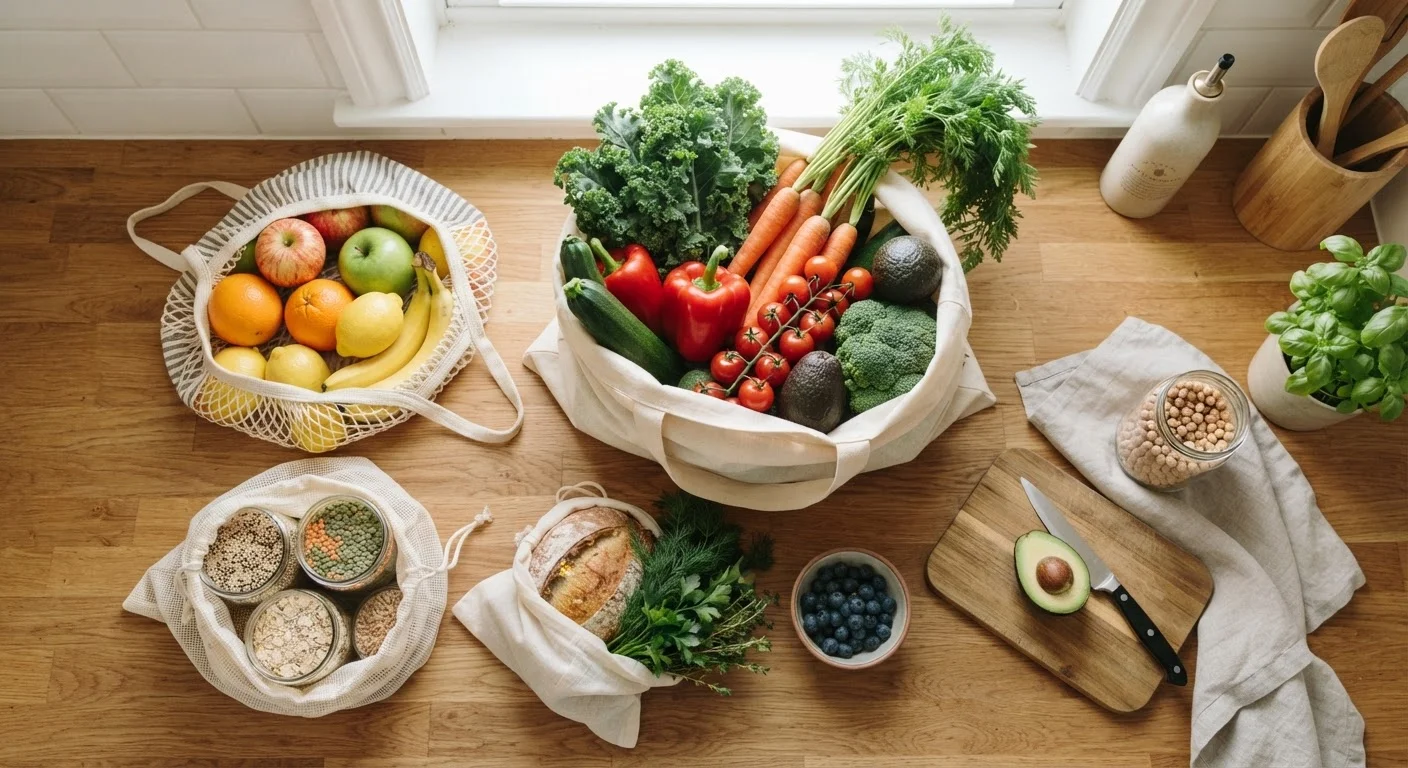
Why Your Shopping Habits Shape What You Actually Eat
Most nutrition advice focuses on what to eat - but what ends up on your plate is largely decided days earlier, in the grocery store. If your cart is stocked with foods that are easy to prepare and genuinely satisfying, you're far more likely to eat well without relying on motivation you may not always have.
This checklist is designed for anyone who wants to eat more consistently well but finds meal planning overwhelming or nutrition advice confusing. As we cover in our guide to common nutrition mistakes, beginners often skip foundational habits in favor of complex strategies - this checklist helps you build the foundation first.
Use it before your next grocery run, or as a regular audit of your current shopping routine. You don't need to do everything at once; even two or three changes can meaningfully shift how you eat day to day.
Notepad or List App
Capture your shopping list and pantry inventory before heading to the store.
Reusable Shopping Bags
Organize purchases by category (cold items, produce, dry goods) to make unloading and storing faster.
Weekly Meal Planner Template
A simple grid (paper or digital) to map out flexible meal ideas before building your list.
Insulated Bag or Cooler
Keep perishables safe if your commute home from the store is longer than 30 minutes.
The Grocery Habits Checklist
Work through these grouped items at your own pace. Items marked must are the highest-leverage habits; should items add consistency; nice-to-have items help once you've got the basics covered. This checklist fits naturally into the broader routines described in a daily structure that supports energy and focus.
Before You Shop
Building a Versatile Cart
Reading Labels Without Overthinking It
Pantry & Habit Maintenance
Don't Let 'Healthy' Labels Do the Thinking
Terms like 'natural,' 'clean,' or 'superfood' on packaging are marketing language, not regulated nutritional claims in the US. A product with a health halo on the label can still be high in added sugar, sodium, or refined ingredients. Use the nutrition facts panel and ingredients list - not the front of the package - to make your own informed assessment.
Putting It Into Practice
The goal of these habits isn't perfection - it's reducing friction so that eating well becomes your default, not your exception. Research in behavioral nutrition consistently shows that environment design (what's available and accessible at home) has a stronger influence on food choices than conscious intent in the moment.
If you're just starting out, try anchoring your grocery trip to one consistent day each week. That single routine change can make planning feel less like a chore and more like a predictable part of your week - similar to how consistency beats intensity in exercise. You can also connect your grocery habits to your overall daily health routines by reading our overview of daily health habits.
This article is for general informational and educational purposes only. It is not a substitute for personalized nutrition or medical advice. If you have specific dietary needs, health conditions, or concerns, please consult a registered dietitian or qualified healthcare professional.